
 JA
JA  EN
EN  DE
DE  RU
RU  PT
PT  ES
ES  IT
IT 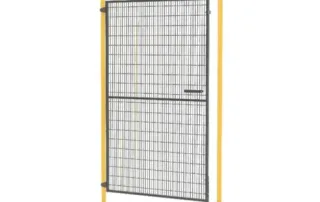
Machine safety fence solutions for palletizing robots.
In End-of-Line (EOL) packaging, your palletizing robot's cycle time is entirely dependent on the reliability of its safety perimeter. When a forklift carrying a 2,000 lbs pallet nudges a flimsy wire mesh, or a sagging access door misaligns your Omron safety switch, the PLC triggers an immediate Safe Torque Off
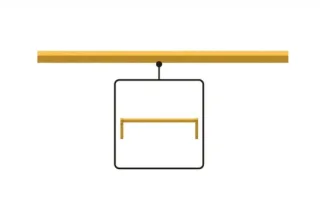
Customizing industrial safety fence panels for corners.
Setting up a perimeter around a new 6-axis robotic welding station or an automated assembly line rarely happens in a perfect square. Pillars, AGV paths, and existing CNC machining centers force system integrators into awkward 45-degree angles or tight geometric layouts. Custom fabricating these corners on-site means hot work permits,
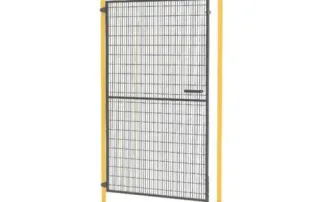
Why use safety guarding fence over light curtains?
Tired of nuisance trips shutting down your high-speed assembly lines? In automated automotive manufacturing, optical sensors like light curtains only sense danger—they don't stop it. When a CNC machining center throws a broken tool, or an AGV strays too close to a robotic welding station, light curtains won't stop the
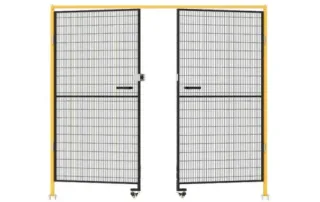
Can machine guarding fence panels handle 2000J impacts?
In a high-speed automotive welding station, cycle times are measured in seconds. If a KUKA robot's pneumatic gripper drops a 150 lbs cast-iron engine block at full swing, or if a runaway AGV veers off its path, cheap frameless wire mesh will fold like a hammock. T-slot aluminum profiles will
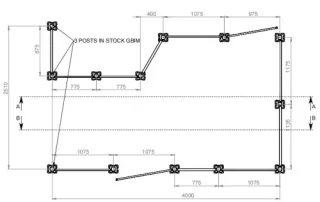
Impact of industrial automation safety on plant OEE.
Every minute a KUKA or FANUC robot sits idle because of a misaligned safety switch or a forklift bump, your plant's OEE plummets. In high-speed automotive assembly, relying on flimsy wire mesh or custom-welded barriers means longer MTTR and failed EHS audits. You need a guarding system that actively integrates
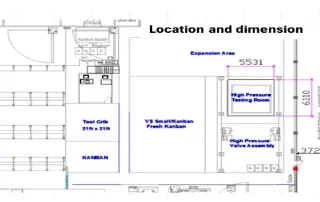
Comparing machine guard fencing mesh sizes for safety.
In high-speed automotive assembly and robotics integration, floor space is your most expensive asset. Relying on outdated 2x2 inch (50x50mm) mesh forces you to push your safety perimeters nearly 3 feet away from robotic pinch points to meet ISO compliance. This eats up critical square footage needed for CNC machining
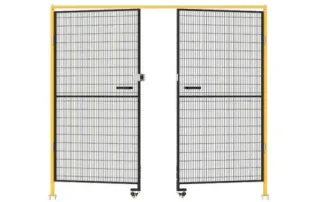
Does Machine Perimeter Guarding reduce insurance costs?
In high-speed automotive assembly and robotic integration, safety isn't just a compliance checkbox—it's a massive line item on your P&L. When an automated production line lacks certified perimeter protection, underwriters see a liability time bomb. A single incident where a worker bypasses a faulty interlock, or a forklift breaches a
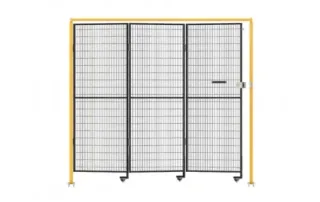
How to ground Industrial Perimeter Guarding for ESD?
In electronics manufacturing, static buildup on your automated SMT lines isn't just a mild shock hazard—it is silently killing your PCB yield rates. When high-speed conveyors and robotic arms operate within inches of ungrounded metal barriers, electrostatic discharge (ESD) can arc, causing latent defects or catastrophic failures in sensitive microchips.
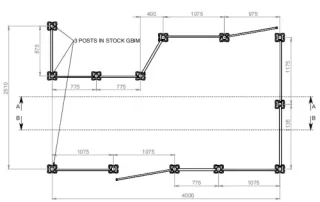
Best floor mounting for Safety Fence Industrial.
When a 6-axis robot in your automotive welding cell throws a 150 lbs part, or a forklift nudges your perimeter barrier, the entire kinetic shock load transfers directly to the floor mounts. If your system relies on cheap anchors or rigid floor welds, the concrete cracks, the posts shear, and
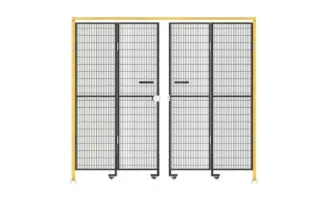
Are robot fencing systems compatible with laser scanners?
Integrating a high-speed 6-axis robot cell? You are likely wrestling with the integration dilemma: laser scanners drop the ball in blind spots, while cheap frameless wire mesh creates optical interference and nuisance tripping that kills your OEE. When an AGV strays off its path or a CNC machining center ejects

