JA
JA  EN
EN  DE
DE  RU
RU  PT
PT  ES
ES  IT
IT AIRBRIDGE / GPU / STAND-EQUIPMENT ASSET PROTECTION
Airbridge Legs, GPU Cabinets and Stand-Equipment Posts: Why a 28,950 J Polymer Crash Barrier Replaces Deformed Steel at Cannot-Stop Airside Assets
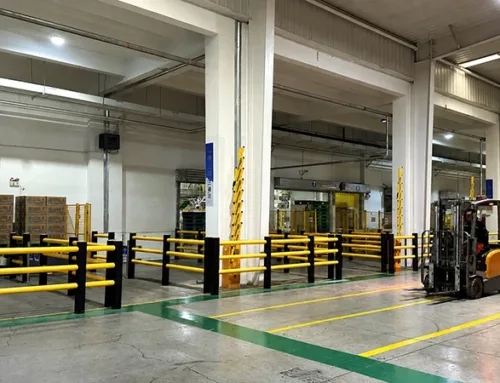
An active wide-body stand puts an airbridge leg, a 400 Hz GPU cabinet and a stand-equipment post inside the same GSE convergence lane as a multi-car baggage tug. Painted hold-lines and a single rotating marshaller cannot keep a struck post from becoming the next hard hazard on the apron. FCBarrier ARMORFLEX™ polymer CTR column protectors and DR190 dual-rail barriers absorb up to 28,950 J (8 t @ 9.6 km/h) of strike energy and rebound — so a guard never degrades into the bent-corner secondary hazard a deformed steel post leaves behind on a cannot-stop airside asset.
Specify by Joules, Not by Stop-Installed Footprint
An airside asset guard is sized by the heaviest equipment that can reach the post, not by the lane width around it. The FCBarrier Joule ladder covers the common baggage-tug and GSE pushback envelope on a cannot-stop stand.
| FCBarrier Series | Rated Impact Energy |
|---|---|
| CTR100 column protector | 8,200 J — 3 t @ 8.4 km/h |
| CTR148+ column protector | 19,000 J — 6 t @ 9 km/h |
| CTR190+ column protector | 28,950 J — 8 t @ 9.6 km/h |
| DR100 dual-rail barrier | 6,500 J — 3 t @ 7.5 km/h |
| DR148 dual-rail barrier | 19,000 J — 6 t @ 9 km/h |
| DR190 dual-rail barrier | 28,950 J — 8 t @ 9.6 km/h |
| TR100 traffic / pedestrian rail | 8,200 J — 3 t @ 8.4 km/h |
| TR190+ traffic / pedestrian rail | 28,950 J — 8 t @ 9.6 km/h |
What a Self-Rebounding Polymer Guard Actually Does at an Active Stand
CTR Column Protector Wraps the Asset, Not the Lane
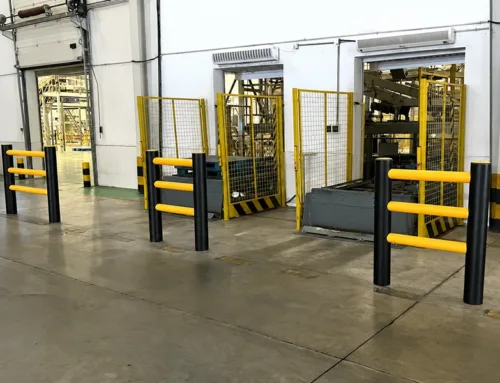
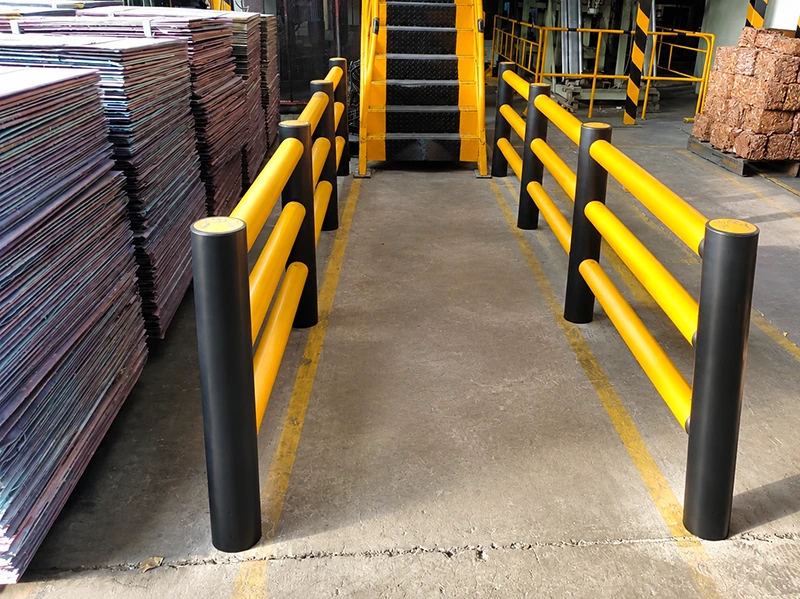
CTR100, CTR148+ and CTR190+ are sized to the post they wrap, not to the lane around it. An airbridge leg, a 400 Hz GPU / pre-conditioned air (PCA) cabinet base, a stand-number ID pylon, or a GSE charging-bay column is set into the CTR shell and bolted to the apron slab. CTR190+ carries the 28,950 J rating that maps to the working envelope of a multi-car baggage-tug train pulling into a wide-body stand — the same energy class the apron sees when a pushback tug nudges a stand-equipment post during aircraft-on-stand maneuvering. Because the CTR is a polymer crash barrier, a struck post absorbs the impact, rebounds and stays on the floor; the airbridge leg and the GPU cabinet behind it never take a secondary hit from a deformed guard.
DR190 Dual-Rail Perimeter for the Stand Edge
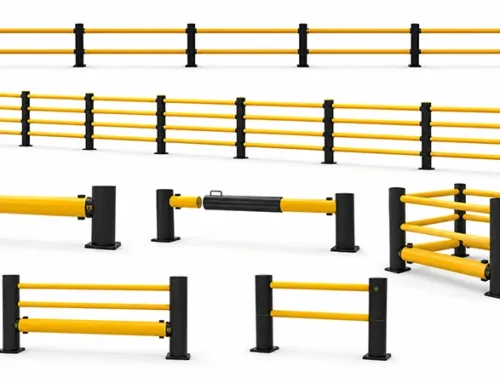
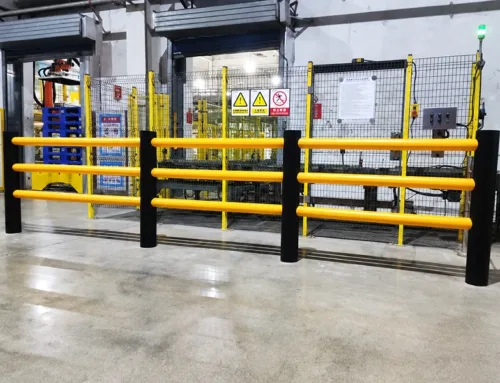
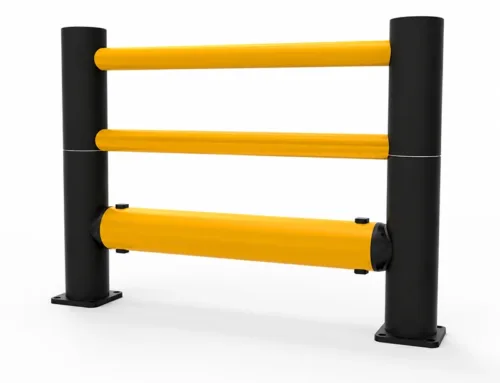
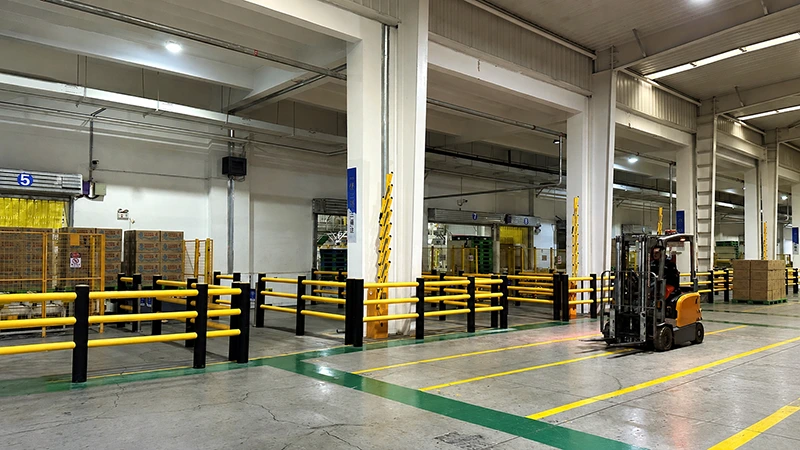
Where a cannot-stop asset sits along the apron edge — behind a fuel hydrant pit, beside a stand-power equipment room, in front of a bowser parking bay — a DR190 dual-rail runs a continuous perimeter at the GSE clearance line. The two parallel yellow steel tubes share the load across the rail pair, so a single baggage-tug strike is distributed instead of concentrated on one rail. ARMORFLEX™ polymer absorbs the energy and rebounds, and the mortise & tenon quick-install means a single damaged segment swaps in minutes without a torch, without an apron shutdown and without waiting for the next maintenance window.
Self-Rebounding, No Permanent Deformation, No Secondary-Injury Corner
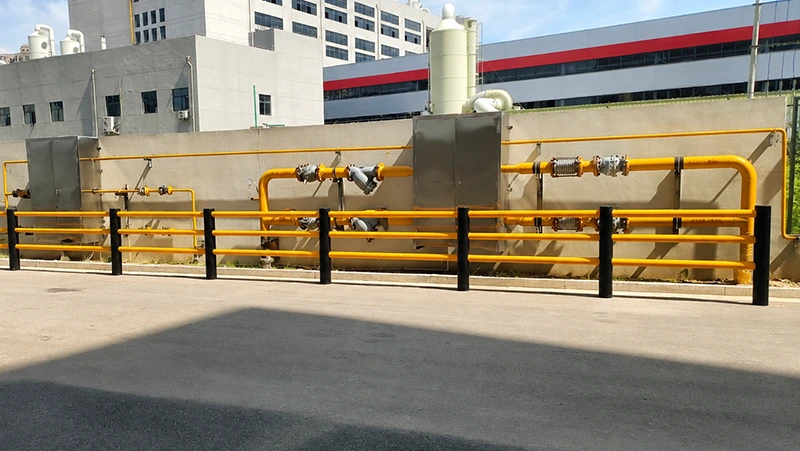
A steel column guard deforms on first contact and stays bent. The bent corner is the secondary hazard: a GSE tire catches it during the next pushback, a crew coverall snags on it during a fueling stop, a passenger boarding the airbridge catches a knee on it on the way to seat 23A. FCBarrier ARMORFLEX™ polymer absorbs up to 80% of the strike energy and returns to its original profile. There is no bent corner to become the next incident report, no welded repair patch to fail the next apron inspection, and no repaint cycle to drop maintenance cost onto the airside operating budget.
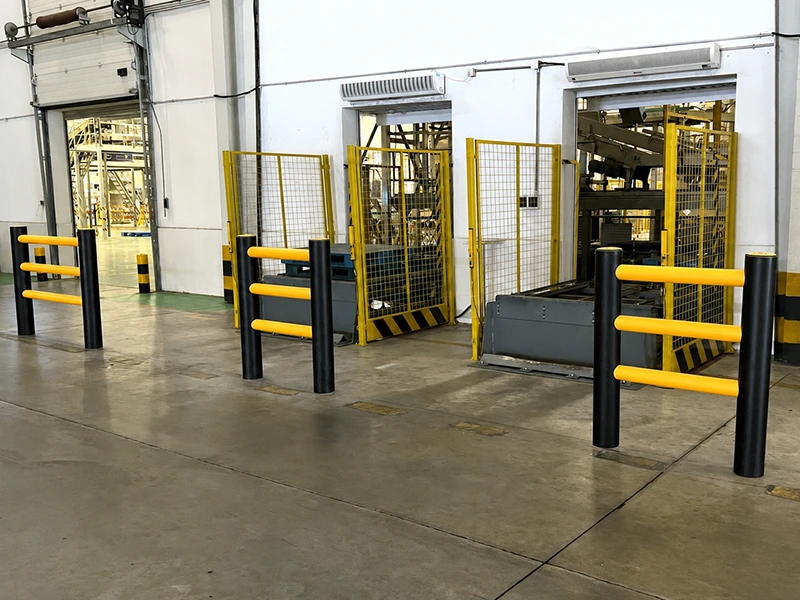
Where a Self-Rebounding Polymer Guard Earns Its Place
- Airbridge leg perimeter (passenger boarding bridge base on contact stand)
- 400 Hz GPU / pre-conditioned air (PCA) cabinet base on the apron
- Aircraft stand-equipment posts and stand-number ID pylons
- Apron fuel hydrant pit enclosures and bowser parking bays
- GSE charging bays and tow-tug staging lanes
- Stand-power, comms and weather-rack protection around the equipment room
- Walk-out crew corridor separation from the tug convergence lane (TR Series)
Any cannot-stop airside asset that sits inside the GSE envelope qualifies. The CTR Series wraps the post; the DR190 runs the perimeter at the apron edge; the TR190+ separates the walker-out crew from the tug lane. One polymer crash barrier family covers the entire cannot-stop footprint of an active stand.
Get the Airside Asset-Protection Spec Pack
The pack contains the CTR / DR / TR Joule ladder, the mortise & tenon quick-install instructions for apron-grade concrete, and the Joules-per-application chart for airbridge, GPU and stand-equipment layouts. It maps the FCBarrier range to the heaviest GSE that can reach each asset, so procurement can specify one self-rebounding polymer crash barrier family across the entire cannot-stop stand.
Specify a Self-Rebounding Polymer Guard for Cannot-Stop Airside Assets
Send the stand layout, the post dimensions, and the heaviest GSE that reaches the apron edge. We return a CTR / DR190 placement plan with Joules per asset, the mortise & tenon quick-install BOM, and a maintenance comparison against the bent-steel guard you are replacing.