JA
JA  EN
EN  DE
DE  RU
RU  PT
PT  ES
ES  IT
IT 
The Importance of Steel Guard Safety in the Workplace

Preventing Accidents and Injuries
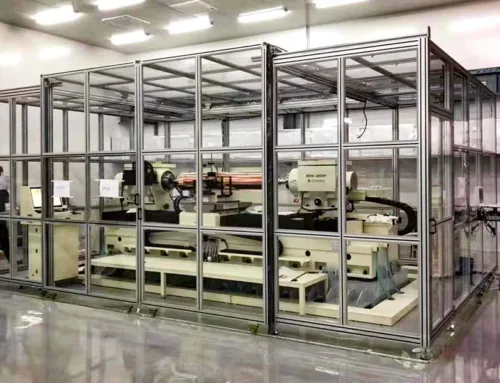
Steel guard safety is a critical aspect of workplace safety, particularly in industries that utilize heavy machinery and equipment. These sturdy barriers play a crucial role in protecting workers from potential hazards such as flying debris, sparks, and high temperatures. By placing steel guards around dangerous machinery and equipment, companies can significantly reduce the risk of accidents and injuries.
One of the primary benefits of steel guard safety is its ability to prevent workers from accidentally coming into contact with moving parts or hot surfaces. By creating a physical barrier, steel guards keep employees safely away from hazardous areas, minimizing the chances of cuts, burns, crush injuries, and other severe harm. This not only ensures the well-being of workers but also contributes to a positive work culture, as employees feel valued and protected by their employers.
Enhancing Workplace Productivity and Compliance
Apart from safeguarding workers, steel guard safety also has a positive impact on workplace productivity. When employees feel safe and secure, they can concentrate more effectively on their tasks, leading to increased focus and productivity. The confidence in their safety allows workers to operate machinery and equipment with a clear mind, reducing distractions and the likelihood of errors.
Moreover, implementing steel guard safety measures helps businesses comply with safety regulations and standards. Industries dealing with heavy machinery are subject to stringent safety guidelines, and non-compliance can result in severe consequences such as fines and legal issues. By prioritizing steel guard safety, companies demonstrate their commitment to workplace safety, ensuring that their operations align with industry regulations and best practices.
結論として steel guard safety is an indispensable component of workplace safety, especially in industries with heavy machinery and equipment. These protective barriers prevent accidents, injuries, and exposure to hazardous materials, providing workers with a secure environment to perform their tasks efficiently. Not only does steel guard safety protect employees, but it also enhances overall workplace productivity and aids businesses in complying with safety standards. Investing in steel guard safety measures is a proactive approach that benefits both workers and the company as a whole, fostering a safe and thriving work environment.
Interlock Switch Mounting Without Drilling: Why Alfence T-Slot Posts End Phantom Stops
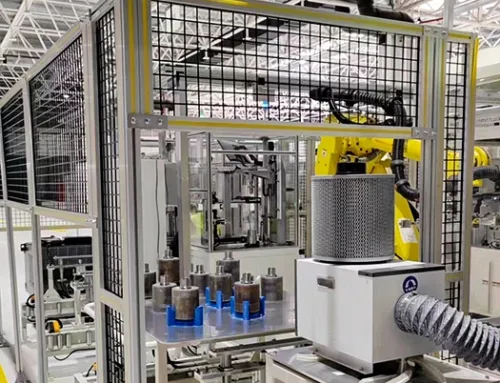
Bolting an interlock switch bracket through a powder-coated steel post drills the coating, drops swarf into the cell and leaves a rust line — and when the hinged leaf sags, the tongue misaligns and the PLC reports a phantom guard fault. Alfence mounts sensors, e-stops and conduit in the T-slot groove of a 40×40 mm or 45×45 mm aluminum post, with door hardware sized to keep the safety switch aligned.
Phantom Safe Torque Off Stops: T-Slot Guarding Fence Posts Mount Interlocks Without Drilling
Painted steel guarding posts force maintenance to drill for interlock switches, dropping swarf in the cell and breaking the coating where rust starts. Sagging hinge doors then misalign the interlock tongue and the PLC trips Safe Torque Off while the gate is closed. Alfence industrial safety fence mounts sensors, e-stops and cable routing into the T-slot aluminum profile post without drilling, and uses hinged, folding or sliding door frames that keep interlock geometry stable - protecting OEE through phantom stops and line changes.
Automotive Plant Industrial Safety Fence: Keep the Robot Cell Close to the Hazard
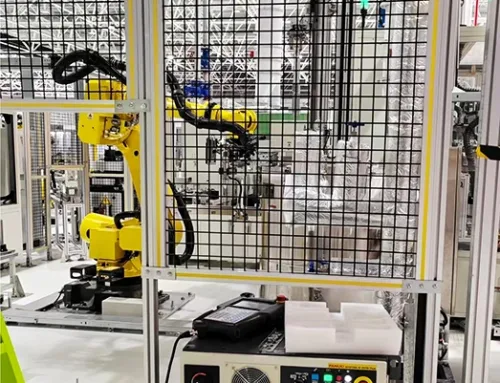
Automotive plants cannot afford to lose production floor to an oversized machine guarding perimeter. Alfence combines 20×100 mm mesh with slim 40×40 mm or 45×45 mm aluminum posts for a compact, reconfigurable industrial safety fence layout, with final clearance confirmed by the project risk assessment.