JA
JA  EN
EN  DE
DE  RU
RU  PT
PT  ES
ES  IT
IT

|
In the high-stakes world of automotive automation, a “standard” quote rarely covers the reality of the shop floor. Whether you are integrating a new robotic welding cell or retrofitting an AGV path, the true cost of safety isn’t just the price of steel per meter—it’s about compliance, integration speed, and preventing costly downtime during installation. Before you finalize your budget for your next turnkey solution, understand the engineering variables that actually drive the price. |
The Hidden Variables in Machine Guarding Economics
For system integrators and plant managers in the automotive sector, calculating the cost of 工業用安全フェンス goes beyond a simple bill of materials. A fencing system around a CNC machining center or a high-speed assembly line is a critical component of the safety circuit, not just a physical barrier.
When you see price variances between suppliers, it is rarely arbitrage on raw steel prices. The cost difference lies in the structural integrity required to contain a robotic arm failure versus a simple walkway divider, and the engineering hours saved during on-site assembly. Here are the specific technical factors that dictate the final investment.
1. Structural Specifications and Impact Resistance
The primary cost driver is the physical capability of the fence to withstand kinetic energy. In an automotive body shop, a barrier must be able to stop a heavy workpiece ejected from a lathe or withstand an accidental collision from a forklift.
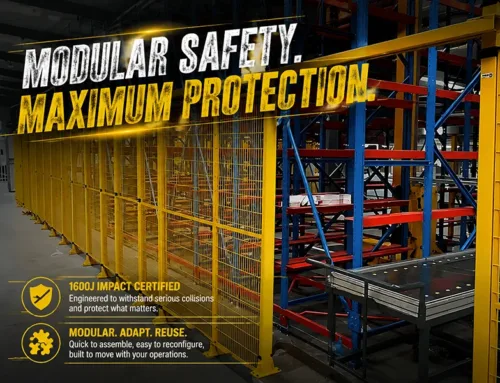
The Cost Factor: High-impact resistance requires thicker wall gauges and specific material grades. For instance, our Mdfence system utilizes Q235炭素鋼 with a 60x60mm post profile and 2.0mm wall thickness. Cheaper alternatives often use 40x40mm posts with 1.0mm thickness, which may suffice for pedestrian guidance but will fail TUV impact tests required for robotic cells.

Figure 1: Framed panels with 20x30mm tubing provide necessary rigidity for high-risk zones.
2. Complexity of Layout and Customization
Standard modular grids (e.g., 5ft x 6ft panels) are the most cost-effective solution. However, real-world manufacturing floors are rarely perfect rectangles. They are crowded with conveyors, electrical cabinets, and support columns.
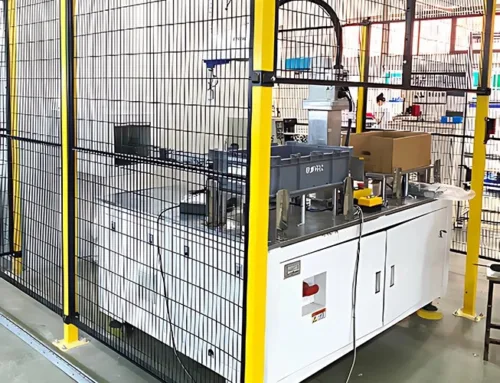
The Cost Factor: “Cut-to-size” panels and custom angles significantly impact the budget. If your layout requires navigating around a complex conveyor feed or creating a 45-degree turn to maximize floor space, this requires non-standard mesh widths and specialized posts. A project requiring 80% standard panels and 20% custom “fillers” will cost more than a 100% standard run, but it ensures no gaps in safety compliance (ISO 13857).

Figure 2: Complex layouts with non-standard angles and multiple entry points increase engineering costs but optimize floor space utilization.
3. Door Systems and Logic Integration
Access points are the most expensive mechanical components of any fencing system. The choice of door directly correlates with the workflow efficiency of the cell.
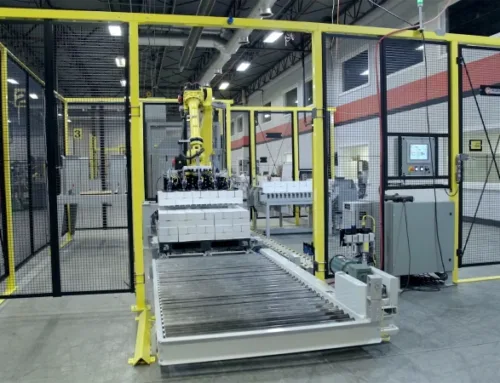
The Cost Factor: A standard hinged door is cost-effective for maintenance access. However, for loading zones where forklifts or AGVs need to enter, you may require wide Sliding Doors または Folding Doors (up to 4.8m wide). Furthermore, integrating these doors with the machine’s safety PLC (Programmable Logic Controller) requires specialized hardware.
We provide pre-engineered セーフティ・インターロック・キャリア tailored for Omron or Pizzato switches. While this adds a small upfront cost compared to a generic door, it saves hours of drilling and retrofitting by your electrical team during the commissioning phase.

Figure 3: Double sliding doors designed for wide AGV or forklift access in automated cells.
4. Installation Efficiency and Hardware
For a System Integrator, time on site is money. If a fencing system requires welding on-site or complex assembly of loose nuts and bolts, your labor costs will skyrocket, potentially delaying the line sign-off.
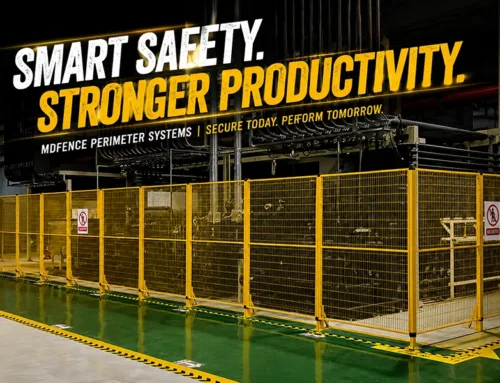
The Cost Factor: Systems designed for rapid assembly—using Framed Panels and pre-threaded fixing rings—reduce installation time by up to 30%. Our system uses M10 expansion bolts for secure anchoring and a modular clamp design that allows for adjustments to floor unevenness without re-fabrication. The initial material cost is offset by the reduction in technician man-hours.

Figure 4: Modular components like fixing rings and framed panels streamline the installation process.
Conclusion: Calculating Total Cost of Ownership
When evaluating the cost of 工業用安全フェンス, do not look at the panels in isolation. A cheaper, flimsy fence that bends under minor impact, takes twice as long to install, or fails to integrate smoothly with your safety interlocks will cost significantly more in the long run.
By selecting a system built with automotive-grade Q235 steel, pre-engineered for automation integration, and tested to ISO standards, you are investing in operational continuity and safety compliance.
よくある質問
1. How does the choice of mesh vs. polycarbonate affect the cost?
Steel wire mesh is generally more cost-effective and allows for better airflow and visibility for standard guarding. Polycarbonate panels are more expensive but are necessary for containment areas where you need to prevent weld spatter, fluids, or fine debris from escaping the cell.
2. Can your system integrate with existing safety interlocks like Omron or Sick?
Yes. Unlike generic fencing, Mdfence offers specialized mounting kits (Lock Carriers) designed specifically for major safety switch brands. This eliminates the need for custom fabrication on-site, reducing integration costs.
3. What is the standard lead time for custom-sized panels?
While standard modular components are stocked for quick deployment, custom “fill-in” panels for complex layouts typically add 1-2 weeks to production. However, using our adjustable mounting brackets can often mitigate the need for custom widths.
4. Do you provide installation support for large automotive projects?
We provide comprehensive CAD drawings and step-by-step installation guides tailored to your specific layout. For large-scale integration projects, our modular design minimizes the skill level required for assembly, allowing your general mechanical team to install it rapidly.
5. Is the fencing system compatible with AGV and AMR traffic?
Absolutely. We offer trackless sliding doors and extra-wide folding doors specifically designed to allow Automated Guided Vehicles (AGVs) and forklifts to enter cells without ground obstructions that could interfere with sensors or tires.