JA
JA  EN
EN  DE
DE  RU
RU  PT
PT  ES
ES  IT
IT 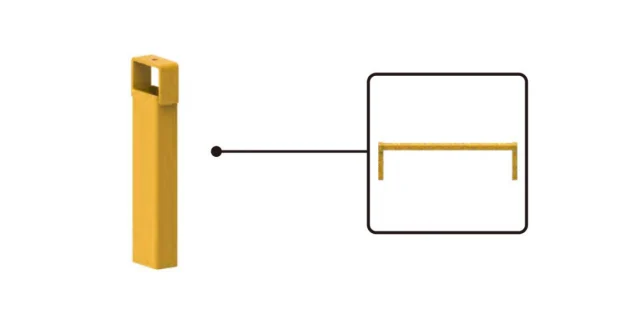

|
When an automated guided vehicle (AGV) drifts off its path or a 6-axis robot drops a 100 lb engine block, your perimeter protection is only as strong as its weakest link. For system integrators designing high-speed mechanical assembly machines, the failure point isn’t usually the steel mesh—it’s the floor anchors ripping out of the concrete. Discover how engineered base plates and the right expansion bolts prevent catastrophic safety circuit failures in your robotics layouts. |
The Hidden Vulnerability in Robotics Layouts: Anchor Failure
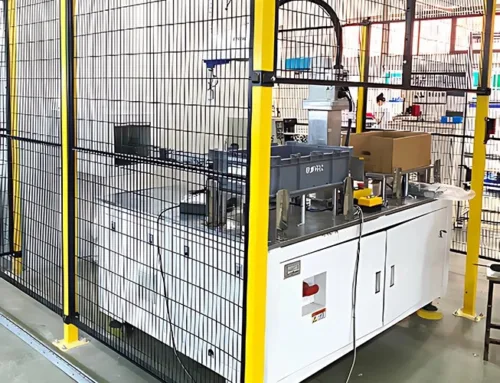
In the automotive manufacturing sector, system integrators excel at “design for automation” methods, meticulously calculating payload capacities for KUKA or FANUC robots. However, a critical oversight often occurs at the floor level. Before: You install standard 工業用安全フェンス around a dedicated manufacturing line using generic wedge anchors from a local hardware supplier. Months later, the constant high-frequency vibration from adjacent CNC machinery and stamping presses causes the concrete around the anchors to micro-fracture. The anchors loosen. The next time a forklift accidentally nudges the post, the entire barrier deflects, misaligning the safety interlock switches (like the Omron D4NL). The PLC registers a breach, triggering an immediate E-stop across the entire assembly system. The result? Hours of expensive downtime and a compromised safety perimeter.
Why Standard Anchors Fail in Automotive Automation
Generic fencing systems often use narrow, stamped base plates with undersized holes. When subjected to dynamic loads—such as a robotic arm ejecting a machined part at high velocity—these narrow plates act like a pry bar against the concrete. The overturning moment generates massive pull-out forces that standard 1/4-inch anchors simply cannot withstand. Furthermore, exposed anchor threads on the factory floor become a tripping hazard for operators and a snag point for material handling equipment.

Two-piece plastic post base protective covers conceal expansion bolts, eliminating tripping hazards and protecting anchors from corrosive cutting fluids.
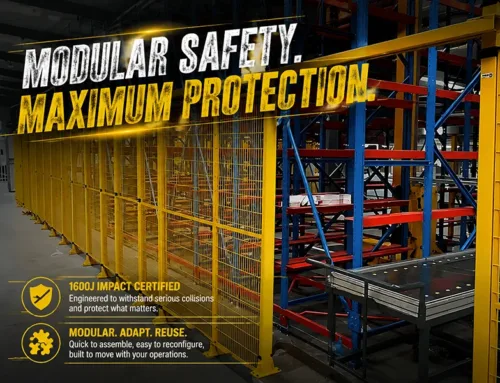
The Engineering Logic: How Mdfence Anchors Absorb 1600J Impacts
Why it works: The Mdfence system approaches floor anchoring through the lens of structural mechanics. Instead of flimsy stamped metal, the standard 60x60mm Q235 carbon steel posts feature welded “ear” style base plates. These extended plates increase the footprint, effectively distributing the leverage of an impact over a wider surface area of the concrete slab.
To secure this foundation, the system utilizes four heavy-duty M10 x 70mm (approx. 3/8″ x 2-3/4″) expansion bolts per post. When a 220 lb object strikes the 機械警備システム at 12 mph (generating 1600 Joules of energy), the kinetic energy transfers through the framed mesh panels, down the rigid post, and into the base plate. The wide plate converts the severe overturning moment into manageable shear forces, allowing the concrete’s compressive strength to keep the structure standing. The expansion bolts are then shielded by protective covers, preventing degradation from industrial solvents and coolants common in milling and turning operations.
Installation Efficiency for Turnkey Solutions
For system integrators, time is the most expensive resource on site. Traditional welded barriers require hot work permits, fire watches, and custom drilling that grinds your deployment schedule to a halt.

Standardized cold-assembly process: Drill, drop in the M10 expansion bolts, secure the base plate, and attach the modular panels.
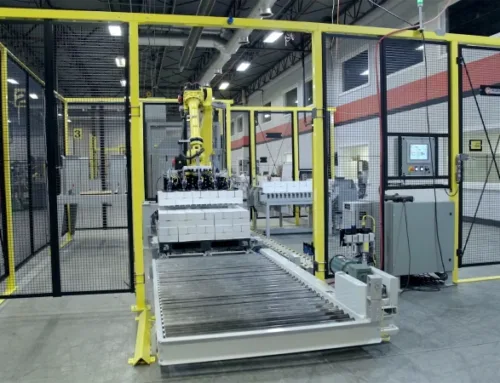
After (The Actual Benefit): By utilizing the Mdfence modular approach, installation becomes a predictable, rapid “cold work” process. Your technicians simply position the post, use a 14mm masonry bit to drill into the slab, drop in the M10 expansion bolts, and torque them down. This standardized process perfectly aligns with “build to print” requirements, allowing a two-man crew to deploy up to 160 feet of ANSI/RIA R15.06 compliant ロボット安全フェンス in a single shift. The robust anchoring ensures that heavy sliding doors and folding doors remain perfectly plumb over years of operation, eliminating the sagging that causes safety interlock misalignment.
| コンポーネント | 仕様 | Impact on System Integrator |
|---|---|---|
| Base Plate | Welded “Ear” Style, Q235 Steel | Prevents post tear-out during AGV or forklift collisions. |
| Floor Anchors | 4x M10 x 70mm Expansion Bolts | Meets ISO 14120 structural stability requirements without chemical epoxy. |
| Protective Cover | Two-piece ABS plastic | Eliminates snag hazards for material handling and protects threads from CNC coolants. |
Frequently Asked Questions: Anchoring Industrial Fencing
1. What size floor anchors are required for OSHA compliant robot safety fencing?
For standard industrial applications, we utilize M10 x 70mm (approx. 3/8″ x 2-3/4″) mechanical expansion bolts. Four bolts per post provide the necessary pull-out strength to meet ISO 14120 and OSHA requirements for fixed machine guarding.
2. Can we install expansion bolts in cracked or uneven concrete near CNC machines?
Mechanical expansion bolts require solid, uncracked concrete to generate friction. If your automotive assembly floor has severe spalling or is heavily saturated with cutting fluids, chemical anchors (epoxy) may be required to achieve the necessary load ratings.
3. How do base plate covers improve safety on the assembly line?
Exposed anchor bolts present a serious tripping hazard for operators and can shred the tires of pallet jacks. Our two-piece plastic covers completely enclose the hardware, creating a smooth profile that also prevents dirt and metal shavings from accumulating around the base.
4. What happens to the anchors if an AGV impacts the machine guarding panels?
Because the Mdfence system features a framed mesh design (20x30mm tubular frame) and Q235 steel, the energy from a 1600J impact is distributed across multiple posts. The extended base plates prevent the posts from acting as levers, ensuring the anchors remain securely lodged in the concrete rather than tearing out.
5. Do I need to re-drill anchors if I need to change my robotics layout?
When reconfiguring a dedicated manufacturing line, the modular fencing panels can be unbolted. The original expansion bolts can typically be cut flush with the floor, and new holes are drilled for the M10 anchors in the new layout position, ensuring 95% of your fencing asset is reused.