JA
JA  EN
EN  DE
DE  RU
RU  PT
PT  ES
ES  IT
IT 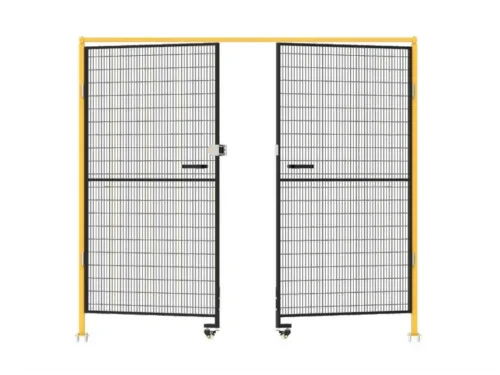

|
In high-speed automotive assembly and robotic integration, safety isn’t just a compliance checkbox—it’s a massive line item on your P&L. When an automated production line lacks certified perimeter protection, underwriters see a liability time bomb. A single incident where a worker bypasses a faulty interlock, or a forklift breaches a flimsy mesh panel near a KUKA robot, can trigger catastrophic workers’ comp claims and skyrocketing insurance premiums. Upgrading to a certified, impact-resistant physical barrier is the most direct route to mitigating these hazards and proving to your insurer that your facility operates at state-of-the-art safety standards. |
The Hidden Link Between OEE, Safety, and Insurance Premiums
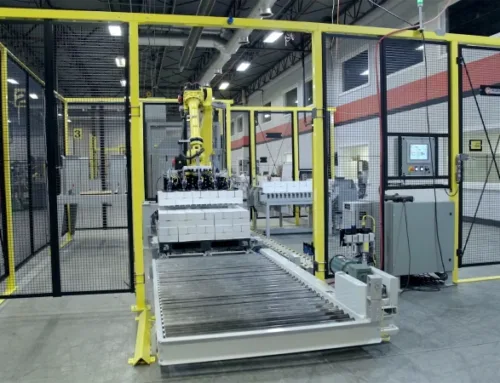
For EHS Managers and System Integrators deploying turnkey solutions, the question often arises: Does machine perimeter guarding reduce insurance costs? The short answer is an absolute yes. Insurance providers base their premiums on risk assessment. An automotive welding station or a CNC machining center operating with outdated, non-compliant fencing is a high-risk asset. By implementing an engineered 工業用安全フェンス system, you directly attack the root causes of workplace injuries and equipment damage, giving underwriters the verifiable data they need to lower your rates.
1. Eliminating the “Cheap Mesh” Liability
The Pain Point (Before): Many integrators try to cut corners by wrapping a new robotic cell in frameless wire mesh or locally welded iron. In a busy material handling area, a forklift lightly bumps the fence. The frameless mesh caves in, permanently deforming. Worse, standard 2″x2″ (50x50mm) mesh allows operators to reach their fingers through to clear a jammed servo motor without triggering a stop. This leads to OSHA citations and severe crush injuries—the exact scenarios that cause insurance premiums to explode.

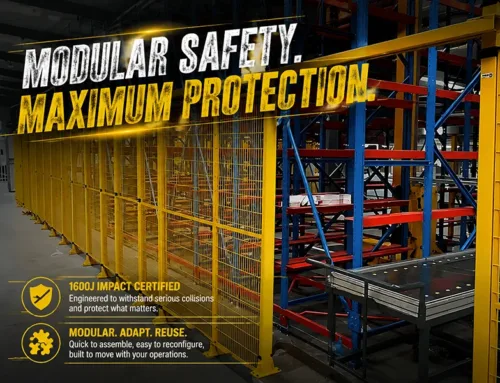
Our Logic (Why it works): The Mdfence system is built on a framed panel architecture. We use a 20x30x1.5mm tubular steel frame with flat-welded wire mesh. Constructed from Q235 carbon steel, the system is TUV certified to withstand up to 1600 Joules of impact—equivalent to stopping a 220 Lbs (100kg) object moving at 12.4 mph (20 km/h). Furthermore, our standard 0.78″ x 3.93″ (20x100mm) anti-climb mesh exceeds ISO 13857 finger-safe standards.
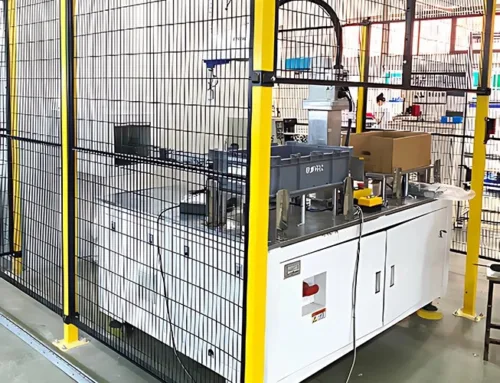
Actual Benefit (After): When the insurance auditor walks the floor, they see a rigid, ISO 14120 compliant barrier. The tight mesh allows you to legally install the fence just 4.7 inches (120mm) from the hazard, saving up to 7.5 sq ft per linear meter of highly expensive factory floor space. You prevent forklift penetrations, eliminate finger-reach hazards, and secure a stronger negotiating position for your insurance renewals.
2. Foolproof Active Safety Integration
The Pain Point (Before): A physical barrier alone isn’t enough for modern automation. If your 機械警備システム can’t reliably integrate with your PLC/HMI, you have a problem. Field workers often use hand drills to mount Omron or Pizzato interlock switches onto painted posts. This creates metal shavings, destroys the powder coating (leading to rust), and often results in misaligned switches. When a heavy door sags, the interlock key misses the slot, causing phantom machine stops that destroy your line’s OEE.

Our Logic (Why it works): Mdfence transforms the fence into an active node of your machine safety circuit. We provide pre-engineered safety interlock carriers (e.g., KKCK-LCK-B-D4NL-SET) designed specifically for industry-standard switches. Whether you are using a 10-foot double sliding door for an AGV pathway or a standard hinged door for operator access, our heavy-duty bearing rails and rigid frames ensure zero door sag over millions of cycles.
Actual Benefit (After): Seamless PLe/SIL3 integration. When an operator opens the door, the mechanical separation immediately triggers a Safety Torque Off (STO) command to the robotic drives. No false trips, no rust, and zero bypassing. Insurers reward facilities that utilize foolproof, redundant safety logic over manual administrative controls.
3. Agile Reconfiguration Without “Hot Work” Liabilities
The Pain Point (Before): Automotive manufacturing lines are dynamic. When a new dedicated manufacturing line is installed, old welded fences have to be cut out with angle grinders. This requires “hot work” permits, creates fire hazards (sparks near oil and coolants), and forces the entire section to shut down. The old fence becomes scrap metal, and you have to buy a completely new system.

Our Logic (Why it works): Mdfence is a 100% modular, cold-assembly system. Panels connect to the 60x60mm posts using high-strength steel fixing rings and M8 flange bolts. There is no drilling or welding required on-site.
Actual Benefit (After): You achieve a 95% asset reuse rate. If a CNC center needs to be expanded, two maintenance technicians can unbolt the ロボット安全フェンス and reassemble it in the new layout within hours—using only hand tools. No sparks, no fire watches, and no production halting. This operational agility drastically lowers your Total Cost of Ownership (TCO) while maintaining continuous safety compliance.
Comparing Guarding Methods in Automotive Automation
| メートル | Traditional Welded / Frameless Mesh | Mdfence Modular System |
|---|---|---|
| 衝撃抵抗性 | Low (Prone to elastic deformation & failure) | High (1600 Joules TUV Certified) |
| ISO 13857 Compliance | Fails (Large 50x50mm gaps require 850mm safe distance) | Passes (20x100mm gaps allow 120mm safe distance) |
| インターロック統合 | Requires field drilling (Causes rust & misalignment) | Pre-engineered mounting plates (Perfect alignment) |
| Asset Reuse Rate | 0% (Must be cut and scrapped) | 95%+ (Bolt-together modularity) |
よくある質問
1. How does the 20x100mm mesh size affect our floor space layout?
According to ISO 13857, larger mesh sizes require the fence to be placed further away from the hazard to prevent arm reach. Our 20x100mm “finger-safe” mesh allows the guarding to be installed as close as 4.7 inches (120mm) to the machine, saving valuable square footage in tight automotive assembly lines.
2. Can this fencing withstand an impact from a forklift in our material handling area?
Yes. The Mdfence system utilizes Q235 carbon steel and a framed panel architecture that is certified to withstand 1600 Joules of impact energy. Instead of shattering, the steel undergoes plastic deformation to absorb the kinetic energy, preventing the forklift from breaching the robotic cell.
3. Do you support integration with standard safety PLCs and interlock switches?
Absolutely. We provide specific lock carriers and mounting plates for industry-standard switches like Omron D4NL and Pizzato. This allows for seamless integration into your machine’s Safety Torque Off (STO) circuits without the need for on-site drilling.
4. Is hot work required to install or modify the perimeter guarding?
No. The entire system is modular and assembles using M8 flange bolts and fixing rings. This “cold work” assembly means you do not need hot-work permits, and you can reconfigure the layout around CNC machines without stopping adjacent production.
5. Will upgrading to this system guarantee a reduction in our insurance premiums?
While final premiums are determined by your specific underwriter, upgrading to an ISO 14120 and OSHA compliant physical barrier with active safety interlocks provides documented proof of risk mitigation. This heavily influences risk assessments, typically leading to more favorable insurance rates and avoiding costly OSHA fines.