JA
JA  EN
EN  DE
DE  RU
RU  PT
PT  ES
ES  IT
IT 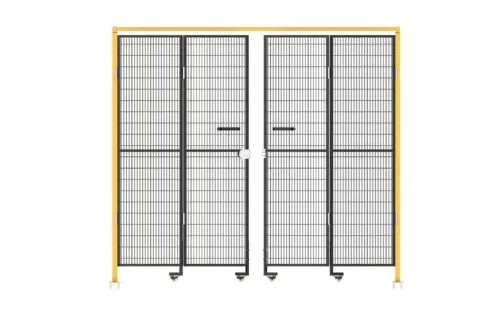

|
Deploying automated scrap conveyors, outdoor robotic palletizers, or AGV transit lanes between factory halls exposes your critical equipment to harsh elements and heavy yard traffic. Standard indoor fencing rusts within months, while cheap chain-link sags the moment a 10,000 lbs forklift bumps it. You need a physical barrier engineered for high-impact resistance and environmental endurance. |
The Reality of Guarding Machinery Outside the Plant
The Pain Point: As automotive plants and automation integrators expand their footprints, equipment inevitably spills into outdoor or semi-outdoor logistics yards. Whether it’s an outdoor CNC chiller unit, a stamping scrap conveyor, or an AGV path connecting two assembly halls, these areas are chaotic. Using standard commercial fencing results in rapid corrosion from humidity and UV exposure. Worse, when an unguided forklift carrying heavy raw materials clips a flimsy frameless mesh, the fence snaps, sending shrapnel into your expensive drives or triggering unnecessary emergency stops.
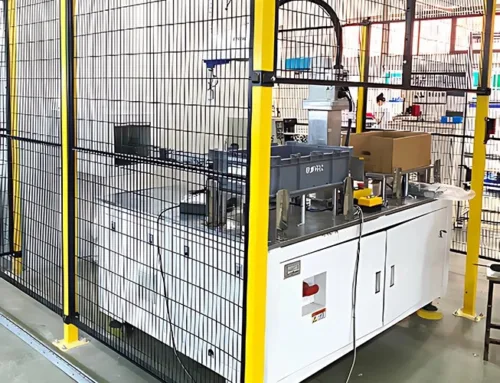
Why It Works: The Mdfence 工業用安全フェンス system is built on a foundation of high-tensile Q235 carbon steel. But raw steel isn’t enough for outdoor applications. Every 60x60mm post and 20x30mm framed panel undergoes a rigorous epoxy polyester electrostatic powder coating process that passes the ISO 9227 salt spray test. Instead of just painting the surface, the coating chemically bonds to the metal, resisting industrial oils, solvents, and weather degradation. Furthermore, the fully welded framed architecture provides 4x the out-of-plane stiffness of standard wire mesh.

The Actual Benefit: You eliminate mid-year maintenance headaches and replacement costs. The rigid framed panels do not sag like hammocks when leaned on or bumped, maintaining a strict, ISO 14120 compliant perimeter. Your outdoor automation cells remain protected behind a high-visibility safety yellow line that withstands both the weather and the chaotic reality of yard logistics.
Surviving Yard Traffic: Impact Resistance vs. The Elements
The Pain Point: In an active loading yard, forklift impacts are not a matter of “if,” but “when.” Brittle cast iron or aluminum extrusion guards will shatter or permanently deform upon impact. If a structural failure occurs near an active automated line, you risk severe secondary injuries to personnel and catastrophic damage to your robotics integration.
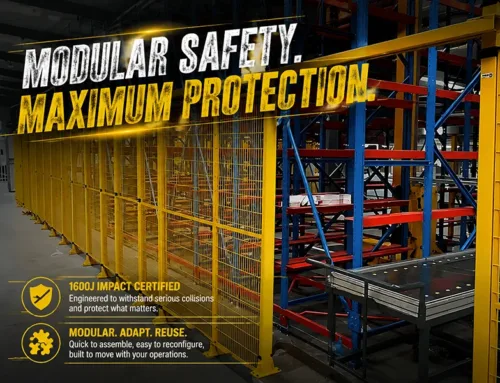
Why It Works: 私たちの 機械警備システム utilize the ductile nature of Q235 steel. When subjected to a heavy blow, the system is engineered to undergo plastic deformation (bending) rather than brittle fracture. Anchored to the concrete by four M10x70mm expansion bolts, the system dissipates kinetic energy efficiently. It is certified to withstand a 1600 Joules impact—equivalent to stopping a 220 lbs mass moving at 12.4 mph dead in its tracks. To protect the anchor points from pooling water and yard debris, we utilize specialized post base protective covers.

The Actual Benefit: In the event of an accidental collision, the fence acts like an automotive crumple zone. It absorbs the kinetic energy, keeping the 10,000 lbs forklift away from your multi-million dollar robotic cell. You replace a single bent panel in 10 minutes, rather than replacing a destroyed $50,000 piece of machinery.
Access Control for Outdoor Automated Cells
The Pain Point: Outdoor material handling often requires wide access points for forklifts to drop off pallets of parts. Traditional wide swing doors sag under their own weight. When the wind blows or the hinges drop, the door misaligns with the safety interlock switch (like an Omron D4NL or Pizzato). This misalignment breaks the Safe Torque Off (STO) circuit, causing phantom machine stops and plummeting your OEE (Overall Equipment Effectiveness).
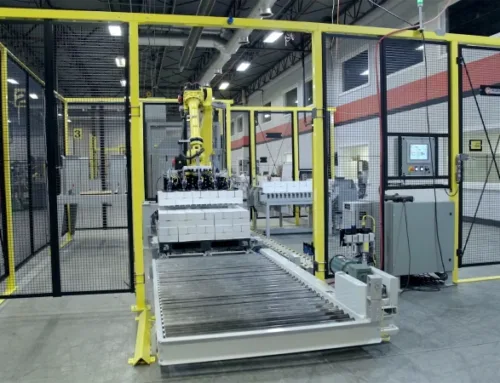
Why It Works: For wide outdoor access, we deploy heavy-duty sliding doors utilizing top-hung bearing rails or bottom rollers. These systems eliminate the gravity-sag issues of hinged doors. More importantly, our ロボット安全フェンス includes pre-engineered lock carriers (e.g., KKCK-LCK-B-D4NL-SET). These solid steel mounting plates are designed specifically for mainstream PLe/SIL3 interlocks, ensuring precise alignment every time the door is closed.

The Actual Benefit: Your forklift operators get a massive, unobstructed entryway for material loading, while your PLC receives a rock-solid, uninterrupted safety signal. You eliminate nuisance trips and maintain continuous production flow, even in semi-outdoor environments subject to wind and vibration.
Cold Assembly: Rapid Deployment Without Hot Work
The Pain Point: Need to build a fence around a new outdoor compressor or AGV charging station? Hiring a local fabrication shop means dragging welding rigs into the yard, securing hot work permits, and dealing with flying sparks near combustible logistics packaging. Plus, field welds destroy any pre-applied anti-corrosion coating, guaranteeing rust within weeks.
Why It Works: The Mdfence system is 100% modular. Panels connect to posts using high-strength steel fixing rings and M8 flange bolts. There is absolutely no drilling, tapping, or welding required on-site. It is a pure “cold assembly” process.
The Actual Benefit: Two technicians equipped with nothing but hex wrenches and a hammer drill can secure a 150-foot perimeter in a single shift. Because the factory-applied powder coating is never breached by field welding, the system’s weather resistance remains perfectly intact, delivering a true turnkey solution for system integrators.
Frequently Asked Questions (FAQs)
Q1: Can Q235 carbon steel really survive outdoor industrial environments?
Yes. While Q235 is the structural core providing impact resistance, its outdoor survivability comes from our epoxy polyester electrostatic powder coating. This coating passes strict ISO 9227 salt spray tests, effectively sealing the steel from humidity, rain, and corrosive industrial environments.
Q2: How does the fence handle the impact of a forklift in an outdoor yard?
The system is TUV certified to absorb up to 1600 Joules of impact energy. Thanks to the ductile nature of Q235 steel and the heavy-duty M10 expansion bolts, the fence will bend and absorb the kinetic energy rather than shattering or tearing out of the concrete, protecting the machinery behind it.
Q3: We use Omron D4NL safety switches on our robotic cells. Do we need to drill mounting holes on-site?
No. Drilling on-site breaks the anti-corrosion coating. We provide pre-engineered lock carriers (mounting plates) specifically designed with the correct hole patterns for Omron, Pizzato, and other standard interlocks, allowing for a bolt-on, cold-assembly installation.
Q4: What is the best door option for a 10-foot wide forklift access point outdoors?
For spans exceeding standard single hinged doors, we recommend our double sliding door systems. They utilize heavy-duty bearing rails that prevent sagging over wide spans, ensuring smooth operation and perfect alignment with safety interlocks, regardless of wind or heavy use.
Q5: If we need to re-route our AGV paths next year, can this fence be moved?
Absolutely. The modular, bolt-together design means you have a 95%+ asset reuse rate. You simply unbolt the panels, remove the anchors, and reassemble the system in the new layout without any destructive cutting or grinding.