JA
JA  EN
EN  DE
DE  RU
RU  PT
PT  ES
ES  IT
IT 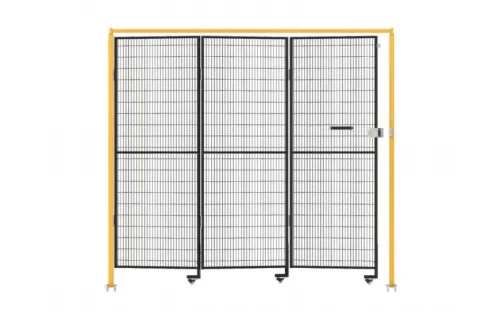

|
Your multi-million dollar automation project is on the line. The robot is programmed, the PLC logic is flawless, but the entire system is held up at the Factory Acceptance Test (FAT) because the safety guarding was an afterthought. On-site welding, drilling, and makeshift brackets for safety interlocks are burning time and budget, and the EHS manager isn’t signing off. A simple fence has become your most complex problem. |
Safety fencing for automated assembly lines? It’s not a barrier, it’s a critical subsystem.
In modern manufacturing, an automated assembly line is a symphony of precision components: six-axis robots, high-speed conveyors, PLC controls, and vision systems all working in perfect concert. Yet, system integrators and plant engineers often treat the most critical safety component—the machine guarding—as a commodity item sourced from a local fabricator or a generic catalog. This approach frequently leads to on-site chaos, project delays, and compliance failures.
The reality is that your safety barrier isn’t just a fence; it’s the physical interface for your entire safety logic. It needs to be as meticulously planned and engineered as the robot it protects.
The Common Pitfall: When “Good Enough” Fencing Derails Your Project
Imagine this scenario: The robot cell is mechanically complete. You’ve purchased standard wire mesh panels. Now, the real problems begin.
- The Integration Scramble: Your safety spec calls for an Omron D4NL or a Pizzato safety interlock. The generic fence posts have no mounting points. Your technicians are now forced to drill into the fresh powder coating, compromising the corrosion resistance, and fabricating custom brackets on-site. This “hot work” requires special permits and introduces fire hazards.
- The Compliance Trap: The EHS manager arrives with a copy of ISO 13857. The 50x50mm mesh you installed requires a safety distance of 200mm or more to be “finger safe.” Your entire layout, which was planned for a compact footprint, is now non-compliant. The fix? Relocating the entire cell, a costly and time-consuming rework.
- The Durability Doubt: A minor collision from a maintenance cart bends a flimsy, frameless mesh panel. The door hinges sag after a few weeks of use, causing nuisance trips in the safety circuit and dragging down the line’s Overall Equipment Effectiveness (OEE).
This isn’t just an inconvenience; it’s a direct threat to your project timeline, budget, and reputation with your end client.
From Afterthought to Asset: The Mdfence Engineered Approach
A true robot safety fencing system is designed from the ground up to prevent these issues. It’s a modular, pre-engineered solution that anticipates the demands of automation integration.
1. Built for Industrial Realities: Structure and Strength
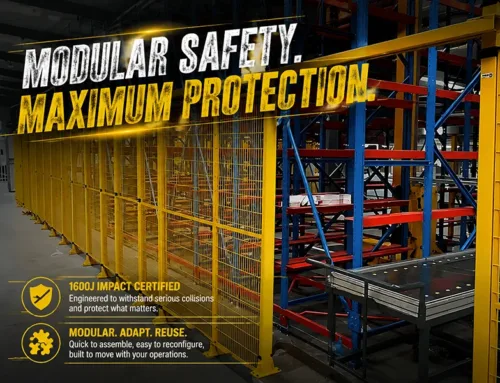
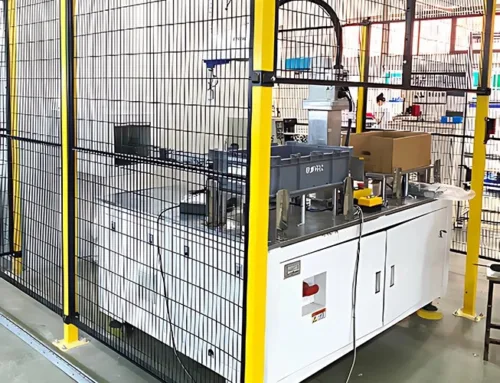
Unlike generic fencing, the Mdfence system is constructed with industrial-grade Q235 carbon steel. The core of its strength lies in the fully welded 20x30mm steel tube frame around every mesh panel. This isn’t just wire mesh; it’s a rigid structural component. This design is certified to withstand impacts of up to 1600 Joules—enough to stop a 220 lbs part moving at 12 mph—preventing a catastrophic failure from a dropped workpiece or robot malfunction.

2. Designed for Integration: The “Plug-and-Play” Advantage
The most significant time-saver is eliminating on-site fabrication. The Mdfence system is engineered to be a physical platform for your safety components.
We provide pre-engineered セーフティ・インターロック・キャリア—mounting plates specifically designed for industry-standard switches like the Omron D4NL, Pizzato, or Schmersal. Your technician simply bolts the switch on. No drilling, no welding, no guesswork. This ensures perfect alignment and a clean, professional installation that will pass any EHS audit.

3. Compliance by Design: Saving Floor Space and Headaches
The standard 20x100mm mesh aperture is a deliberate engineering choice. According to ISO 13857, this narrow opening is “finger-safe,” allowing the barrier to be installed as close as 120mm (4.7 inches) from the hazard. Compared to larger mesh that can require a standoff of 850mm (33.5 inches), our design can save you over 7 square feet of precious floor space for every 10 feet of fence length. In a dense factory layout, this is the difference between a workable cell and a blocked aisle.
The Result: Predictable, Rapid Assembly
With a modular 機械警備システム, the on-site workflow is transformed. Instead of a multi-day fabrication project, it becomes a simple mechanical assembly. Two technicians with basic hand tools can erect hundreds of feet of fencing in a single shift. There are no fumes, no fire hazards, and no production downtime for adjacent lines. It’s a “cold assembly” process that respects your timeline and your facility’s operational needs.

Case in Point: An Automation Integrator’s Challenge Solved
A client, GBM Automation, needed to guard a complex multi-station assembly line. Their CAD drawings were precise, the layout was tight, and their end-client specified the exact Pizzato and Omron safety interlocks to be used. A generic solution would have meant weeks of costly on-site modifications.
Instead, we delivered a complete Mdfence kit based on their CAD files. The delivery included every post, panel, and door, plus the specific pre-drilled lock carriers for their chosen interlocks. The result? The integrator saved over 30% on installation time, eliminated on-site fabrication costs, and passed the end-client’s rigorous EHS acceptance test on the first attempt.
For your next automated assembly line project, don’t let the safety fence be a source of risk. Choose an engineered 機械警備システム that protects your people, your equipment, and your project’s profitability.
よくある質問
1. How does the Mdfence system integrate with our safety PLC and specific interlocks like Schmersal or Allen-Bradley?
Our system is designed for seamless integration. We offer a range of pre-engineered mounting plates, or “Safety Interlock Carriers,” that are compatible with all major safety switch brands, including Schmersal, Allen-Bradley, Omron, Pizzato, and more. These carriers bolt directly onto our door posts and panels, ensuring precise alignment and eliminating the need for on-site drilling or welding. This allows the fence door to act as a reliable input to your safety PLC’s control circuit.
2. Our automated line has a complex layout with conveyor pass-throughs and 45-degree angles. Can your system accommodate this?
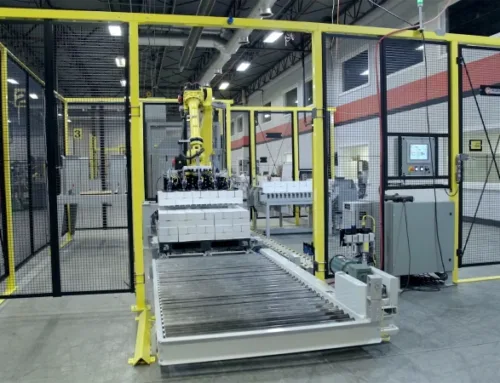
Absolutely. Mdfence is a fully modular system. We can provide panels in a wide variety of standard widths and can create custom-sized panels to fit any layout. For conveyors, we design and supply “Tunnel Guards” that enclose the opening, complying with ISO 13857 safety standards to allow product passage while preventing human access. Our adjustable corner brackets easily accommodate any angle, not just 90 or 45 degrees, ensuring a perfect fit for complex cell geometries.
3. What documentation do you provide to support our risk assessment and EHS compliance verification?
We provide comprehensive technical documentation to support your safety and compliance efforts. This includes detailed CAD drawings (3D STP files) for layout planning, product specification sheets with material data (Q235 steel) and performance ratings (e.g., 1600J impact resistance), and installation manuals. We also provide documentation on our compliance with key international standards like ISO 14120, which is essential for your risk assessment process.
4. Our end-client is a major automotive OEM with very high standards for fit and finish. How does Mdfence compare to a custom-welded solution aesthetically?
Mdfence offers a superior fit and finish to typical on-site welded solutions. All components are manufactured in an ISO 9001 certified facility with automated welding and a high-quality electrostatic powder coating process (RAL 1023 Safety Yellow for posts, RAL 9005 Jet Black for panels). The result is a consistent, professional appearance with no weld spatter, uneven paint, or sharp edges. The black mesh offers excellent visibility into the cell, while the yellow posts provide a clear visual warning, meeting the high aesthetic and safety standards of world-class manufacturing facilities.
5. We have a tight project timeline for a new robot cell. What is the typical lead time for a standard configuration?
We maintain a significant inventory of all standard components, including posts, panels in common sizes, doors, and hardware. For standard configurations, we can often ship within a few business days of order confirmation. This rapid availability is a key advantage over custom fabrication, which can have lead times of several weeks, and helps our system integrator partners meet even the most aggressive project deadlines.