JA
JA  EN
EN  DE
DE  RU
RU  PT
PT  ES
ES  IT
IT 
Walk onto the floor of any major Waste Recovery Storage facility. Look at the sorting lines. Heavy loaders are dropping concrete and scrap metal. Conveyor belts are running. Massive forklifts are operating in tight aisles right next to the Industrial Material Handling Automation. It is loud, crowded, and dangerous.

What do most plant managers use to separate the heavy moving machinery from the walking paths? They hire a local guy to weld some cheap wire mesh, or they bolt down flimsy angle iron.
It is a complete failure. A forklift bumps the fence, and the entire frame caves in. The flimsy hinge sags, trips a false signal on the safety switch, and shuts down your entire automated line. You lose an hour of production because of cheap hardware.
Then the EHS auditor walks in. They look at the huge holes in your locally welded mesh. Because an operator can easily stick an arm through those gaps, regulations force you to push that fence 850mm away from the hazard.
Think about that math. You lose almost a full meter of floor space for every single machine. In a facility where space dictates capacity, you are wasting premium square footage on empty air.

It gets worse when you need to change your layout. You freeze operations. Workers apply for hot work permits. Two guys stand out there with angle grinders, throwing sparks and dust near flammable waste. They cut the old fence down, throw it in the scrap bin, and leave you with zero salvage value. It is slow, dangerous, and a massive waste of budget.
The Engineering Logic: Physical Constraints Over Consumables
You need to stop treating safety barriers like disposable wire. You need risk control engineering.
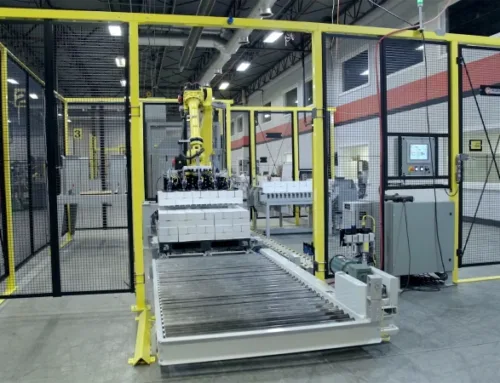
Look at machine guarding systems built on fully welded frames and drill-free snap connections. The core logic is brute-force physical constraint.
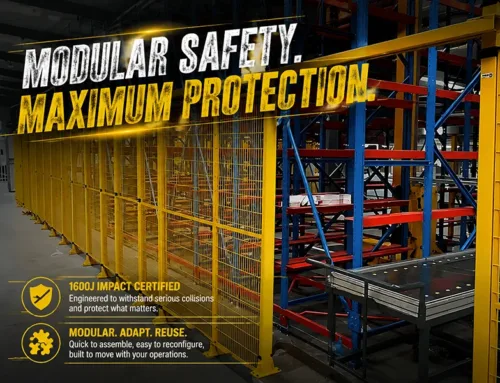
The skeleton relies on Q235 cold-rolled carbon steel , utilizing a 20x30x1.5mm rectangular tubular frame. It is engineered to absorb 1600 Joules of kinetic energy. That means it can intercept a 100kg object moving at 20km/h. When a load shifts and hits it, the steel uses plastic deformation to absorb the impact and push the energy down into the concrete base. It does not snap like aluminum.

The Real Math: Shrinking the Safety Gap
The actual financial return happens at the mesh level.
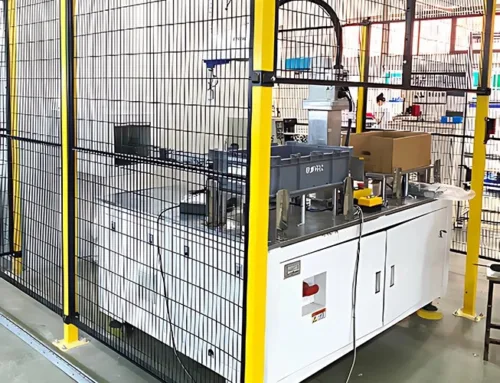
Shrink the mesh down to a 20x100mm finger-safe gap. Because fingers cannot penetrate the barrier, ISO 13857 calculations allow you to drop the fence a mere 120mm from the hazard.
You eliminate the 850mm dead zone. You instantly reclaim floor space around your Heavy Duty Logistics Equipment.
Where material needs to pass through, you do not just cut a hole in the wire. You use customized Tunnel Guards. The Waste Recovery Storage material flows out on the belt, but the geometry stops operators from reaching in.
Future maintenance becomes cold work. No sparks, no grinders. A worker takes an Allen wrench, removes four M8 screws, and pulls the panel out in 10 minutes. You adjust your line, clip the panel back in, and restart production.

The Boundaries: Where This Fails
Do not pretend this is magic. Upgrading your guarding has hard constraints.
- High Initial Cost: The upfront price per meter is much higher than buying scrap iron from a local welder. If your procurement team only looks at the lowest price per kilogram, this project will fail.
- Strict Anchoring Requirements: You cannot bolt this into cheap asphalt or weak floors. It requires a hard concrete base strong enough to handle M10 expansion bolts pulling on 140x140x5mm welded plates.
- Zero Destructive Modification: You cannot let maintenance guys drill random holes into the posts to mount switches. That destroys the continuous stress tolerance and ruins the ISO 9227 anti-corrosion layer.
- Overkill Warning: If you just need to guide truck drivers through an empty outdoor yard without any moving machinery, do not buy this. Using a 1600J impact-rated system for basic crowd control is a complete waste of money.
Stop Wasting Your Budget
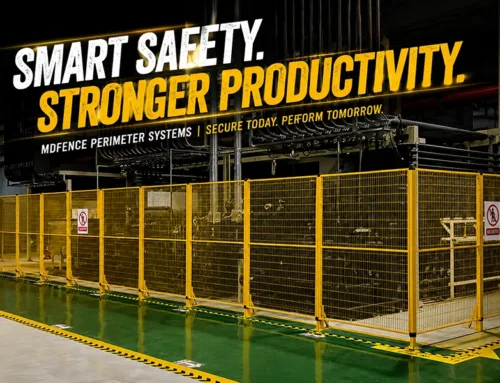
If you are tired of replacing bent wire mesh every month and losing floor space to compliance rules, it is time to engineer your boundaries correctly.
Watch our application video below to see how this system handles real impacts in heavy industrial environments. Then, click the inquiry button to get a customized equipment selection list for your facility layout.