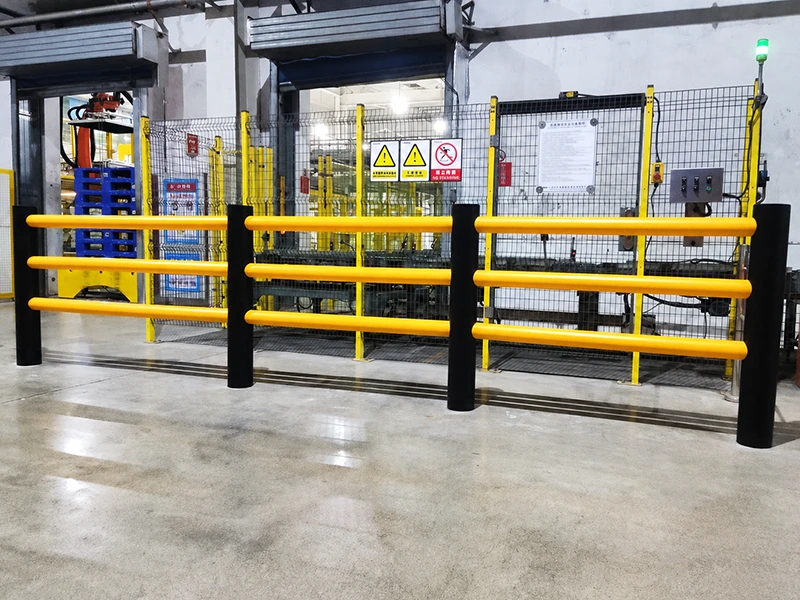
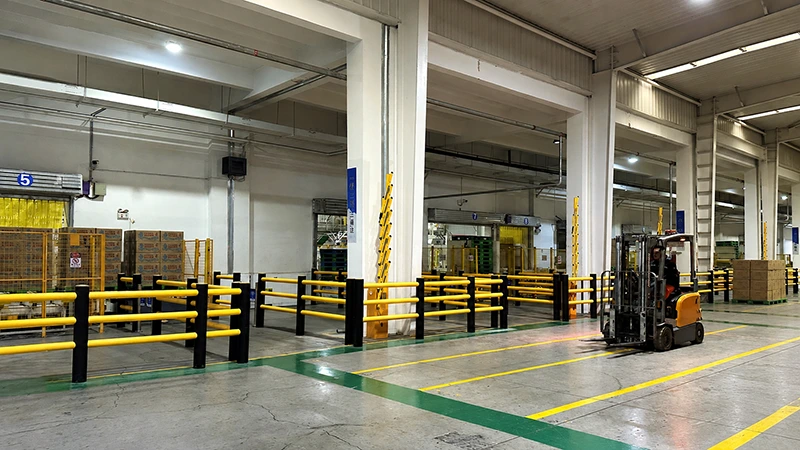
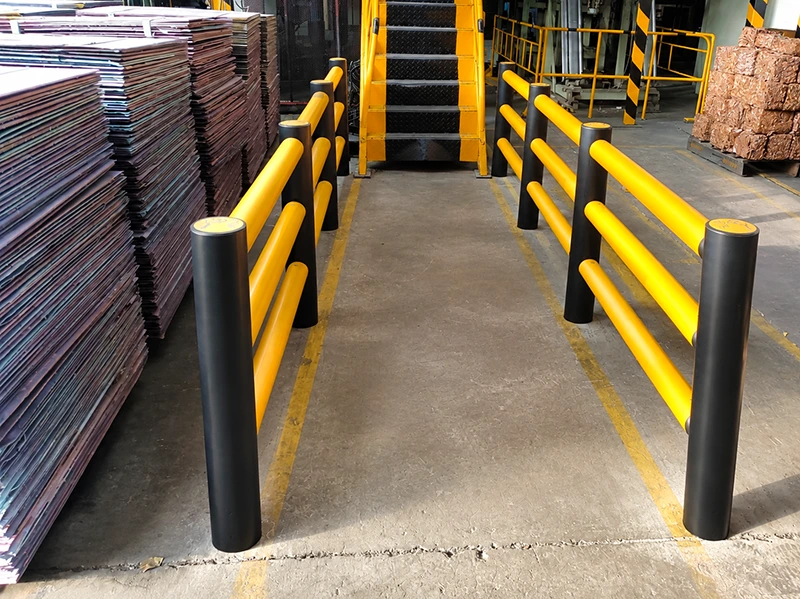
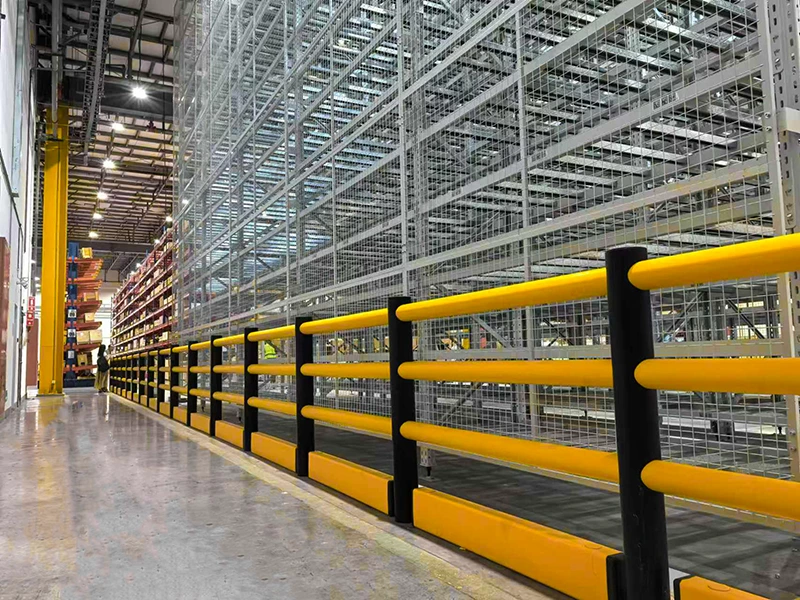
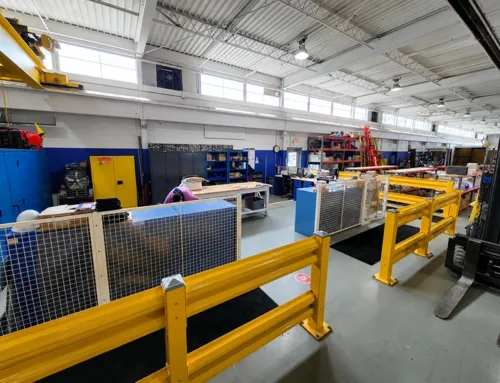
Impact Resistant Barrier / FCBarrier Flexible Safety Barrier
Impact Resistant Barrier for Forklift Aisles: Cut Floor Damage in Warehouse Collisions
When steel barrier systems transfer forklift impact into anchor bolts and concrete, operations pay twice: slab repair and downtime. FCBarrier is an Impact Resistant Barrier built to absorb energy, reduce residual force at the base, and protect floor integrity in active warehouse and production aisles.

Why steel barriers fail in floor-sensitive forklift zones
In food plants, logistics centres, and warehouse aisles, the old answer was a rigid steel barrier. The problem is not just visible damage. After impact, steel can transmit force into the floor, pull anchor bolts, crack concrete, and block the lane while repairs are carried out. FCBarrier changes that pattern by using a polymer body that absorbs impact and rebounds instead of turning the slab into the shock absorber.
| Old rigid barrier | Impact Resistant Barrier |
|---|---|
| Force goes into floor anchors and concrete | Residual force is reduced at the base and floor interface |
| Anchor bolts can loosen or pull out | Modular floor-anchored base keeps protection serviceable |
| Concrete repair causes lane closure | Fast repair or replacement supports active operations |
| Steel is rigid and maintenance heavy | Polymer safety barrier is corrosion free, low maintenance, and self-rebounding |
Why FCBarrier fits the problem
Absorb impact before it reaches the slab
FCBarrier uses an ARMORFLEX polymer structure to absorb energy and rebound after a strike. That matters in forklift aisles because the real cost is often not the rail itself, but the cracked concrete, damaged fixings, and rework around the lane. The goal is to protect racking, loading bays, and floor integrity at the same time.

Modular layout for live facilities
For retrofits, the key is not only resistance, but install speed. FCBarrier is designed for modular installation, so operators can add protection in existing DC aisles, loading zones, and machine edges without tearing the site apart. That helps reduce accident downtime and keeps the retrofit scope controlled.

Evidence from structure, not slogans
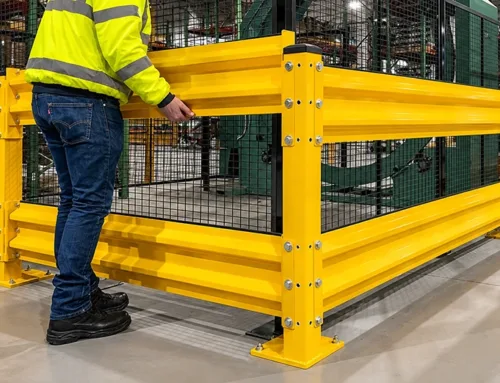
The product family covers single-rail, double-rail, traffic-rail, and column-protector style layouts. That gives specifiers options for warehouse safety barrier, forklift safety barrier, pedestrian barrier, and loading dock protection projects. In PAS 13-style evaluation, the important question is how much force reaches the floor and fixings; that is exactly where a flexible polymer system is built to perform differently from steel.

Where this barrier makes the most sense
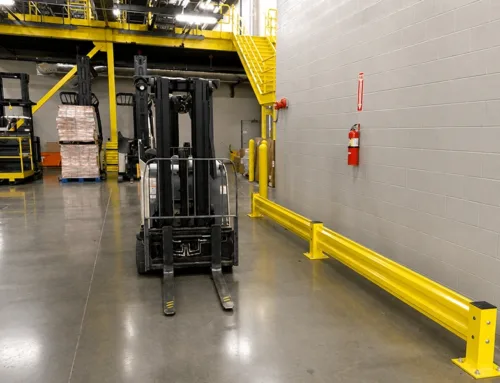
- Warehouse safety barrier protection along forklift aisles and racking runs
- Loading dock protection where vehicles, pallets, and staff share the same edge
- Manufacturing plant safety for machine edges, pedestrian segregation, and retrofit zones
- Food & beverage safety barrier projects where corrosion free, low maintenance protection is valued
- Distribution centre safety upgrades that need modular installation without long shutdowns
For sites replacing steel barrier systems, the practical win is simple: less transferred force, less floor damage, less lane closure, and a clearer path to safer daily operations.
What to look for in a collision protection upgrade
Ask for impact rating data, the expected residual force at the floor interface, install method, and how the system behaves after repeated strikes. In a live warehouse, the best barrier is the one that protects the slab, keeps the aisle open, and can be serviced quickly.
Need an Impact Resistant Barrier plan for a forklift zone?
Send SGF your aisle width, traffic type, and floor condition. We will map the FCBarrier layout to the zone that needs protection most.