JA
JA  EN
EN  DE
DE  RU
RU  PT
PT  ES
ES  IT
IT WAREHOUSE SAFETY | OSHA-ORIENTED LAYERED PROTECTION
双轨护栏助力仓库审计准备和叉车隔离
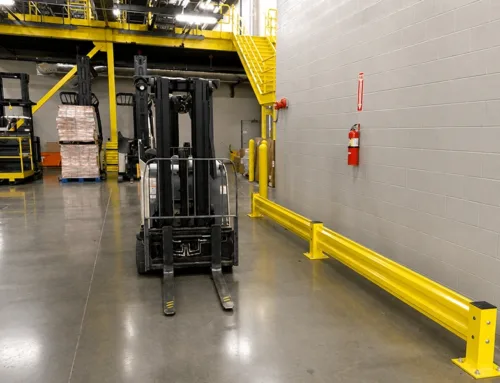
A double rail guardrail gives warehouse operators a visible, floor-mounted layer of passive forklift impact protection around racks, equipment and pedestrian routes. Hsafety combines Q235 steel, modular bolted assembly and configurable finishes to create auditable physical boundaries across distribution centers and multi-site industrial networks.
Why Compliance and ESG Teams Need Physical Evidence
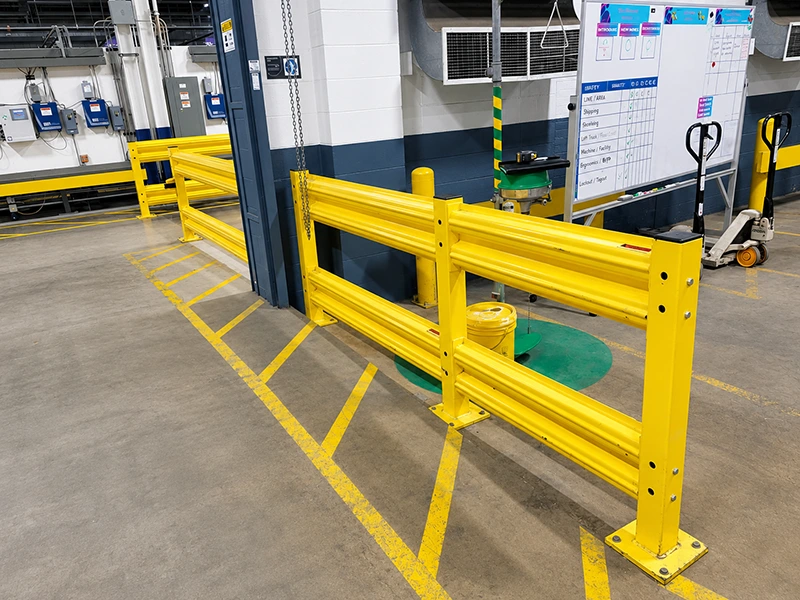
For a warehouse, distribution center or parcel-delivery network with 1,500+ sites, a safety audit cannot rely only on training records or active warning systems. Forklift traffic still needs a visible workplace safety barrier that separates people, vehicles and fixed assets. Steel pipe railing welded on site is difficult to standardize; concrete bollards can obstruct access and do not form a continuous boundary; rope or strap barriers provide little collision protection. These legacy options also make it harder to show a repeatable control method across locations.
| Audit or deployment requirement | Hsafety double rail guardrail response |
|---|---|
| Passive separation of forklift and pedestrian routes | Two horizontal corrugated steel rails create a clear physical boundary around aisles, loading dock protection zones and equipment edges. |
| Consistent hardware for network rollout | Q235 carbon steel beams, square posts and floor-mounted base plates support a repeatable modular specification, while lengths and colors can be adapted by site. |
| Evidence of controlled installation | Bolted rail-to-post connections and anchor-bolt base plates make the installed barrier visible, inspectable and replaceable in sections. |
| Integration with a complete protection stack | Physical collision protection can work alongside forklift alerts, access controls, traffic markings and incident procedures rather than replacing active safety systems. |
Structure, Parameters and Site Evidence
1. Double rails turn a risk boundary into a visible control
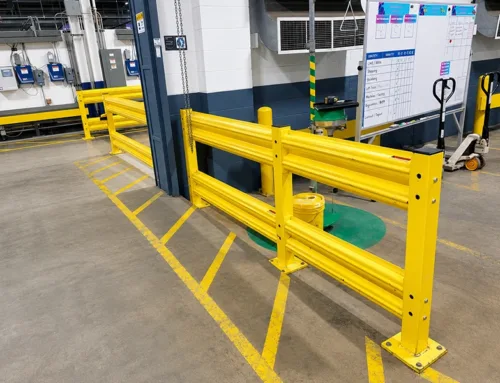
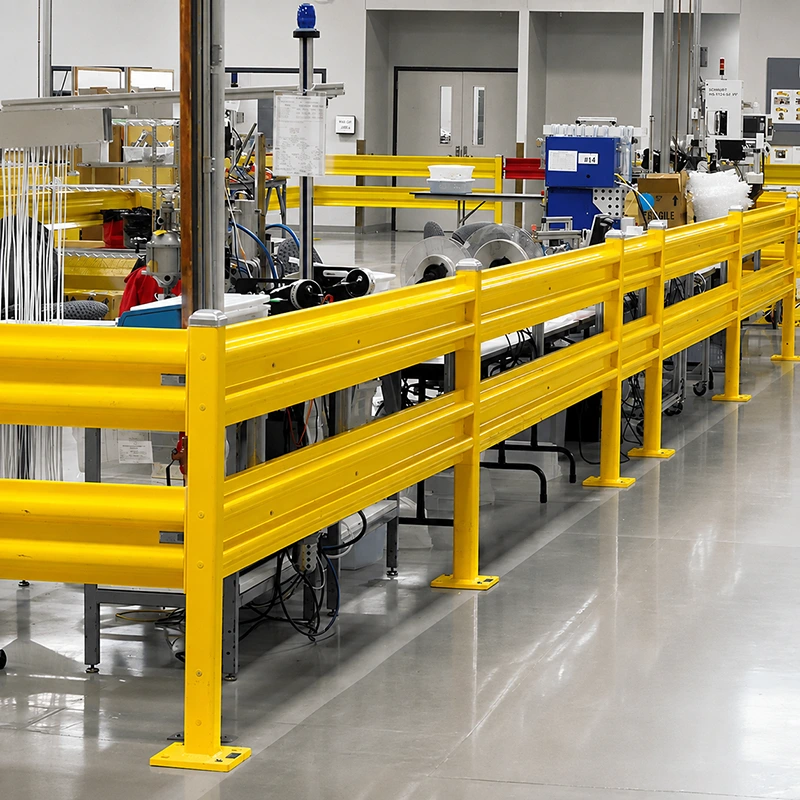
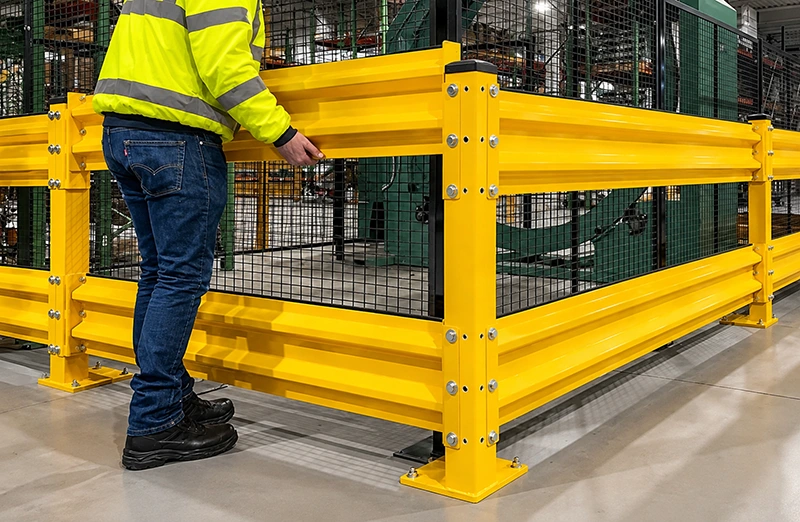
In rack-end protection and pedestrian-vehicle separation areas, the double rail guardrail configuration presents two continuous impact members between moving equipment and the protected side. The corrugated profile uses wave peaks, valleys and formed bends to add structural stiffness. Hsafety is intended for warehouse and industrial guard rail applications; final impact performance, anchor selection and replacement decisions must follow the project engineering review rather than an unverified generic rating.
2. Floor anchoring supports repeatable inspection
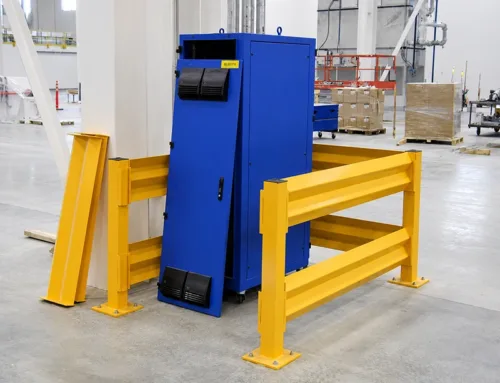
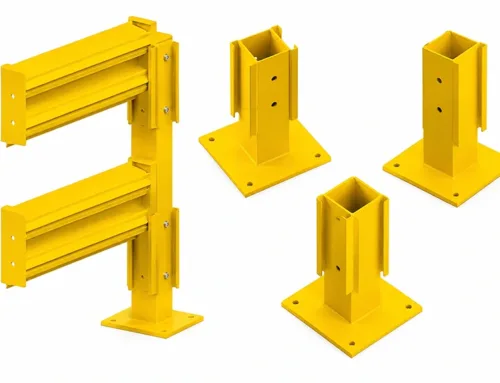
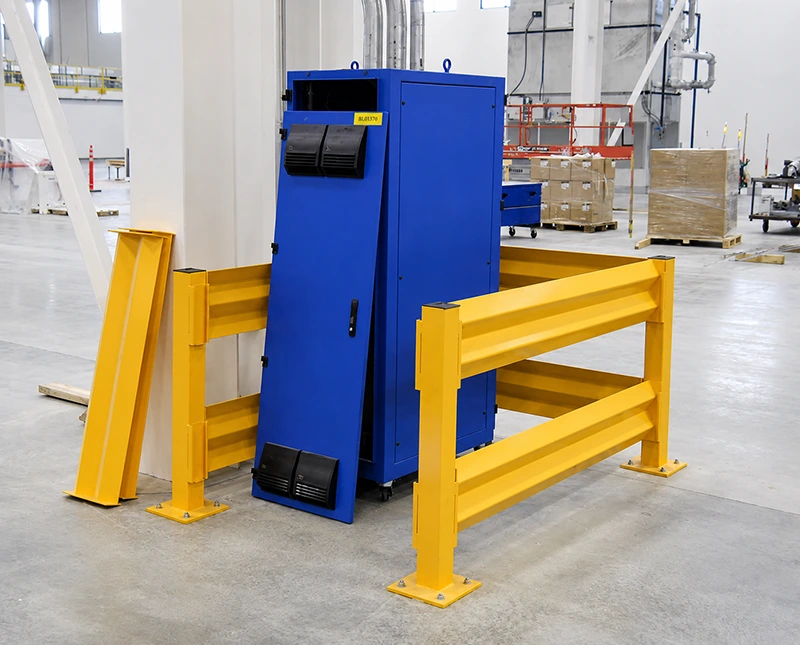
The photographed installation shows square posts, base plates and bolted connections around a fixed industrial cabinet. Common project data uses approximately 1,000 mm overall height, 80 × 80 × 6 mm square-tube posts and 160 × 160 × 16 mm base plates, with anchor bolts into a concrete floor. These are recorded scheme values, not a substitute for the final drawing: concrete thickness, edge distance, anchor type and local loads should be confirmed before installation. The result is a floor-mounted guardrail that can be inspected and repaired without site welding.
3. Modular details make network standards practical
Hsafety uses Q235 steel guardrail beams with a double-rail or other project-selected configuration. Reference data includes roughly 300–310 mm rail width, 85 mm wave height, 3 or 4 mm thickness and common 1,500 mm modules; custom length guardrail sections can close the final gap in an irregular zone. Powder coated guardrail finishes support yellow safety visibility, while hot-dip galvanized steel and reflective tape guard rail options can be discussed for the environment. Color and site identification markings can be specified to match a customer’s brand and ESG reporting system.
Where the Passive Layer Delivers the Most Value
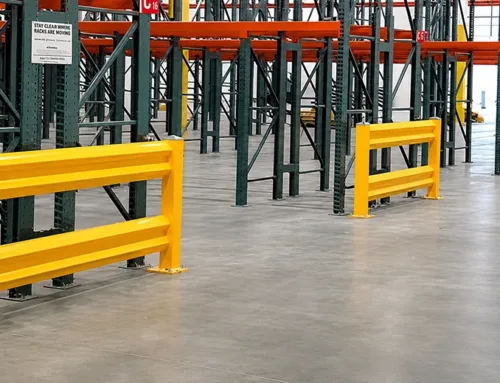
- Rack end protection: shield pallet-racking uprights and reduce the chance of forklift damage to equipment.
- 荷積みドック保護: define vehicle operating edges where people, pallets and fixed structures meet.
- Conveyor and machine guarding: protect conveyors, robots, cabinets and production-line assets from impact.
- Pedestrian-vehicle separation: give aisles and crossing points a visible workplace safety barrier that complements active warning systems.
For multi-site deployment, controlled Q235 manufacturing cost, modular bolt-on installation and customizable colors or identifiers help a safety team standardize the baseline while adapting each floor plan. Hsafety is not a machine safety fence and should not be specified as a highway guardrail; those applications require separate engineering and regulatory review.
Build an Audit-Ready Guardrail Specification
Start with the site map, vehicle routes, protected assets, pedestrian crossings, concrete conditions and required finish. Then confirm whether each zone needs double rail guardrail, a different 2-rib or 3-rib profile, a single rail guardrail, a lift-out section or accessory hardware such as a guardrail bracket, blockout, end cap or reflective sign. Our engineering team can translate those inputs into a modular bill of materials and installation layout, with project-specific checks for anchors and impact conditions.
Make Physical Protection Visible Across Every Site
Use Hsafety warehouse guard rails as the passive infrastructure layer in an OSHA-oriented safety program: separate traffic, protect assets, document the hardware and integrate it with active controls. Send your site lengths and risk zones to receive a tailored double rail guardrail proposal.