JA
JA  EN
EN  DE
DE  RU
RU  PT
PT  ES
ES  IT
IT INDUSTRIAL AUTOMATION SAFETY · AUTOMOTIVE RECYCLING
火災に敏感な自動車リサイクル:ライン再構築を迅速化するモジュール式産業用安全フェンス
For vehicle dismantling lines with residual fuel, oil and metal dust, a machine guarding fence must do more than define a boundary. A modular industrial safety fencing system supports cold-work assembly, controlled equipment isolation and repeated layout changes—helping reduce costly downtime without treating the old fence as disposable capital.
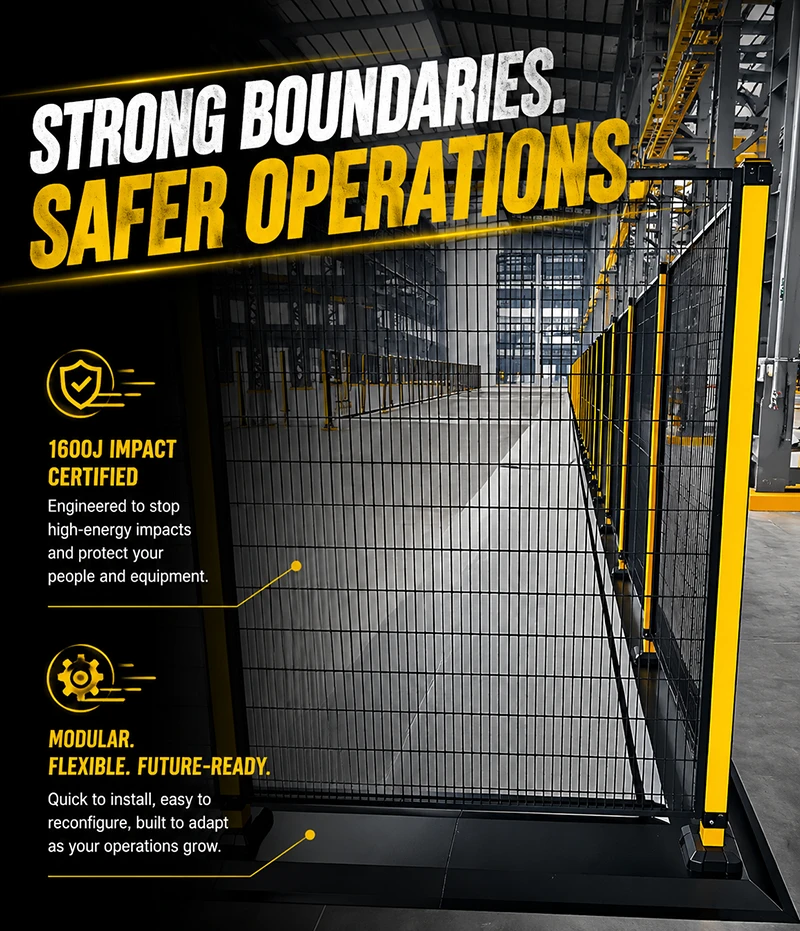
Why a welded safety fencing retrofit becomes a fire and cost problem
In a vehicle recycling plant, dismantling and metal-processing areas can contain residual fuel, engine oil and suspended metal dust. Cutting, grinding or welding a conventional barrier beside the line introduces hot work, sparks and permit controls. The production impact does not end there: when conveyors, dismantling stations or access routes move, a welded safety fence is often cut apart and sold as scrap. That creates a second loss—new guarding must be purchased for every upgrade.
| エンジニアリング要件 | Relevant machine safety fencing response |
|---|---|
| Fire-sensitive modification area | Panel and post assembly uses mechanical fixing and clip/ring connections, allowing the guarding build to be completed as cold work rather than on-site welding or cutting. Ground anchoring remains a project-specific installation item. |
| Repeated automation changes | Framed mesh panels can be removed, extended and reconfigured instead of being destroyed. The project brief identifies reuse of up to 95% as the target for a suitably planned layout and BOM. |
| Machine perimeter guarding | Q235 carbon steel posts, framed wire mesh panels, gates and safety-lock mounting carriers establish a defined physical guarding solution around equipment and access points. |
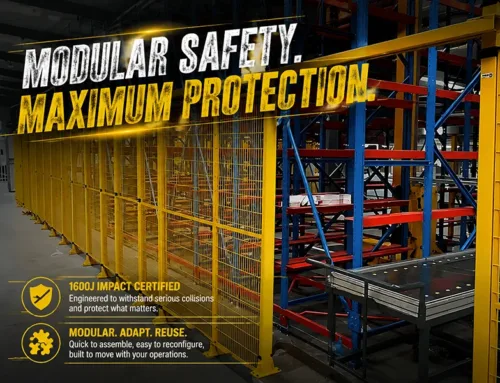
| Risk and compliance review | Typical selections include 20x100mm mesh, 3.0/4.0mm wire, 2000/2200mm heights and a documented ≥1600J impact design reference; final safety distance, impact rating and ISO 14120/ISO 13857 or local requirements must be confirmed for the actual hazard. |
How the physical guarding solution fits the retrofit
1. Cold-work assembly for a hazardous production environment
The key difference is not a slogan about speed; it is the connection method. Mdfence-style modular guarding uses posts, framed mesh panels and mechanical fasteners rather than requiring the installer to fabricate every corner in place. That supports a 100% cold-work panel assembly approach for a fire-sensitive dismantling area: no welding arc, cutting torch or grinding spark is needed to adjust the fence modules. The site team can isolate the work zone, follow its permit process and shorten the shutdown window. Any concrete anchors, electrical interlock work and final risk controls still need to be planned and approved separately.
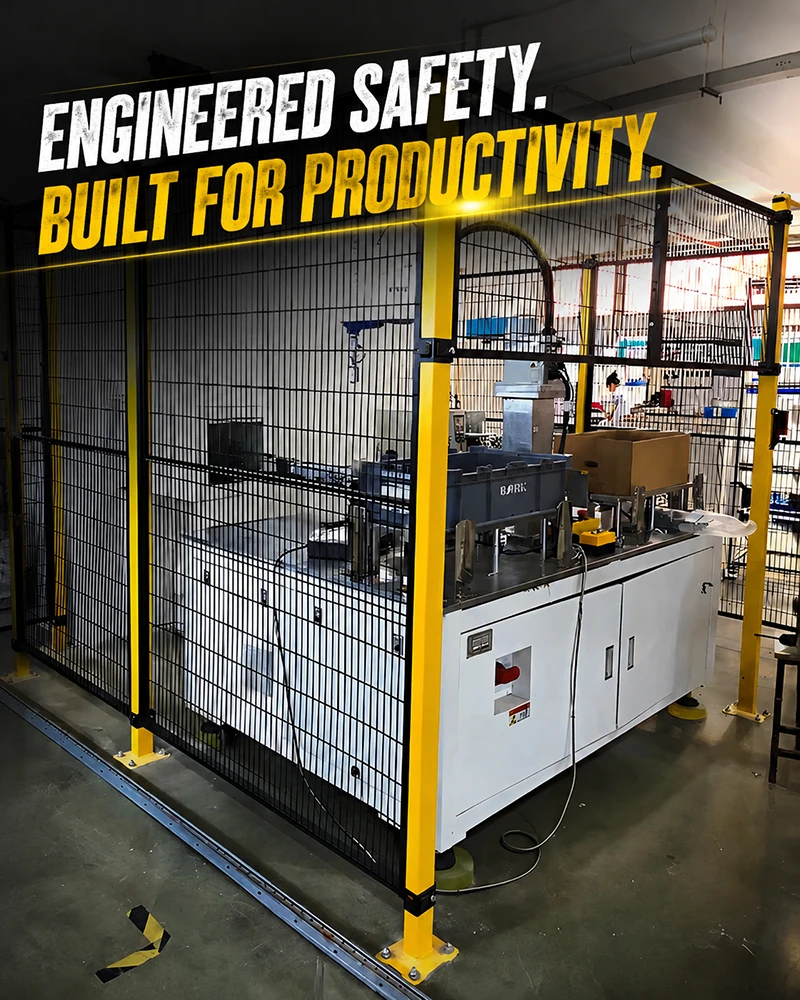
2. Framed mesh, steel posts and visible load paths
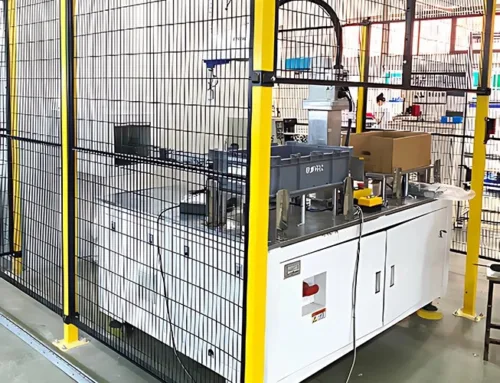
A machine guard has to hold its geometry after installation. The standard construction uses Q235 carbon steel posts with commonly specified 40x60mm or 60x60mm sections, plus 20x30x1.5mm tubular framed mesh panels. Welded wire and a perimeter frame create a more controlled panel than a loose, low-cost mesh sheet. Flat full welds, burr-free finishing and powder coating are production checkpoints; the commonly specified finish is RAL1023 safety yellow for posts with dark mesh. The image evidence shows the panel frame, reinforcement, weld areas and base-plate relationship that engineers review before approving a machine perimeter guarding layout.
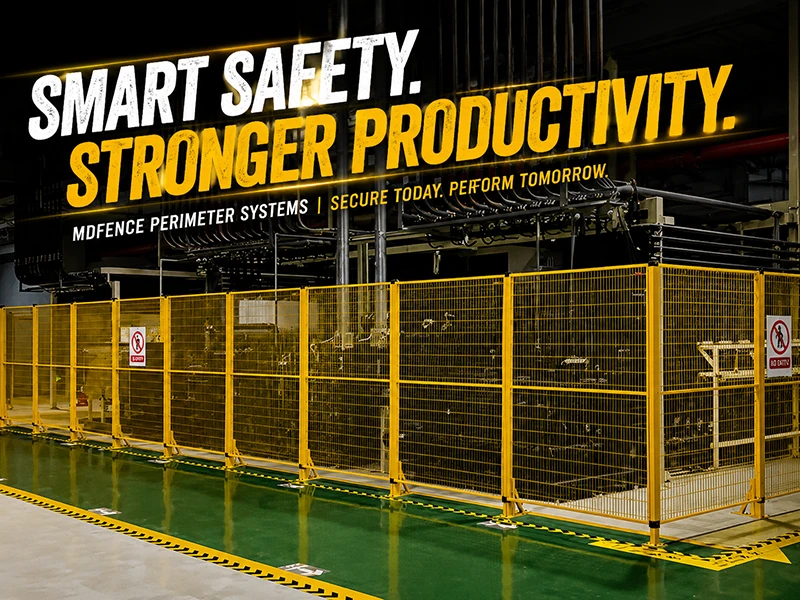
3. Access points that can move with the line
Retrofit work usually fails at the door, not in the straight run. Gate width, hinge support, latch alignment and the material transfer opening must be checked against the new layout. Hinged, sliding and folding options can be combined with safety interlock devices or a safety lock mounting carrier for Omron D4NL or Pizzato FS series hardware. The fence supplies the physical carrier; the integrator remains responsible for the safety circuit, PLC logic and validation. For a line that changes again, removable modules, casters on selected gate assemblies and adjustable panel positions make equipment isolation easier to revise without buying an entirely new guarding perimeter.
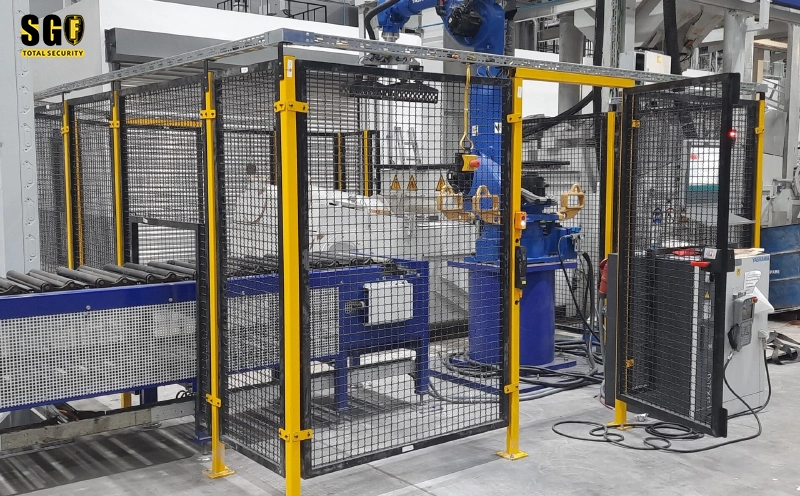
Where this modular safety barrier creates measurable project value
- Vehicle dismantling and metal recycling: keep personnel and moving equipment separated while avoiding hot-work modification beside residual fuel, oil and metal dust.
- 自動マテリアルハンドリング安全: define conveyor openings, maintenance access and forklift/pedestrian routes without allowing a temporary change to erase the machine boundary.
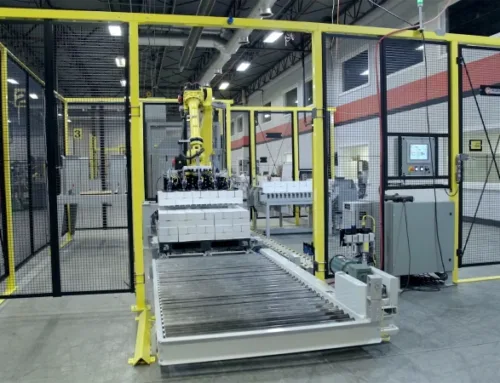
- ロボットセルのガーディング: enclose robot motion, control cabinets and roller conveyors with hinged access gates and a planned safety interlock installation.
- 柔軟な製造: use a configurable safety fence when new equipment, maintenance access or production-line upgrades require repeated extension and re-layout.
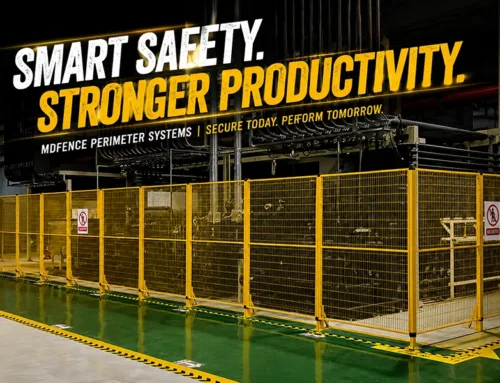
The result is a physical guarding workflow that links the customer’s original risk to a practical engineering response: cold-work assembly reduces fire exposure during modification, framed mesh and anchored posts create a defined industrial safety fence, and reusable modules help prevent unexpected production line downtime and future scrap-value loss. Final dimensions, safety distances, impact criteria and certifications should be verified against the project risk assessment and contract drawings.
Specify the fence before the shutdown window
Provide the equipment perimeter, hazard locations, transfer openings, gate type, floor condition, required height, mesh selection, interlock model and planned future changes. The engineering team can then prepare a BOM and layout around the machine guarding fence rather than forcing a welded safety fencing retrofit to fit after production stops.
Plan a safer, reusable production-line upgrade
Share the dismantling-line layout and the areas classified as fire-sensitive. We will help map the industrial perimeter guarding, access points and modular reuse strategy for your next changeover.