JA
JA  EN
EN  DE
DE  RU
RU  PT
PT  ES
ES  IT
IT 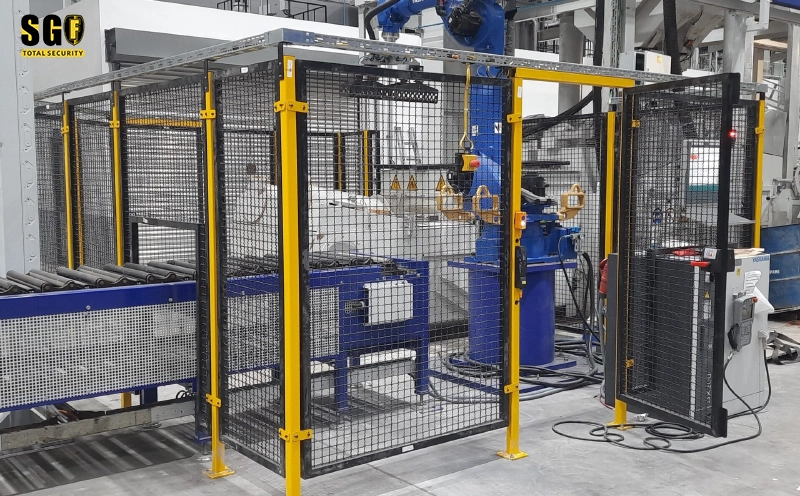
For a turnkey automation and robotics integrator selling high-speed assembly equipment, robot welding cells, pick-and-place units, and vision-based production lines into Europe and North America, machine safety fencing is not a decorative perimeter. It is part of the export package. If the guarding around a robot cell fails physical protection expectations under ISO 14120 or creates unsafe reach distances against ISO 13857 logic, the line can be delayed at FAT, rejected during site acceptance, or forced into costly retrofit work after shipment. That risk is especially serious for integrators building custom systems for multiple end users and multiple jurisdictions.
Why export-oriented automation projects fail safety review
On paper, many robot cells look compliant because the machine builder has added a fence line and a gate. In practice, audit failure usually comes from weak execution: mesh that is too open for the actual hazard distance, flexible frameless panels that deflect under impact, gates that sag after repeated service access, and improvised field drilling for interlock switches. For a turnkey integrator, those are not small defects. They affect acceptance, CE-related documentation, maintenance behavior, and the credibility of the whole installation package.
Mdfence is built for that exact engineering gap. Its framed wire mesh architecture uses a Q235 carbon steel structure with framed panels instead of light loose mesh sections. The recurring system specification includes 20×100 mm finger-safe mesh, framed panel tubes around 20x30x1.5 mm, anchored posts, and modular clamps for cold assembly. That means the fence behaves like a proper machine guarding system rather than a temporary workshop divider.
How Mdfence helps recover compliance margin without wasting floor space
Automation integrators are always fighting for layout density. Conveyor transfer points, robot sweep envelopes, electrical cabinets, and operator access lanes all compete for space. A common mistake is using a guarding system with large openings that forces the fence farther away from the hazard. Mdfence addresses this with its 20×100 mm mesh format, which supports close-to-machine layouts down to 120 mm in many applications when the full risk assessment and machine geometry allow it. In export projects, that can be the difference between a compact cell that still clears audit review and a last-minute redesign that breaks the customer’s plant layout.
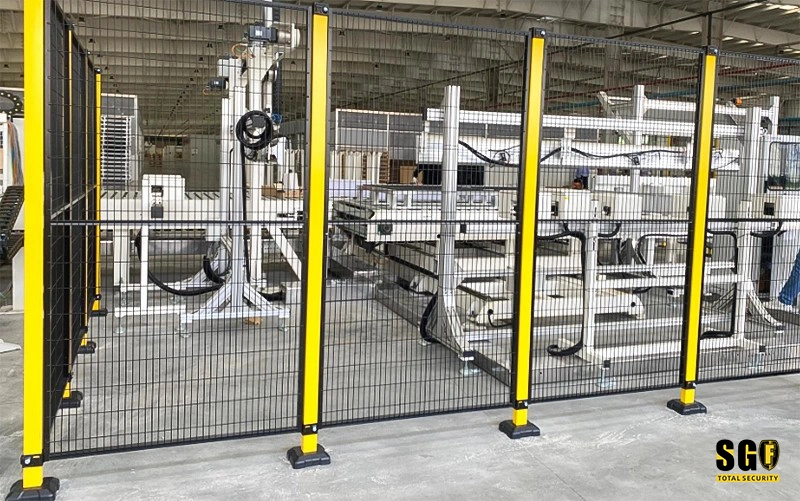
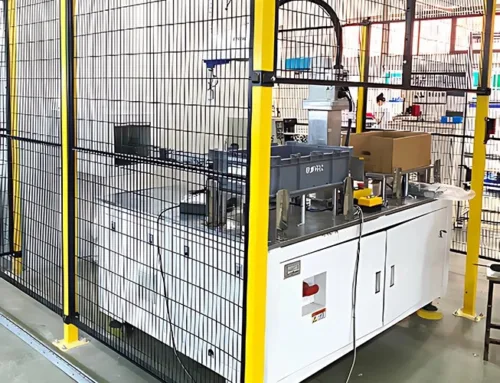
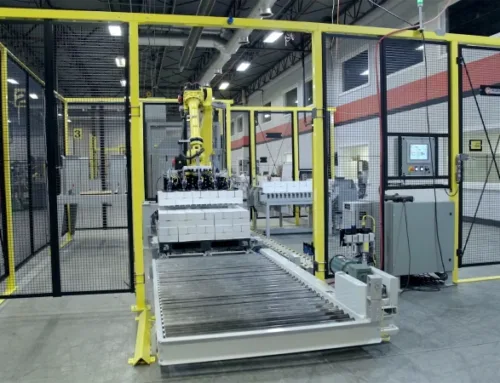
The conveyor-line application above shows why this matters. The fence keeps clear visual supervision through black framed mesh while maintaining a robust post-and-panel structure along the machine side. For integrators shipping assembly or palletizing lines, this visibility is important because operators, maintenance staff, and auditors all need to verify separation without losing sight of machine status.
Why impact resistance is a legal risk issue, not just a durability issue
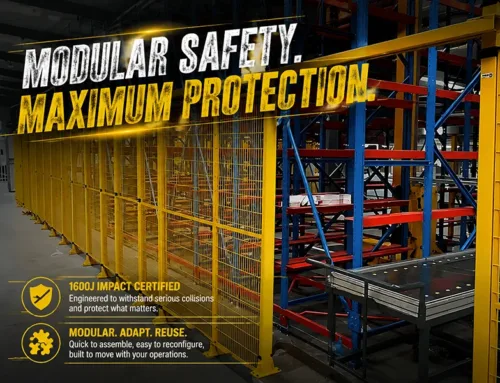
In robot welding, pick-and-place, and automated handling lines, the fence is exposed to more than pedestrian contact. It may need to resist accidental trolley contact, part ejection, or loads caused by service mistakes near the guarding line. Cheap barriers that deform too easily create a direct compliance problem because the physical protective device no longer performs consistently over time. Mdfence core materials repeatedly cite impact resistance up to 1600 J, giving integrators a much stronger basis for specifying guarding around energetic automation processes and avoiding the reputation damage that comes with field failures.

For an exporter, that matters beyond hardware life. A stronger guarding system reduces the chance that a shipped line will trigger rework because the perimeter no longer reflects the documented safety intent after installation, transport, or early production use.
Gate design is where many custom cells become unreliable
Another weak point in exported machine cells is access control. Turnkey lines need frequent access for setup, tool change, and maintenance, yet poorly designed hinged gates often sag, misalign with interlocks, or encourage unsafe bypass habits. Mdfence answers this with multiple gate formats including single swing, double swing, sliding, bi-fold, and three-panel folding layouts, plus support casters and interlock-ready mounting logic for Omron D4NL and Pizzato hardware. Instead of forcing the integrator to improvise on site, the guarding system is already structured around real service access behavior.

This is especially useful when a cell must fit wide maintenance openings into tight aisles. A folding or sliding arrangement can preserve usable floor area while still supporting proper interlocked access. For integrators responsible for overseas commissioning, fewer field modifications mean fewer delays, fewer compliance arguments, and fewer warranty calls.
A better export package for EU and US EHS expectations
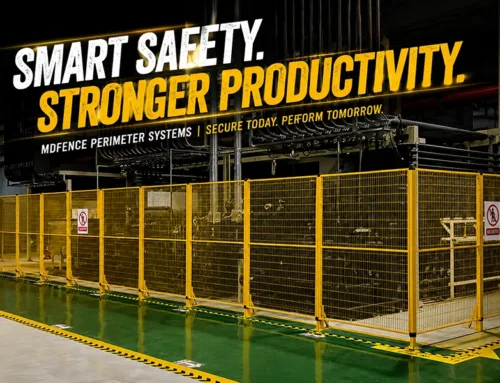
For automation companies shipping into strict EHS environments, Mdfence works as a risk-control engineering system rather than a generic fence kit. Framed Q235 steel panels improve rigidity. The 20×100 mm mesh format supports safety-distance planning. Anchored modular installation avoids hot work on site. Yellow-and-black visibility helps define hazard boundaries clearly. Interlock-ready gates make access control easier to implement correctly. Most importantly, the system gives the integrator a more defensible guarding specification when customers, auditors, or local safety teams ask whether the line is truly ready for acceptance.
If your next robot cell or automated assembly line is heading to Europe or North America, the right guarding package is not an accessory. It is part of how you protect delivery schedule, compliance status, and commercial credibility. Mdfence gives turnkey automation integrators a stronger, more audit-ready path to machine safety fencing.