JA
JA  EN
EN  DE
DE  RU
RU  PT
PT  ES
ES  IT
IT OSHA audit pressure, unified site standards, and panelized machine guarding
industrial safety fence panels for multinational sites that must pass OSHA and ISO review
When a North America-headquartered group has to keep every site aligned to the same safety baseline, industrial safety fence panels stop being a simple barrier purchase and become an audit-control decision. The goal is not just to block access. The goal is to build a repeatable machine-guarding standard that can be rolled out, inspected, and defended across regions without custom exceptions.
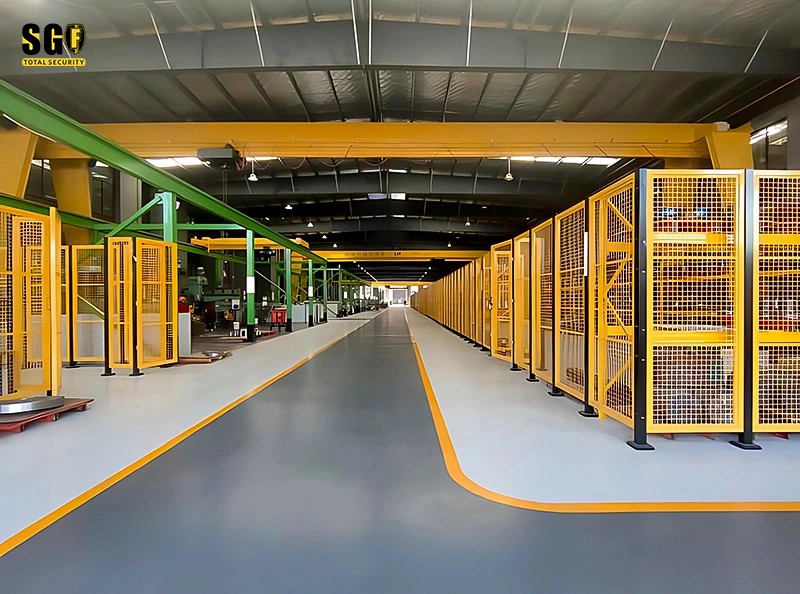
Why the old approach fails under strict compliance review
Many multinational plants still rely on a patchwork of welded barriers, local contractor habits, and site-by-site interpretations of machine protection. That can work until the first serious audit. Then the weak points show up fast: one plant has a different gate style, another uses inconsistent anchor hardware, and a third has a guard line that protects the machine but cannot be explained clearly during an OSHA walk-through. A unified system matters because compliance is not only about safety intent; it is about repeatable structure, visible separation, and documented installation logic.
| Audit concern | What industrial safety fence panels solve |
|---|---|
| Inconsistent guarding between sites | Panelized layout makes every line and enclosure repeatable across locations |
| Weak access control | Lockable gate hardware supports controlled entry into machine zones |
| Unclear installation standard | Base plates, drilling, and expansion-bolt fastening create a visible, explainable method |
| Audit proof is hard to show | Mesh fence geometry, posts, clamps, and anchors create easy visual evidence for inspectors |
Why this system fits an OSHA-first global rollout
1) The layout is built for repeatability
In a global program, a guard system must be easy to standardize. The fence-panels approach is stronger than ad-hoc barriers because each enclosure is assembled from defined posts, mesh panels, and fixed connection points. That makes it easier for headquarters to define one approved guarding method and for local plants to implement it without improvisation.
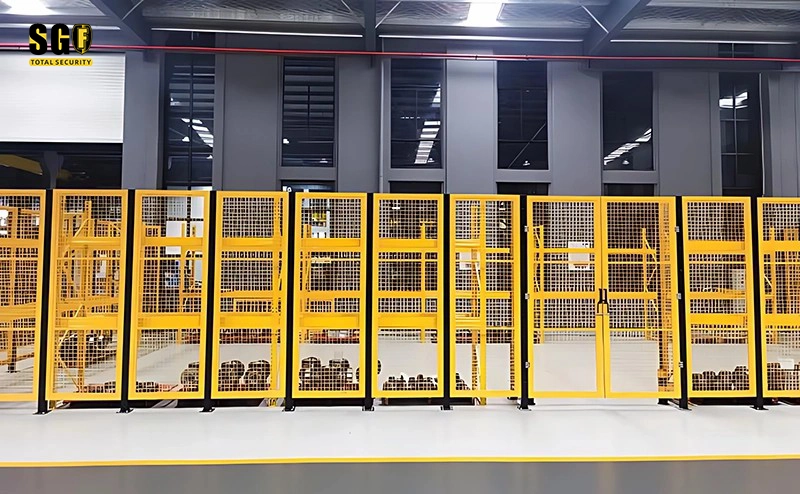
2) The structure supports controlled machine access
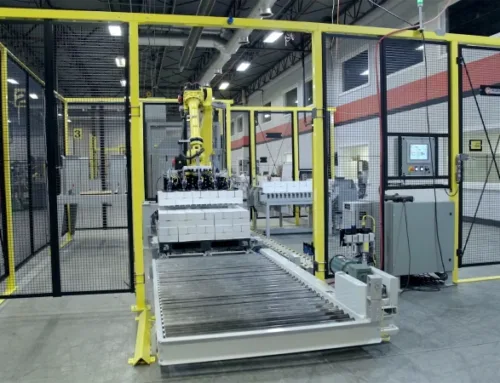
The biggest compliance risk is not the open aisle; it is uncontrolled entry into the work cell. A lockable gate and defined access point give the safety team a clear way to separate routine traffic from protected machinery. That is exactly what auditors want to see: physical separation, visible control, and no ambiguity about where the operator zone ends.
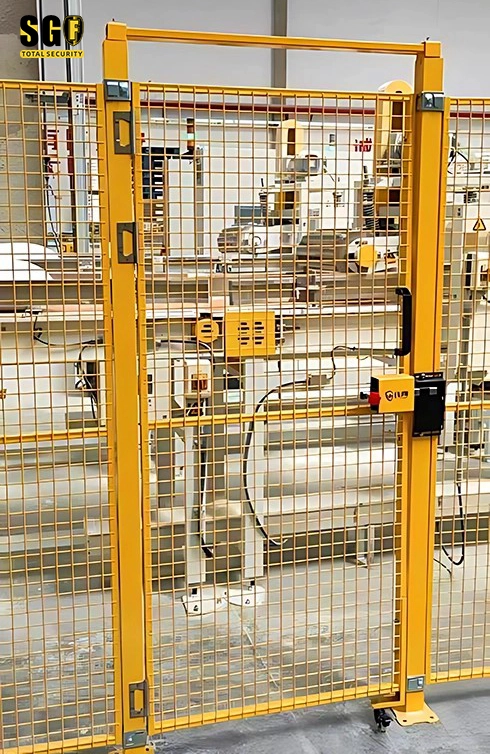
3) The installation logic is easy to defend
For a multinational safety program, the installation method has to be as defensible as the barrier itself. Base plate positioning, drilling, expansion bolts, and retaining components turn the guard into a documented process instead of a vague field modification. That matters when the same standard must be rolled out across multiple plants with different local teams.
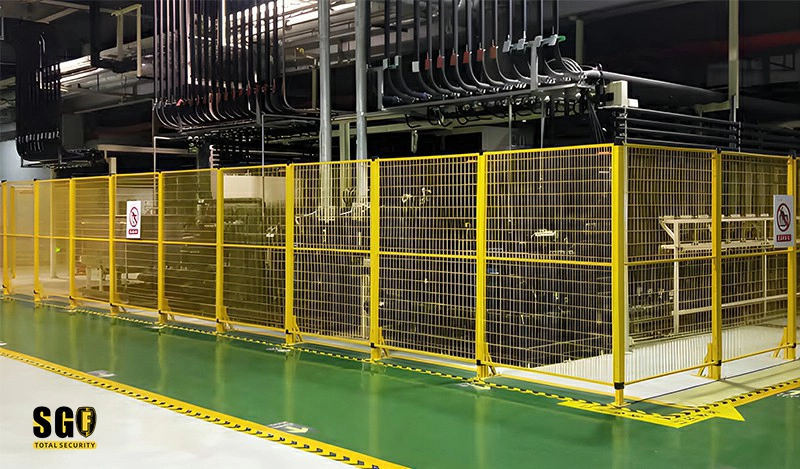
Structure and evidence that support the audit story
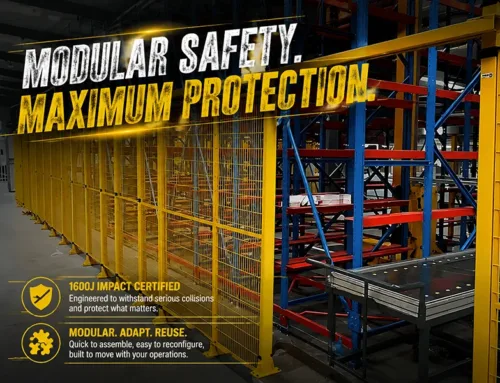
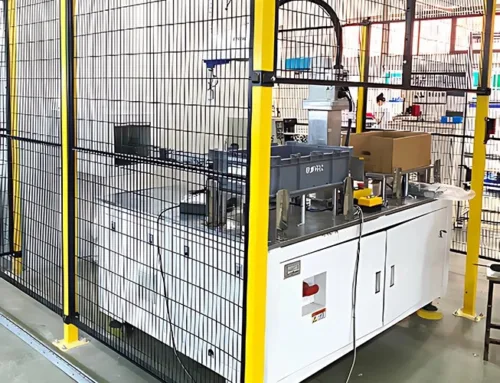
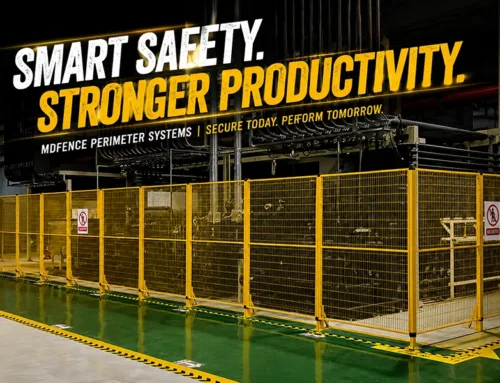
- Yellow posts and black mesh create clear visual separation between personnel aisles and machine cells.
- Base plates and fastening points make the guarding line easier to document during internal safety reviews.
- Gate hardware supports controlled entry instead of improvised openings or temporary barriers.
- Panelized sections make it simpler to expand, reconfigure, or standardize the same layout across sites.
In practice, this is the difference between a one-off barrier and a global compliance asset. One plant can keep the same guarding language as another plant, even if the equipment differs. That helps the safety team build a unified benchmark that can stand up to OSHA review in the United States and still make sense inside an ISO-oriented corporate safety system.
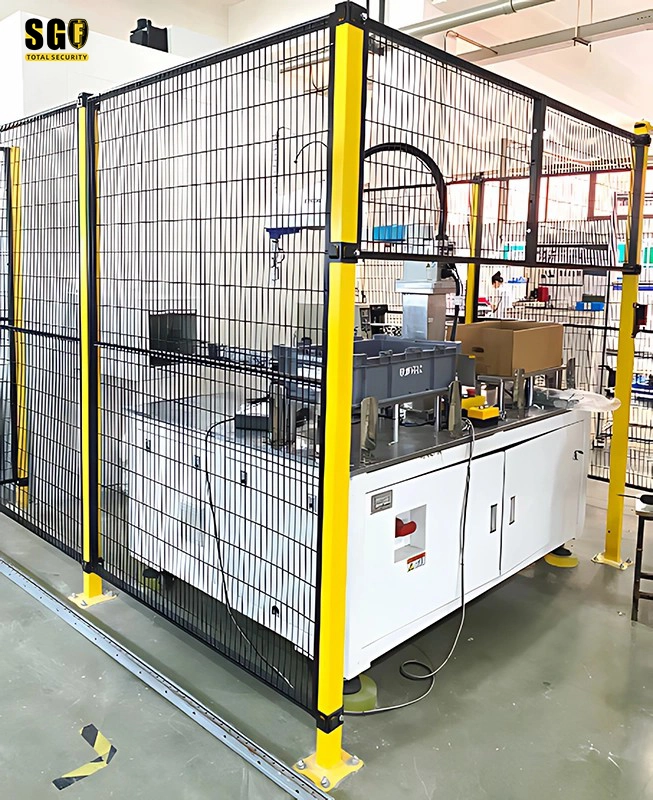
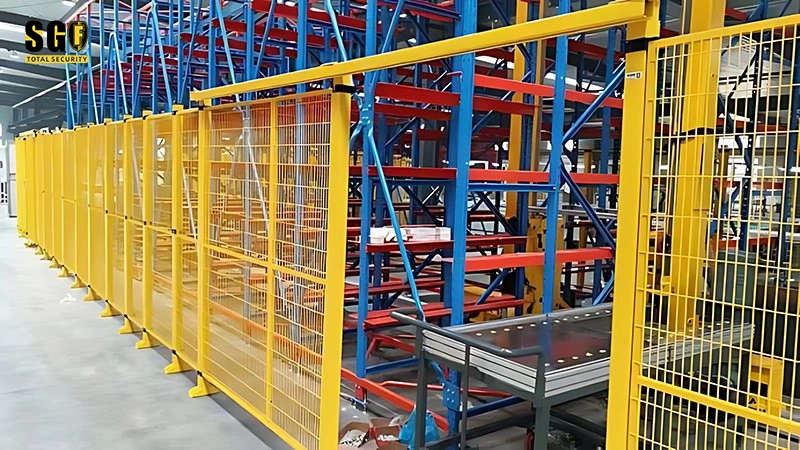
最終結果がどのように見えるか
The result is not just a safer machine cell. It is a standardized guarding platform that gives the HQ safety team one rule set, gives local plants one repeatable installation method, and gives auditors a clear visual and structural story. Instead of defending a patchwork of site-by-site barriers, the company can present a single safety baseline built on industrial safety fence panels that are easy to inspect, easy to explain, and easy to scale.
For groups facing strict compliance review, that matters. The safer the layout looks, the easier it is to maintain. The clearer the structure is, the easier it is to audit. And the more consistent the guarding is across regions, the more credible the entire safety program becomes.
Build one guarding standard for every site
If your plants need a machine-guarding system that supports OSHA review, ISO discipline, and global rollout consistency, use industrial safety fence panels to turn compliance from a risk into a repeatable standard.