JA
JA  EN
EN  DE
DE  RU
RU  PT
PT  ES
ES  IT
IT Industrial safety fence for food plant segregation
食品工場向け産業用安全フェンス:フォークリフトと人の間の物理的隔離
工业安全围栏为食品工厂在叉车通道与行人路线之间提供了真正的物理屏障,而油漆标线、胶带和帘幕无法强制执行这一规则。.
What Mefence changes in a food plant traffic plan
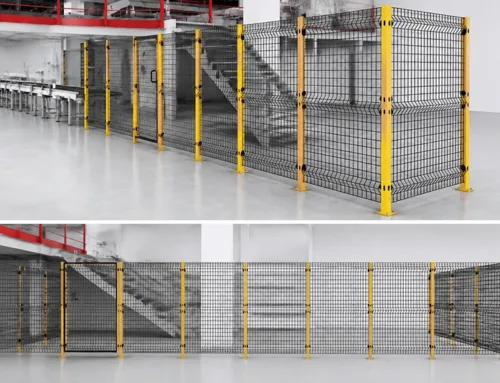
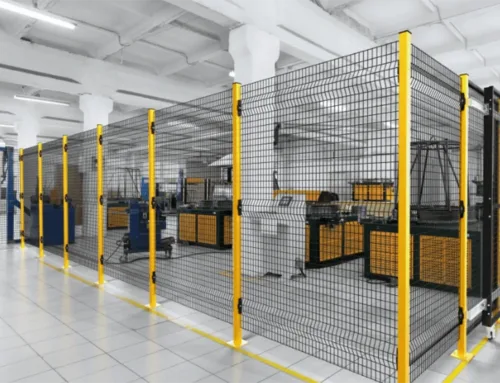
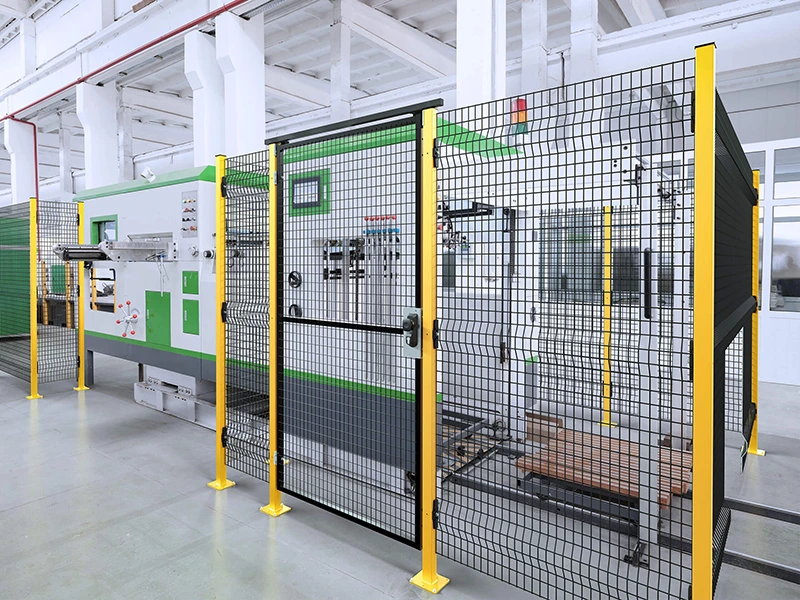
A floor line marks intent. Mefence turns that intent into a physical barrier. For a food factory, that matters because the real risk is not the line being invisible; it is the line being ignored when the floor is wet, the corner is blind, or the shift changes and a pallet must cross the same route as a person. This is where industrial safety fencing works as machine guarding for pedestrian vehicle separation.
| アイテム | Mefence spec and job to be done |
|---|---|
| Primary function | Physical segregation between forklift lanes and pedestrian routes for warehouse zoning and hazard zone separation |
| 素材 | Q235 carbon steel with powder coated finish for a durable industrial safety fence surface |
| 線径 | 3 mm or 4 mm, chosen by required stiffness and visibility |
| メッシュ開口部 | 20×100 or 50×50 mesh for a welded wire mesh safety barrier |
| 投稿サイズ | 40×60 or 60×60 posts for modular support and area demarcation |
| Panel range | 200-1400 mm width, 200-3000 mm height to fit long runs, corners, and gate segments |
| 固定方法 | Plastic clip, self-tapping screw, expansion bolt, and base plate post installation with no welding required |
| 結果 | Quick install safety fence with slim profile barrier, reusable layout, and clearer one-way traffic flow |
Why this frameless safety fence fits the segregation job
A visible barrier, not a painted suggestion
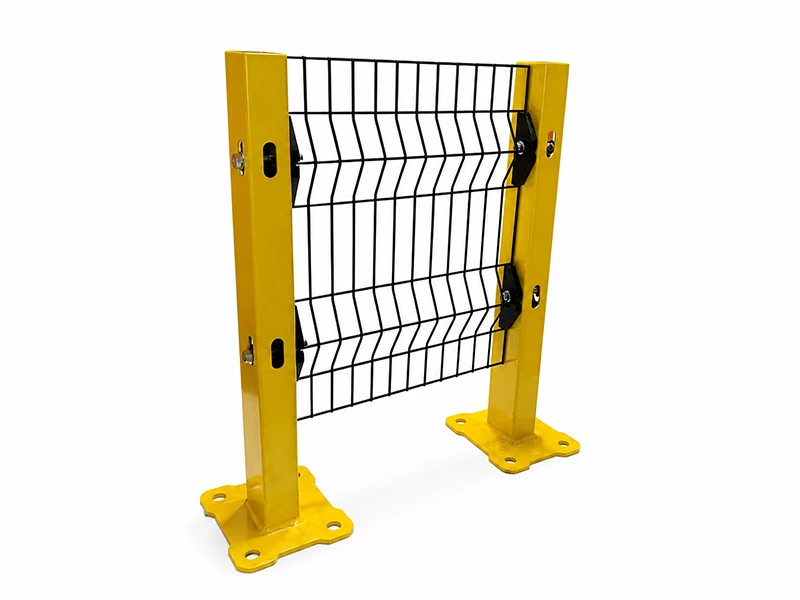
In a food plant, pedestrian-vehicle separation fails when the control is only visual. Yellow-black posts and black welded mesh make the route look and feel closed, so operators do not treat it like a suggestion. That is why Mefence suits the long segregation runs between a fork truck aisle and a walking path. It keeps the route narrow enough to preserve floor space, but strong enough to act as a real industrial safety fence for everyday traffic discipline.
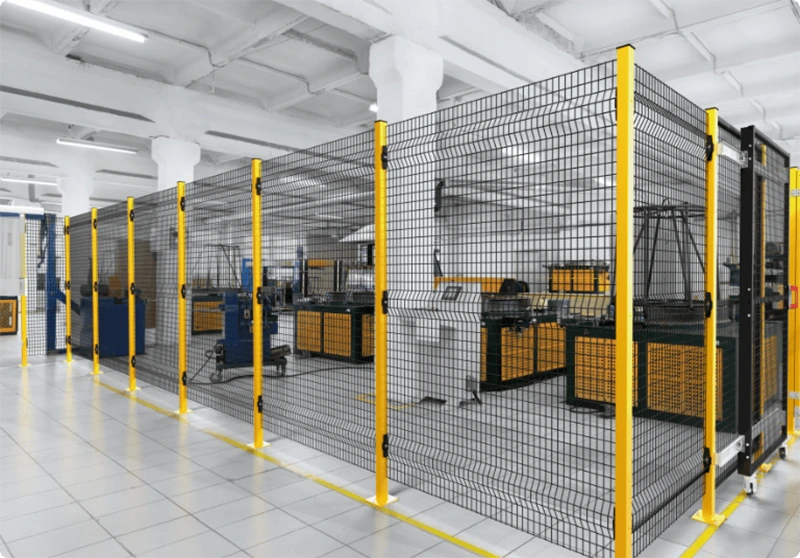
The connector detail makes the system modular
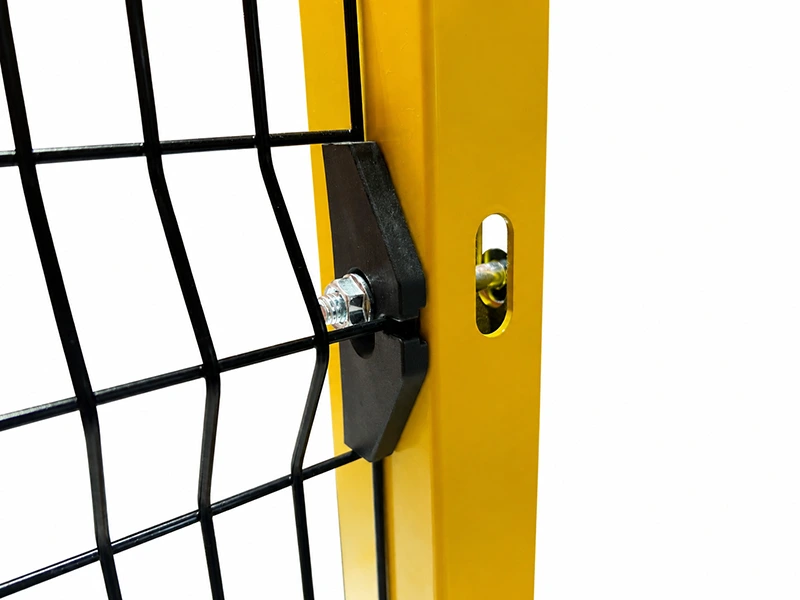
The clamp connector matters because food factories change. Routes shift after sanitation plans, new packing lines arrive, and receiving traffic moves when the warehouse layout changes. The bolt-mounted connector lets the panel system stay modular, so damaged sections can be replaced without rebuilding the whole run. That is a practical advantage over welded square tube fence or barrier tape: the layout stays reconfigurable, and the barrier still reads as industrial safety fencing rather than temporary clutter.
Base plates and slotted holes cut install time
One reason operations teams tolerate painted lines is speed. Mefence answers that with base plate posts, slotted mounting holes, and bolt-down fixing that do not require welding on site. For a live plant, that means a faster install window, less hot work, and easier phasing around production. It also means one-person installation is realistic for many sections. Use Mefence for the broad physical segregation runs; at points where a forklift may actually hit the barrier, move up to the Machine Fence product line instead of overloading this lane-separation system.
Where food factories use it
- Raw material receiving lanes where forklifts cross near QA staff or line operators
- Ingredient prep and mixing zones where sanitation routes and handling routes intersect
- Packaging line crossovers that need a clear pedestrian path without depending on floor paint
- Warehouse zoning between pallet traffic, picking routes, and manual inspection walkways
- Blind corners, wet-floor transitions, and stair/platform edges that need a slim profile barrier
- Maintenance access corridors that must stay open for people but closed to general cross-traffic
The logic is simple: if the site needs people and forklifts to stop sharing the same space, a framed, modular industrial safety fence gives the operation a real physical line to enforce. It is a better fit than tape, better than a painted stripe, and cheaper than putting impact-rated protection everywhere that no collision is expected.
What to confirm before ordering
Before you specify the run, confirm the clear aisle width, turning radius, gate position, required height, mesh opening, and whether any point is a direct impact zone. If the answer is yes to impact, use Machine Fence there. If the answer is no and the goal is physical segregation, Mefence is the right industrial safety fencing layer for the job.
Plan the lane split once, then stop relying on floor paint
Send us the food plant layout, route width, and crossing points. We will size the Mefence safety fencing industrial run for pedestrian vehicle separation, keep the aisle slim, and flag the few impact points that belong in the Machine Fence line instead.