JA
JA  EN
EN  DE
DE  RU
RU  PT
PT  ES
ES  IT
IT The production process of temporary metal fence posts

The production process of 仮設金属フェンス posts typically involves the following steps:
-
-
- Material Selection: The first step is to select the appropriate materials for making the fence posts. Generally, the posts are made of steel or aluminum, as these materials are strong, durable, and resistant to weather and corrosion.
- Cutting: Once the material is selected, the metal sheets or bars are cut to the desired length and width using cutting tools such as saws or plasma cutters.
- Shaping: After the metal sheets or bars are cut to size, they are shaped into the desired profile for the fence post. This can be done using tools such as bending machines or rolling machines, which shape the metal into the required curvature.
- Punching Holes: Once the metal is shaped, the next step is to punch holes in the posts to attach fencing materials such as mesh, wire, or panels. The holes can be punched using a drill press or a specialized punching machine.
- Welding: After punching the holes, the fence post components are welded together to create the final structure. The welding process involves melting and joining the metal pieces using a welding machine or torch.
- Finishing: The final step is to apply a finish to the fence post to protect it from rust and corrosion. This can be done by painting, powder coating, or applying a protective coating to the surface of the post.
-
Once the finishing process is complete, the 仮設金属フェンス posts are ready for use. These fence posts can be used for a variety of temporary fencing applications such as construction sites, outdoor events, or crowd control.
Interlock Switch Mounting Without Drilling: Why Alfence T-Slot Posts End Phantom Stops
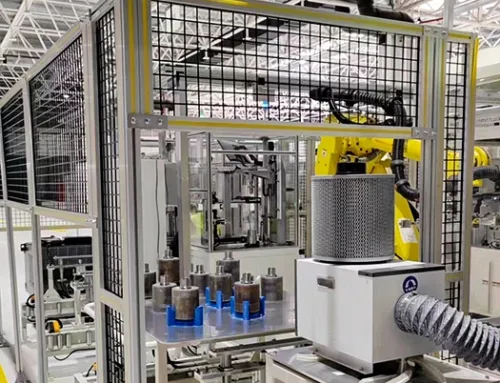
Bolting an interlock switch bracket through a powder-coated steel post drills the coating, drops swarf into the cell and leaves a rust line — and when the hinged leaf sags, the tongue misaligns and the PLC reports a phantom guard fault. Alfence mounts sensors, e-stops and conduit in the T-slot groove of a 40×40 mm or 45×45 mm aluminum post, with door hardware sized to keep the safety switch aligned.
Phantom Safe Torque Off Stops: T-Slot Guarding Fence Posts Mount Interlocks Without Drilling
Painted steel guarding posts force maintenance to drill for interlock switches, dropping swarf in the cell and breaking the coating where rust starts. Sagging hinge doors then misalign the interlock tongue and the PLC trips Safe Torque Off while the gate is closed. Alfence industrial safety fence mounts sensors, e-stops and cable routing into the T-slot aluminum profile post without drilling, and uses hinged, folding or sliding door frames that keep interlock geometry stable - protecting OEE through phantom stops and line changes.
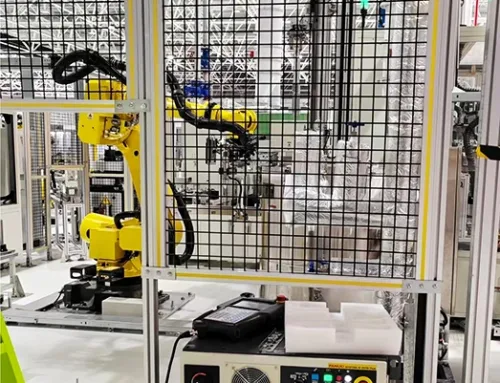
Automotive Plant Industrial Safety Fence: Keep the Robot Cell Close to the Hazard
Automotive plants cannot afford to lose production floor to an oversized machine guarding perimeter. Alfence combines 20×100 mm mesh with slim 40×40 mm or 45×45 mm aluminum posts for a compact, reconfigurable industrial safety fence layout, with final clearance confirmed by the project risk assessment.