EN
EN  DE
DE  RU
RU  PT
PT  JA
JA  ES
ES  IT
IT Machine Guarding Systems for cut-heavy light-steel panel lines
Machine Guarding Systems that keep debris inside the cell and the line in sight
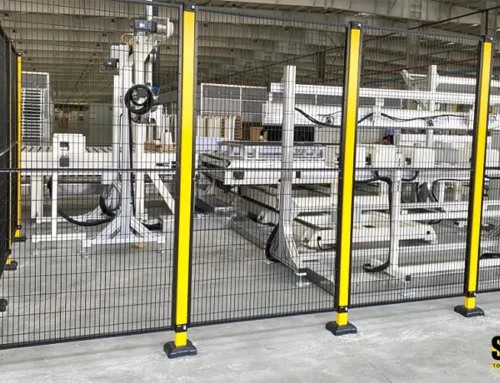
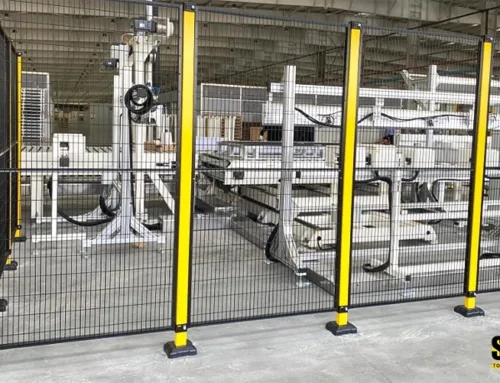
For heavy cutting cells in light-steel panel assembly, Machine Guarding Systems must stop fast-moving chips and gypsum dust without hiding eight-robot operation. Mdfence is built for that exact balance: containment first, visibility preserved.
What the line needs, and how Mdfence answers it
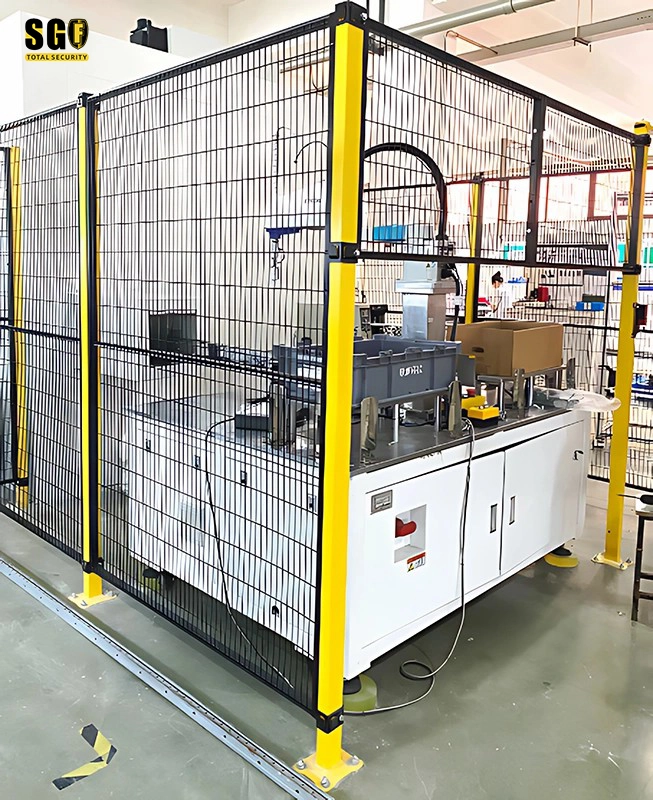
Cutting steel openings, trimming panels, and handling robot-assisted fabrication create two risks at once: flying debris at the edge of the cell and poor oversight across multiple machines. Older solutions often solve one problem by creating another. Dense barriers reduce visibility. Open guarding leaves chips and dust uncontrolled. Mdfence is shaped for the middle ground: high-strength mesh, full-weld structure, and a color scheme that keeps the cell readable from the aisle.
| Line requirement | Mdfence response |
|---|---|
| Fast debris interception | Narrow-aperture mesh blocks high-speed chips and dust before they leave the cutting zone. |
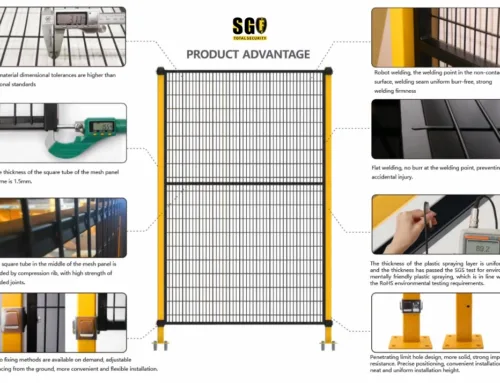
| Reliable frame strength | 20x30x1.5mm rectangular tube border with full weld on all wires and frame joints. |
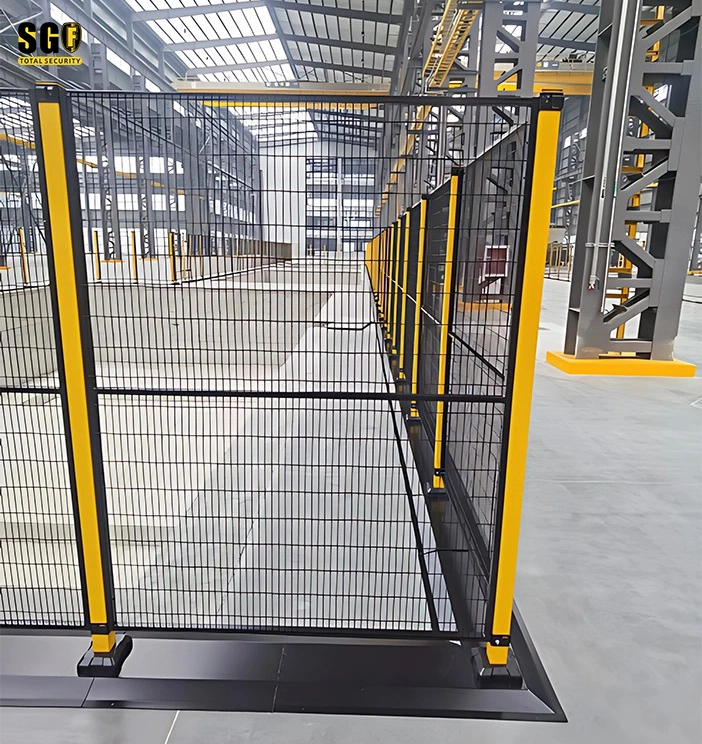
| Operator visibility | RAL 9005 black mesh keeps the cell legible while reducing visual clutter around moving equipment. |
| Supervisor line-of-sight | RAL 1023 safety yellow posts help managers track an eight-robot line from the corridor without blind spots. |
| Clean layout discipline | Modular panels fit long runs, corner returns, and access points without turning the aisle into a maze. |
Why this Machine Guarding Systems build fits the process
1) The cell stays closed when chips are moving fast
Heavy cutting is not a dust-only problem. In light-steel panel work, the cutting edges throw fragments, trim offcuts, and powder into the surrounding zone. Mdfence uses a narrow opening mesh and a fully welded wire-to-frame build so the guard acts like a real containment boundary, not a visual suggestion. That matters when the goal is to protect hands, faces, and walking paths around a robotized line.
2) The structure is made for industrial abuse, not display only
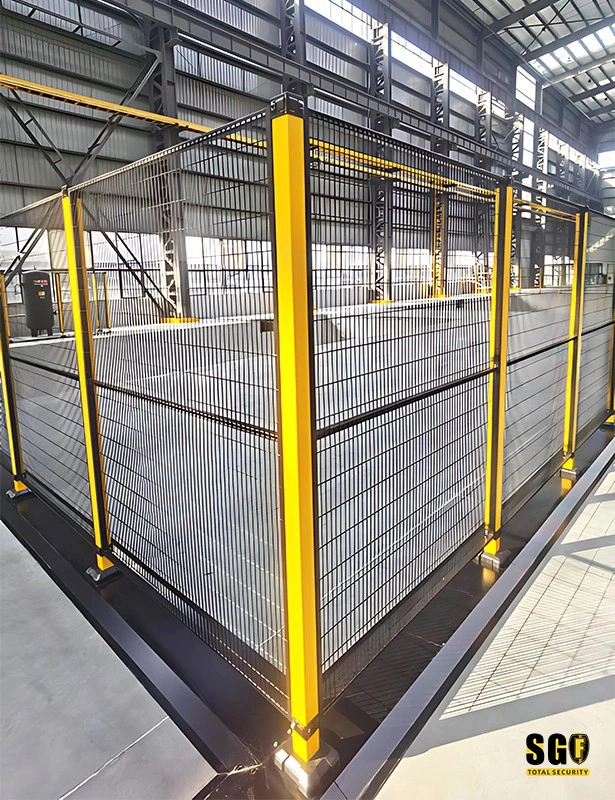
The 20x30x1.5mm rectangular tube border gives the panel real edge rigidity. The full-weld construction ties the wire mesh and frame together so vibration, cleaning, and repeated access do not loosen the build. In a production plant, that is what keeps the guard aligned after repeated shifts, forklift traffic nearby, and daily operator interaction at access points.
3) The color contrast helps the supervisor keep control
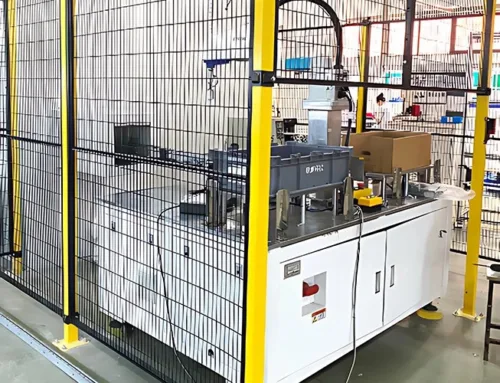
On a line with eight robots, the supervisor cannot afford to lose the overview. The deep black mesh in RAL 9005 keeps the fence from creating a bright visual block, while the RAL 1023 safety yellow posts define the perimeter clearly enough to read from the aisle. That means the guard does not interrupt supervision; it supports it. Managers can scan robot motion, access points, and workflow status in one glance.
Where Mdfence works best
- Heavy cutting stations in light-steel panel assembly lines
- Robot cells that need debris interception plus aisle visibility
- Multi-machine production zones where a supervisor must monitor several workstations at once
- Access-controlled perimeter guarding around saws, cutters, and trimming equipment
- Factory layouts that need modular fence runs, corners, and gate openings without visual clutter
In practice, the result is straightforward: the cutting zone stays contained, the aisle stays readable, and the production manager keeps a clear line of sight across the automation cell. That is the kind of Machine Guarding Systems setup that supports throughput instead of getting in its way.
Evidence the buyer can verify
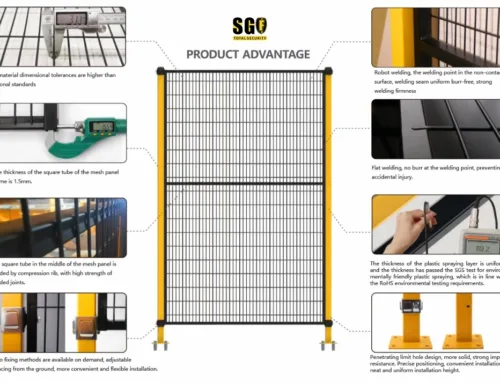
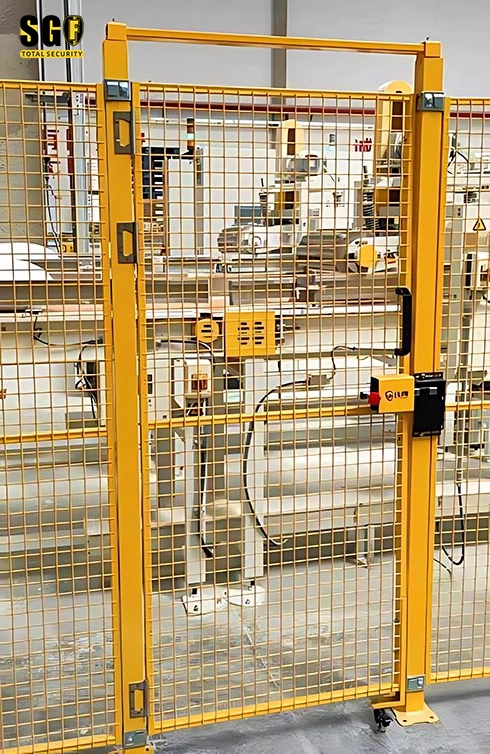
The product evidence is visible in the structure itself: the welded frame, the gate hardware, the tight mesh pattern, and the contrast between black panel and yellow post. Those details are not decorative. They are what let the fence absorb cutting-line abuse while still letting the team watch the process in real time.
Build the guard around the process, not around the brochure
If your line is generating chips, dust, and constant motion, the guarding spec should answer three questions at once: can it stop debris, can it hold up, and can the supervisor still see the line? Mdfence is designed to answer yes to all three.