EN
EN  DE
DE  RU
RU  PT
PT  JA
JA  ES
ES  IT
IT 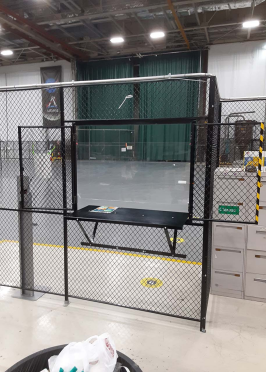
We invest thousands of dollars in training a forklift operator. We teach them the mechanics of the machine, the physics of a balanced load, and the layout of the warehouse. But we often overlook the most critical component of their performance: their focused attention. In a chaotic warehouse, failing to implement solutions like industrial mesh dividers means we are stealing that focus from them, every minute of every day.
Ask a seasoned forklift operator like John what his job entails. He won’t just say “driving.” He’ll talk about listening to the subtle hydraulic whine that signals a heavy load. He’ll talk about the feel of the machine as it balances on a slight incline. He’ll talk about the three-dimensional mental map he maintains of the entire facility. It is a job of immense skill, precision, and concentration.
Now ask him what his biggest fear is. It’s probably not dropping a pallet or misjudging a turn.
His biggest fear is the unexpected person. The flash of movement in his peripheral vision. The visitor staring at their phone, stepping off the painted yellow line and into his path.
For leaders and managers, this reality holds a crucial, often-missed insight: the greatest threat to a safe and productive warehouse isn’t a machine malfunction; it’s the constant, low-level stress and cognitive burden we place on our most skilled employees by failing to control our environment.
The Invisible Burden of Cognitive Load
In psychology, “cognitive load” refers to the amount of information a person’s working memory can handle at one time. When we ask an operator to simultaneously manage a multi-ton load, navigate a tight space, AND constantly scan for unpredictable pedestrian traffic, we are overloading their system.
This isn’t just a feeling of stress; it’s a measurable drain on performance.
- Divided Attention: Every time an operator’s brain has to process “Is that person going to move?” it takes mental energy away from “Is this load stable?” This division of focus is a direct precursor to errors—both in safety and in inventory handling.
- The “Near-Miss” Hangover: A single close call—a sudden stop for a wandering visitor—can flood an operator’s system with adrenaline. Their heart rate spikes, their hands might shake. This physical stress response doesn’t vanish in a second; it can linger for hours, affecting their precision and judgment for the rest of their shift.
- The Weight of Unfair Responsibility: Your best employees feel a profound sense of responsibility. They know that if an accident happens, even if it’s the visitor’s fault, they will be the one at the controls. They carry the moral and psychological weight of protecting people who are, through a flawed system, allowed to put themselves in danger. This is an exhausting and deeply unfair burden.
How Hidden Stress Ripples Through Your Business
As an HR leader or a general manager, you know that a chronically stressed workforce is not a productive one. The impact of this “invisible burden” shows up in the hard metrics that define your business.
- Employee Turnover: Skilled warehouse operators are in high demand. They can afford to be selective. If your warehouse has a reputation for being chaotic and stressful, you will lose your best people to competitors who offer a calmer, more professional environment.
- Reduced Productivity and Accuracy: A distracted or stressed operator is a slower operator. They are also more prone to errors, such as placing a pallet in the wrong location or damaging goods, which creates costly downstream problems.
- A Corroded Company Culture: An environment where operators are constantly forced to dodge visitors sends a clear message: “We value immediate throughput more than your well-being.” This erodes trust and makes it impossible to build a true culture of safety and excellence.
The Solution: An Investment in Psychological Safety with Mesh Dividers
When we reframe the problem from this human-centric perspective, the solution also changes. A physical access control system, like mesh dividers, is no longer just a piece of safety equipment.
It is a tool for providing psychological safety.
It is a tangible commitment to your team’s well-being. Think of what it communicates to an employee like John:
- It’s a “Cocoon of Concentration”: By creating a hard boundary, you are effectively telling your operator, “This space is yours. We have handled the external variables. We trust you to focus on your highly skilled craft without distraction.”
- It Lifts the Burden of Responsibility: The system, not the individual operator, becomes the primary enforcer of safety rules. This frees the employee from the stressful role of being a part-time traffic cop and allows them to be a full-time professional.
- It Is a Visible Symbol of Respect: Unlike a poster, a physical installation is a significant, visible investment. It is a non-verbal declaration from the company that says, “We see the pressure you are under, and we are investing in a real solution to protect you.”
The New Differentiator in a Tight Labor Market
In today’s competitive labor market, companies can no longer afford to compete on salary alone. The best talent is attracted to and retained by organizations that offer a superior work environment—one that is safe, professional, respectful, and designed for focus.
Investing in a system that guarantees an operator’s peace of mind is one of the most powerful retention tools at your disposal. It is a strategic HR decision that pays dividends in morale, productivity, and your ability to brand yourself as an employer of choice.
So, when you next walk your warehouse floor, don’t just see machines and inventory. See the skilled, focused professionals you depend on. And ask yourself: what have I done today to protect their most valuable asset—not their safety vest, but their peace of mind?