PT
PT  EN
EN  DE
DE  RU
RU  JA
JA  ES
ES  IT
IT 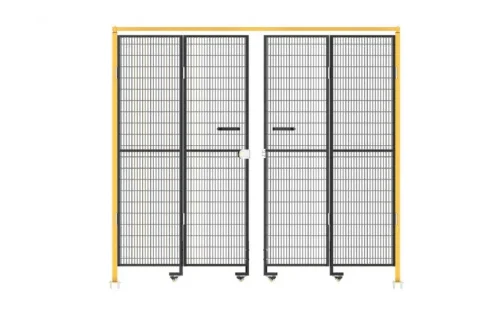

Choosing the right safety barrier for your facility is a critical decision that impacts not just safety, but also your operational efficiency and future adaptability. While traditional fixed, welded fencing has long been an option, modern modular systems present a fundamentally different approach to industrial safety. Understanding their core differences is key to optimizing your production environment.
Structural Integrity and Installation: The Myth of Permanent Strength
The primary consideration for any safety barrier is its ability to withstand force. The debate between fixed and modular fencing often centers on the perceived strength of permanent, welded structures versus bolt-together systems.
Fixed (Welded) Fencing
Traditionally, fixed fencing is constructed on-site by welding steel posts and panels directly to each other and to floor plates. This process requires specialized labor, hot work permits, and significant downtime in the installation area. While a proper weld is undeniably strong, the system’s integrity is entirely dependent on the skill of the on-site welder. Furthermore, the heat from welding destroys any pre-applied protective coatings, requiring on-site grinding and repainting, which is often less durable and creates a potential point of failure for corrosion.
Mobile/Modular Fencing
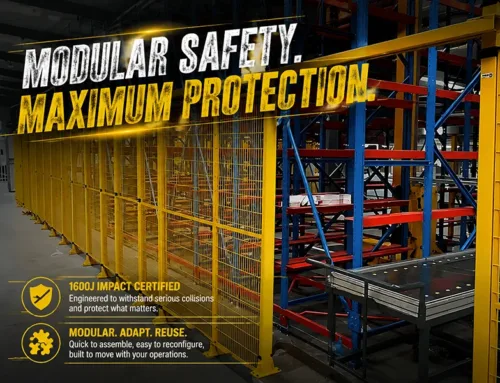
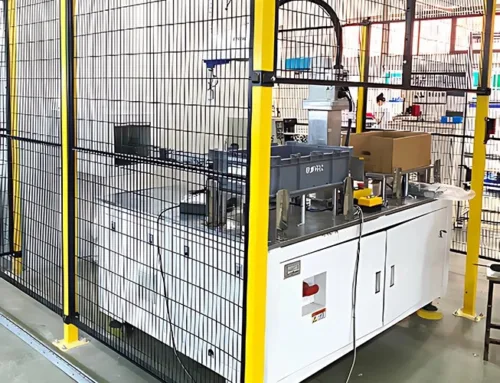
High-quality Sistemas de Proteção de Máquinas are engineered, not just fabricated. They rely on the calculated strength of their components. For instance, a system built with robust 60x60mm posts made from Q235 carbon steel and fully welded framed panels offers immense rigidity. The strength comes from the engineering design, which is validated through third-party testing like TUV impact resistance certifications. Installation is a clean, mechanical process. Posts are anchored with heavy-duty expansion bolts, and panels are secured with high-tensile fasteners. This method is faster, predictable, requires no hot work, and preserves the integrity of the factory-applied, corrosion-resistant powder coating.

Adaptability and Future-Proofing: Preparing for the Dynamic Factory Floor
The modern manufacturing environment is anything but static. Production lines are reconfigured, new robotic cells are added, and equipment is upgraded. The ability of your infrastructure to adapt is a major competitive advantage.
Fixed (Welded) Fencing
The permanence of fixed fencing is its greatest liability. Modifying a welded barrier is a destructive, costly, and time-consuming process. It involves cutting torches, angle grinders, and re-welding, essentially scrapping the original section and starting over. This inflexibility means that a change in your production layout can trigger a significant and unplanned capital expense, turning a valuable asset into a barrier to progress.
Mobile/Modular Fencing
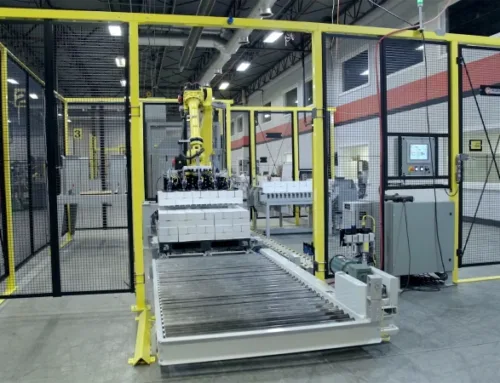
Modularity is the key to agility. A modular Cerca de Segurança para Robôs system is designed for change. Because every component is bolted together, the entire system can be easily disassembled, reconfigured, or expanded using simple hand tools. If a new robot is installed, you can re-use the existing posts and panels to create a new layout. If a line is moved, the entire fencing system can be relocated without damage. This protects your initial investment and allows your safety infrastructure to evolve with your operational needs, a critical benefit for system integrators managing complex, multi-phase projects.
Safety Integration: From a Passive Barrier to an Active System
In automated environments, a fence is more than just a physical wall; it’s an integral part of the machine’s safety control circuit. The ease and reliability of integrating safety devices like door interlocks are paramount.
Fixed (Welded) Fencing
Integrating a safety interlock switch onto a standard welded fence post is a custom job. It requires an electrical engineer or technician to drill and tap holes on-site. This process has several drawbacks: it compromises the post’s protective coating, introduces metal shavings into the clean production environment, and relies on manual alignment. A slight misalignment can cause the switch to malfunction, leading to nuisance trips and costly production stoppages.
Mobile/Modular Fencing
Advanced modular systems are designed with integration in mind. They offer pre-engineered mounting solutions, often called a Safety Interlock Carrier. These are specifically designed brackets that allow for the direct, bolt-on installation of industry-standard safety switches from brands like Omron, Schmersal, or Pizzato. This “plug-and-play” approach eliminates on-site fabrication, guarantees perfect alignment, and ensures the reliability of your safety circuit. For a system integrator, this dramatically reduces on-site engineering time and commissioning costs, ensuring a faster, more reliable project delivery.

Maintenance and Total Cost of Ownership (TCO)
The final, and perhaps most important, difference lies in the long-term cost and ease of maintenance.
Fixed (Welded) Fencing
If a section of welded fence is damaged by a forklift, the repair is a major undertaking. It often requires cutting out the damaged section and welding in a new one, necessitating a production shutdown and the associated costs of specialized labor and hot work permits.
Mobile/Modular Fencing
With a modular system, maintenance is simple and localized. A damaged panel or post can be unbolted and replaced in minutes, often by in-house maintenance staff. This drastically reduces downtime and repair costs. The superior, factory-applied powder coating also ensures a longer service life with minimal corrosion, contributing to a lower total cost of ownership over the life of the asset.
In conclusion, while fixed fencing may appear robust for static applications, the dynamic nature of modern industrial automation overwhelmingly favors the engineered strength, superior adaptability, and intelligent integration capabilities of a modular safety fencing system.
Perguntas Frequentes
1. Is modular safety fencing as strong as a fully welded fence?
Yes, and often stronger. High-quality modular systems are engineered with robust materials like heavy-gauge steel posts and framed panels. Their strength is verified through standardized impact tests (e.g., TUV certification) to meet or exceed international safety standards like ISO 14120, ensuring predictable and reliable performance that doesn’t depend on on-site welding quality.
2. How does modular fencing handle uneven floors?
Modular systems are designed with on-site realities in mind. Components like adjustable fixing rings on the posts allow for minor height adjustments of the panels during installation. This ensures a level and secure fence line even on floors that are not perfectly flat, without the need for shims or custom fabrication.
3. Can I reuse modular fencing if my plant layout changes?
Absolutely. This is a primary advantage. Since the entire system is bolted together, it can be completely disassembled without damage and reassembled in a new configuration. This protects your initial investment and makes it a long-term asset that can adapt to your business needs, unlike welded fencing which must be scrapped.
4. What is involved in repairing a damaged section of modular fencing?
Repair is fast and simple. You only need to replace the specific components that were damaged (e.g., a single panel or post). Using basic hand tools, you can unbolt the damaged part and bolt in a new one. This process typically takes minutes, not hours, and minimizes production downtime compared to the cutting and welding required for fixed fence repair.
5. How do modular systems integrate with electronic safety devices?
Leading modular systems offer pre-engineered mounting brackets and carriers for common safety interlock switches, light curtains, and other devices. This eliminates the need for on-site drilling or welding, ensuring a clean, secure, and perfectly aligned installation that enhances the reliability of your entire machine safety system.