PT
PT  EN
EN  DE
DE  RU
RU  JA
JA  ES
ES  IT
IT 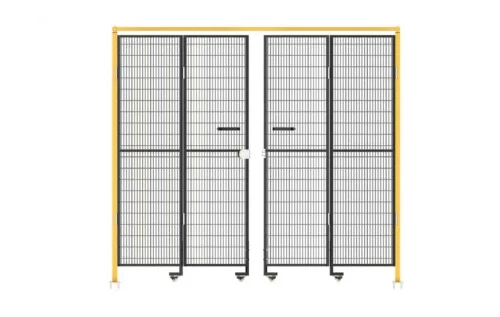

|
Struggling with on-site welding, mismatched safety interlock brackets, and delayed turnkey robotic cell deployments? When integrating high-speed mechanical assembly machines, your physical perimeter must seamlessly connect with your PLC safety logic without slowing down your installation schedule or failing strict automotive EHS audits. |
Safety Guarding Systems for Automated Lines
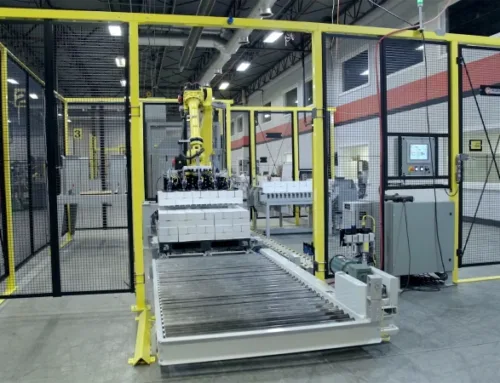
For system integrators and facility managers in the automotive and advanced manufacturing sectors, deploying a new automated production line is a race against the clock. The physical barrier surrounding your CNC machining centers and 6-axis robots isn’t just a fence; it’s a critical node in your machine safety circuit.
Eliminating the Integration Bottleneck
The Painful Reality (Before): System integrators frequently encounter delays during the final commissioning phase because generic wire mesh requires on-site hot work. Workers end up drilling and welding directly onto the posts to mount Omron D4NL or Pizzato safety interlocks. This ruins the powder coating, creates metal shavings that threaten nearby electro-optical elements, and extends the MTTR (Mean Time To Repair) when a switch inevitably misaligns.
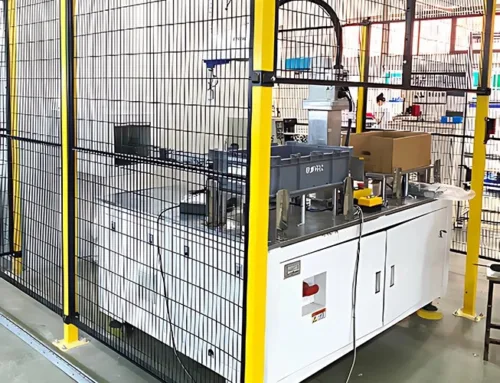
The Engineering Logic (Why it works): Our Sistemas de Cercas de Segurança para Robôs are engineered with a fully modular architecture. We utilize framed mesh panels constructed from 20x30x1.5mm seamless steel tubes with flattened weld points. More importantly, the system features pre-engineered lock carriers specifically designed as plug-and-play mounting plates for industry-standard safety switches.

The Operational Yield (After): Zero on-site drilling or hot work permits are required. Mechanical assembly time drops by up to 40%. You achieve instant, flawless PLC integration, ensuring that when the access door opens, the E-stop circuit triggers reliably every single time, keeping your OEE (Overall Equipment Effectiveness) high and passing ANSI/RIA R15.06 audits with ease.
Reclaiming Floor Space in High-Density Layouts
The Painful Reality (Before): Factory floor space is premium real estate. Standard 2″x2″ (50x50mm) mesh panels allow fingers to pass through easily. According to ISO 13857 standards, this forces integrators to install the perimeter guarding up to 33.5 inches (850mm) away from the hazard zone. This massive footprint squeezes your AGV/AMR pathways and limits the number of welding stations you can fit on the floor.
The Engineering Logic (Why it works): We utilize a “finger-safe” 0.78″ x 3.93″ (20x100mm) narrow mesh design. The entire structure is supported by heavy-duty Q235 carbon steel posts (60x60mm) anchored directly into the concrete with M10 expansion bolts.

The Operational Yield (After): The restricted mesh opening legally allows you to shrink the safety distance down to just 4.7 inches (120mm) from the machine hazard. This reclaims approximately 10 square feet per robotic cell, allowing you to widen material handling aisles and optimize your turnkey layout without compromising safety.
Securing Wide Access for Material Handling
The Painful Reality (Before): Automotive assembly lines require frequent forklift access to load heavy engine blocks or tooling into the cell. Standard hinged doors sag under their own weight when spanning wide openings. This sagging misaligns the safety interlock keys, causing phantom machine stops. Furthermore, flimsy frameless fencing buckles under minor forklift bumps, requiring complete line shutdowns to replace.
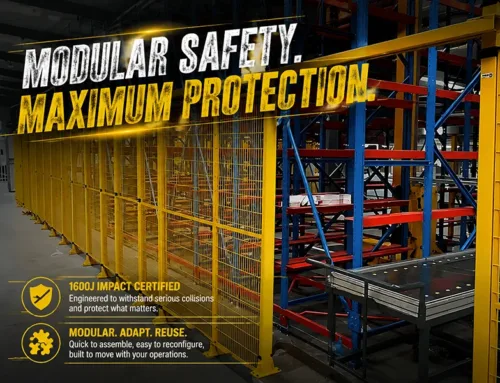
The Engineering Logic (Why it works): Our Cerca de segurança industrial solutions feature double-leaf sliding doors that utilize top-mounted bearing rails, capable of spanning up to 14 feet (4300mm) without gravity-induced sagging. The fully welded Q235 steel structure is TUV-certified to withstand 1600 Joules of impact.

The Operational Yield (After): Your automated line can absorb a 220 lb (100kg) object hitting at 12.4 mph without breaching. The sliding doors maintain perfect horizontal alignment year after year, guaranteeing that your safety switches engage flawlessly and your material handling flow remains uninterrupted.
Rapid Turnkey Deployment
The Painful Reality (Before): Complex conveyor systems and dedicated manufacturing lines often require last-minute layout changes. Custom-fabricated guards cannot adapt, leaving integrators waiting weeks for re-machined parts.
The Engineering Logic (Why it works): We employ a “design for automation” methodology. Using standardized fasteners and adjustable mounting clips, the entire perimeter acts like an industrial erector set. We provide accurate CAD models that drop straight into your layout drawings.

The Operational Yield (After): If a CNC machine needs to be shifted 2 feet to the left during installation, your team simply unbolts the panels, moves the posts, and re-secures them. You maintain 100% asset reusability and hit your project delivery deadlines without fabricating new materials.
Frequently Asked Questions (Automotive & Automation Integration)
We provide pre-engineered mounting plates (lock carriers) specifically designed for industry-standard safety switches. This allows for direct bolt-on installation without any on-site drilling or welding, ensuring seamless integration with your PLC safety logic.
Yes. The 20x100mm narrow mesh is designed to be “finger-safe” and fully complies with ISO 13857 and ANSI/RIA R15.06 standards, allowing you to legally install the guarding as close as 120mm (4.7 inches) from the hazard.
Absolutely. Our Q235 carbon steel posts and framed panels are TUV-certified to withstand up to 1600 Joules of impact energy, effectively absorbing collisions from material handling equipment without catastrophic failure.
Thanks to our modular, bolt-together design, a two-person crew can typically assemble the perimeter for a standard robotic work cell in just a few hours using basic hand tools, completely eliminating hot work permits.
Yes, we provide comprehensive 3D STP files and CAD layouts for all our modular components. This allows system integrators to validate clearances and safety distances digitally before any hardware arrives on site.