PT
PT  EN
EN  DE
DE  RU
RU  JA
JA  ES
ES  IT
IT

|
Your OEE is dropping because operators have to shut down the line just to see inside a robot cell. Solid guards create blind spots, and standard reflective mesh is a visual nightmare. This constant stop-and-start for simple monitoring is costing you valuable production time. |
See-through machine guarding for equipment monitoring?
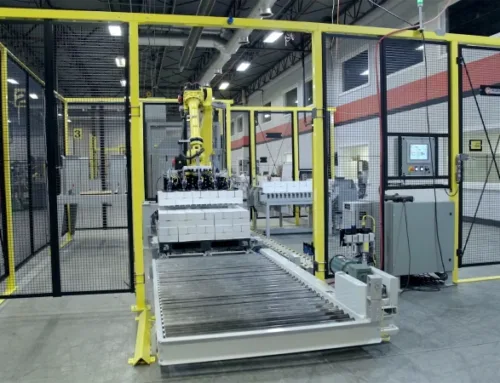
In the world of high-speed automation and robotics, the question isn’t whether you need Proteção de Máquinas. The question is whether your guarding is a barrier to productivity or a tool for it. Traditional guarding solutions often force a difficult choice: robust, opaque barriers that create dangerous blind spots, or wide-grid mesh that offers a distorted, fatiguing view of your critical equipment. This compromise is no longer necessary. Modern guarding is not just about containment; it’s about providing crystal-clear visibility that enhances monitoring, speeds up diagnostics, and boosts your Overall Equipment Effectiveness (OEE).
The “Black Box” Problem: When Safety Guards Hide Inefficiency
Picture a typical automotive welding station or a high-speed assembly cell. It’s enclosed in safety fencing. Suddenly, a component misaligns on a fixture. With solid steel guarding, the robot continues its cycle, unaware of the issue, producing costly scrap until an alarm finally trips. With standard galvanized or brightly colored mesh, the constant glare and visual “noise” make it difficult for operators to spot subtle issues during their patrols. The result is the same: the line must be stopped, the door interlock opened, and only then can the problem be diagnosed. These micro-stoppages add up, eroding minutes and then hours of productive uptime.
It’s Not Just Mesh, It’s Optical Engineering for the Factory Floor
The solution lies in treating the guard not as a wall, but as a window. This requires a system engineered for optical clarity without compromising on strength.
Why Black Mesh Creates Uninterrupted Visibility
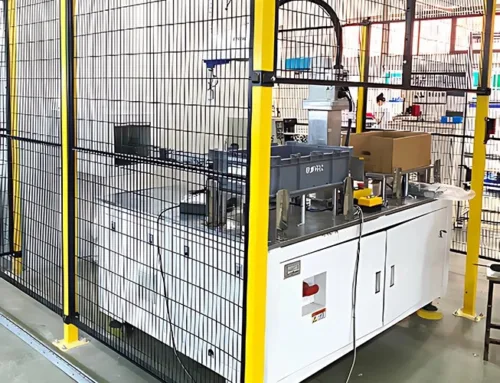
The key is a simple principle of physics. While silver or yellow mesh reflects ambient factory light back at the operator, creating glare and distraction, our standard RAL 9005 deep black powder coating absorbs it. This high-contrast finish makes the mesh itself seem to disappear, allowing the human eye to focus effortlessly on the machinery and processes within the cell. Your team can monitor robot arm movements, check conveyor flow, and perform visual quality inspections in real-time, without straining their eyes or needing to halt production.
How Framed Panels Deliver Strength Without Obstruction
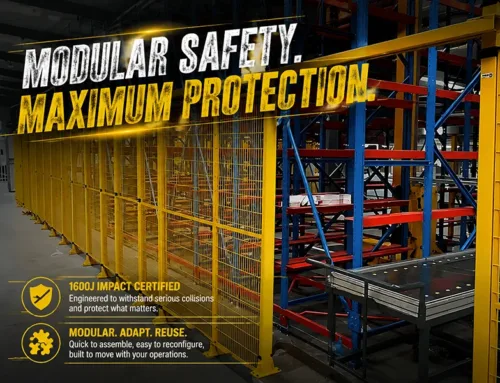
Superior visibility is useless if the structure is weak. Unlike flimsy, frameless mesh that can easily deform, our system is built around a full-perimeter 20x30mm tubular steel frame on every panel. This architecture provides immense rigidity and contributes to a system-wide impact resistance rating of 1600 Joules—enough to stop a 220-pound object moving at over 12 mph. This inherent strength means fewer vertical posts are needed, creating wider, more open sightlines into the work cell.

Gaining Floor Space While Improving the View
Compliance with safety standards like ISO 13857 is non-negotiable. The standard dictates that the distance from the guard to the hazard is determined by the size of the openings in the mesh. Larger openings mean the guard must be placed further away.
Many common Cerca de Segurança para Robôs systems use a 50x50mm (approx. 2″x2″) mesh. To be compliant, this often requires the fence to be installed 200mm (nearly 8 inches) or more from the nearest hazard. On a long assembly line, this wasted space adds up fast.
Our standard 20x100mm “finger-safe” mesh aperture is too narrow for fingers to pass through, allowing the Cerca de Segurança Industrial to be placed as close as 120mm (~4.7 inches) from the equipment. For a 65-foot (20-meter) robotic cell, this small change can reclaim over 40 square feet of valuable production floor—space that can be used for wider forklift aisles, maintenance access, or part staging.
From Passive Barrier to Active Safety System
True equipment monitoring requires more than just a good view. It demands safe, controlled access and seamless integration with your machine control systems. A well-designed guarding system is a platform for your safety devices, not an obstacle to them.
We provide pre-engineered mounting plates and lock carriers specifically for industry-standard safety interlock switches like the Omron D4NL or Pizzato series. This eliminates the need for on-site drilling or welding, which compromises the protective coating and can lead to premature rust. For system integrators, this means faster, cleaner, and more professional installations that pass EHS audits the first time.
When maintenance is required, a robust hinged or sliding door provides quick and easy access. Because the system is engineered for rigidity, our doors don’t sag or misalign, ensuring that safety interlocks engage perfectly every time. This reliability prevents the nuisance trips and “door-fault” errors that plague lesser systems and tempt workers into unsafe bypasses.

Ultimately, see-through Sistemas de Proteção de Máquinas are not about compromising safety for a better view. They are about leveraging superior visibility to create a safer, more efficient, and more productive manufacturing environment. It’s time to stop looking *at* your safety fence and start looking *through* it.
Perguntas Frequentes
1. Does the black powder coating scratch easily in an automotive plant environment?
No. Our electrostatic powder coating process creates a hard, durable finish that is chemically bonded to the Q235 carbon steel. It is designed to resist common industrial oils, solvents, and coolants and passes ISO 9227 salt spray tests for corrosion resistance, ensuring long life even in demanding conditions.
2. Can we mount our specific brand of safety interlock switch on your doors?
Absolutely. We offer a range of pre-engineered mounting plates and “lock carriers” designed to provide a perfect fit for major safety device brands, including Omron, Pizzato, Schmersal, and Allen-Bradley. This ensures a clean, compliant, and robust installation without any field modification.
3. How does the visibility of black mesh compare to clear polycarbonate (PC) panels?
Black mesh offers several distinct advantages. It is far more resistant to scratching and abrasion than polycarbonate. It does not suffer from glare, smudging, or the yellowing that can occur with PC panels over time. Furthermore, the mesh allows for natural airflow, preventing the buildup of heat, smoke, or fumes within the cell.
4. What is the certified impact rating of your standard see-through panels?
Our standard framed mesh panels are engineered and tested to withstand an impact energy of 1600 Joules. This is equivalent to stopping a 100 kg (220 lbs) object traveling at 20 km/h (12.5 mph), ensuring it can contain a dislodged workpiece or withstand accidental contact from material handling equipment.
5. We have conveyors passing through the guarded area. How do you handle these openings?
We design and fabricate custom tunnel guards and cutouts. These are precisely shaped to fit around your conveyors while strictly adhering to the safe opening sizes specified in ISO 13857. This allows your product to pass through seamlessly while preventing any part of a person from reaching the hazard zone.