PT
PT  EN
EN  DE
DE  RU
RU  JA
JA  ES
ES  IT
IT 
No mundo das operações de data centers, o tempo de atividade é a moeda do reino. A busca pela disponibilidade de “cinco noves” é implacável. Investimos milhões em energia redundante, refrigeração e conectividade de rede. Projetamos pilhas complexas de cibersegurança para nos defender contra ameaças digitais.
But in this focus on digital and operational resiliency, a foundational element is often underestimated: the physical perimeter. A determined physical breach is not just a security incident; it is a catastrophic threat to uptime, client trust, and the very viability of the facility.
For this reason, the Uptime Institute’s Tier Standard for Topology—the global benchmark for data center reliability—places significant emphasis on physical security. As we dissect the requirements for achieving and maintaining a Tier III or Tier IV certification, it becomes clear that your perimeter fence is not merely a boundary marker. It is your first, and arguably most critical, line of defense.
Decoding Tier Standards: The Non-Negotiable Role of Physical Hardening
While the Tier standards are performance-based, they create an undeniable requirement for robust physical security. A Tier III facility must be “Concurrently Maintainable,” meaning any single component can be removed or serviced without disrupting operations. A Tier IV facility must be “Fault Tolerant,” meaning it can withstand any single unplanned failure. A successful physical intrusion is a catastrophic, unplanned failure.
Therefore, achieving these high tiers necessitates a perimeter that aligns with the foundational security principle used by military and critical infrastructure planners worldwide: Delay, Detect, Respond.
- Delay: Physically impede an intruder for a quantifiable period.
- Detect: Reliably identify the intrusion attempt as it happens.
- Respond: Dispatch a security force to intercept and neutralize the threat.
The entire security chain fails if the first link—Delay—is weak. The most advanced response team is useless if an intruder can breach your perimeter in seconds. This is where the technical specifications of your fence become mission-critical. Its sole purpose is to buy your security team their most valuable asset: time.
The Fence as a “Delay” Asset: A Technical Analysis
Uma verdadeira cerca de alta segurança é um sistema projetado para derrotar táticas comuns de invasão. Ela deve possuir atributos específicos que vão muito além de uma cerca comercial padrão.
1. Anti-Climb Capability
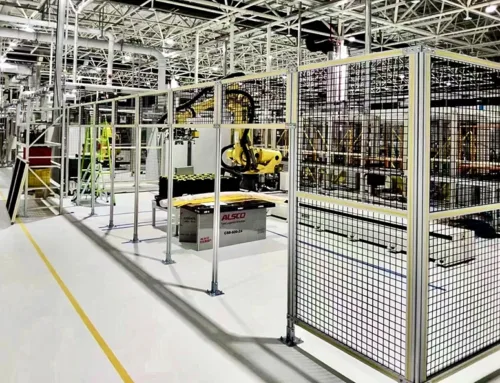
O método de intrusão mais comum é simplesmente pular por cima. Uma cerca em conformidade com os padrões deve tornar essa tática praticamente impossível para um indivíduo sem auxílio. A solução técnica é um sistema anti climb security fencing especializado. A chave é sua abertura de malha. Uma cerca de elos padrão é, na prática, uma escada. Em contraste, um sistema de painel de arame soldado de alta segurança com malha apertada—tipicamente com aberturas não maiores que 76,2 mm x 12,7 mm (3" x 0,5")—impede o apoio para dedos e pés. As aberturas verticais e estreitas tornam impossível estabelecer uma pegada ou apoio seguro, atuando como um poderoso mecanismo de dissuasão e atraso.
2. Anti-Cut & Breach Resistance
Um invasor determinado chegará com ferramentas. A cerca deve ser capaz de resistir a um ataque sustentado com implementos comuns, como cortadores de parafuso, cortadores de arame e até ferramentas elétricas sem fio. Isso requer uma combinação de resistência do material e design inteligente. Procure arame de aço de alta resistência e bitola grossa que resista a ferramentas de corte padrão. Crucialmente, a resistência da solda em cada interseção deve ser excepcionalmente alta para evitar que todo o painel seja comprometido. A pequena abertura da malha novamente oferece uma vantagem defensiva: impede que as mandíbulas de cortadores de parafuso maiores agarrem o arame em primeiro lugar, forçando um atacante a usar ferramentas menores e muito menos eficazes, aumentando drasticamente o tempo necessário para criar uma brecha.
3. Seamless Integration with Detection Systems (PIDS)
“Atraso” não tem sentido sem “Detecção”. Sua cerca deve servir como uma plataforma estável e confiável para seu Sistema de Detecção de Intrusão Perimetral (PIDS), como sensores de cerca de fibra óptica. É aqui que os sistemas de painéis rígidos superam em muito as cercas de elos flexíveis. Um painel de cerca rígido e não flexível garante que os sensores sejam acionados apenas por tentativas genuínas de intrusão—corte, escalada ou levantamento. Cercas flexíveis são atormentadas por alarmes falsos causados por vento, chuva ou pequenos animais, levando à fadiga de alarme e a uma postura de segurança comprometida. Um sistema rígido fornece uma plataforma estável, garantindo a integridade dos seus dados de detecção.
Beyond the Spec Sheet: Specifying a System, Not Just a Fence
Achieving Tier-level security is not about buying panels of fence; it’s about deploying an integrated perimeter system. The fence panels are the core, but they must be supported by equally robust components:
- Posts and Footings: Must be engineered to withstand vehicle impact and attempts to pull them from the ground.
- Gates: Often the weakest link. Gates must meet the same anti-climb and anti-cut specifications as the fence itself.
- Toppings and Outriggers: The use of concertina or barbed wire can further enhance the “Delay” factor.
A single weak point nullifies the strength of the entire system. True security is achieved when the delay time is consistent across every linear foot of the perimeter.
Your First Investment in Five-Nines Availability
In your role as a security director, you are a guardian of your company’s core asset. The integrity of the data within your walls is predicated on the physical integrity of the walls themselves. That integrity begins at the fence line.
Uma cerca perimetral de alta segurança e em conformidade com os padrões não é uma despesa operacional a ser minimizada. É um investimento de capital fundamental na promessa de segurança, confiabilidade e tempo de atividade da sua instalação. Antes de garantir a tolerância a falhas digitais aos seus clientes, você deve primeiro proteger seu próprio domínio físico com a anti climb security fencing.