PT
PT  EN
EN  DE
DE  RU
RU  JA
JA  ES
ES  IT
IT For any major infrastructure investment, longevity is paramount. When specifying an outdoor steel security fence, decision-makers are often presented with vague promises of “durability.” But what truly separates a fence that begins to fail in five years from one engineered to stand strong for twenty?
The answer is not found in the thickness of the steel alone, but in the sophisticated materials science applied to protect it. The unseen enemy of every outdoor steel structure is corrosion—a relentless electrochemical process that turns a valuable asset into a rusty liability.
This analysis moves beyond marketing terms to provide a clear, scientific explanation of the protection systems that define a truly long-life fence. Understanding this science is critical to making a sound, long-term investment.
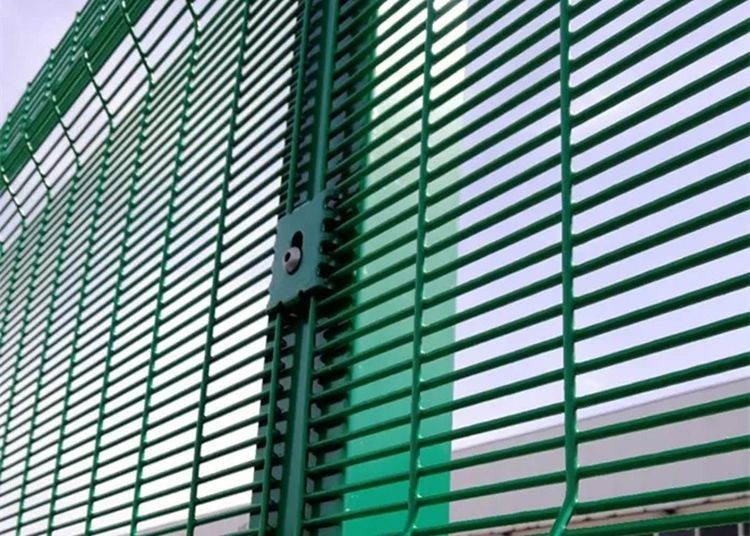
The Inevitable Failure of Standard Paint: A Microscopic View
The most common method for protecting steel is a simple layer of industrial paint. While economical upfront, paint is merely a topical barrier, and a flawed one at that. At a microscopic level, liquid paint cures into a film that is porous and brittle. Its defense is entirely passive.
The failure mechanism is predictable:
- Barrier Breach: A small scratch from impact, abrasion, or even natural expansion and contraction creates a microscopic opening in the paint.
- Infiltration: Moisture and oxygen infiltrate this opening, reaching the steel surface.
- Sub-Surface Corrosion: An electrochemical reaction begins, and rust forms. Crucially, this corrosion spreads underneath the paint film, breaking the bond between the paint and the steel.
- Catastrophic Failure: This results in the bubbling, flaking, and peeling familiar on older steel structures. The fence is now decaying from the inside out, and its structural integrity is compromised long before it becomes visually obvious.
The First Line of Defense: Hot-Dip Galvanization
A truly durable system requires a more fundamental approach. The first and most critical layer of defense is hot-dip galvanization. This is not a “coating” in the traditional sense; it is a process that creates a metallurgical transformation of the steel’s surface.
The Science: This process creates a multi-layered, corrosion-proof shield with two distinct defense mechanisms:
- Barrier Protection: The process forms a series of zinc-iron alloy layers, topped with a pure zinc layer. This shield is metallurgically bonded to the steel, making it far more robust and resistant to abrasion than a simple layer of paint.
- Sacrificial Protection: This is the truly remarkable property of galvanization. Zinc is more electrochemically active than steel. This means that if the coating is deeply scratched or breached, the zinc will preferentially corrode to protect the steel. It actively “sacrifices” itself, preventing rust from ever starting. When looking for long-lasting anti climb fences, this is a key feature.
The Second Line of Defense: Powder Coating
While hot-dip galvanization provides exceptional intrinsic protection, a premier system adds a second, synergistic layer of defense: a heavy powder coating.
The Science:
- Synergistic Protection: The powder coating acts as a durable, inert barrier, protecting the underlying zinc layer from abrasion, impact, and UV radiation. This dramatically slows down the rate at which the zinc needs to “sacrifice” itself, extending the lifespan of the entire protection system exponentially.
- Superior Durability: Unlike wet paint, the powder coating’s thermal bonding process creates a finish that is significantly thicker, harder, and more flexible. It is far more resistant to chipping, cracking, and fading.
An Investment in Scientific Certainty
The difference between a short-term fence and a long-term asset lies in the intelligence of its protection. A simple paint job is a temporary measure. A comprehensive, dual-layer system of hot-dip galvanization and powder coating is a calculated, scientific strategy to defeat corrosion.
By understanding the materials science, you are no longer just buying a product based on vague claims of durability. You are investing in a predictable, engineered outcome. You are choosing a system whose longevity is not a hope, but a measurable result of its chemical and physical properties.