PT
PT  EN
EN  DE
DE  RU
RU  JA
JA  ES
ES  IT
IT 
For many mid-sized manufacturing plants, the promise of automation is often met with the harsh reality of its price tag. This was the exact dilemma facing Maria, a Plant Manager at a regional automotive parts supplier in Ohio. Her proposal to implement a fleet of Autonomous Guided Vehicles (AGVs) to streamline parts delivery from warehousing to the assembly line was a clear winner for boosting efficiency. The problem? The initial project quote was nearly double her approved budget, putting the entire initiative on the verge of being shelved.
The single largest and most inflexible line item was “Safety Fencing.” The AGV vendor, following a standard, liability-averse protocol, had specified a heavy-duty, impact-rated guarding system to line the hundreds of feet of planned robotic pathways. For Maria, the project’s champion, it was a frustrating roadblock. The long-term efficiency gains were undeniable, but the upfront capital expenditure was simply too high to justify.
The Challenge: When “Best Practice” Exceeds the Budget
Maria’s challenge is a common one. Automation vendors often recommend the highest-possible-spec safety equipment as a default. While well-intentioned, this “one-size-fits-all” approach fails to consider the specific context of the application. Maria believed in safety, but she also believed in smart spending.
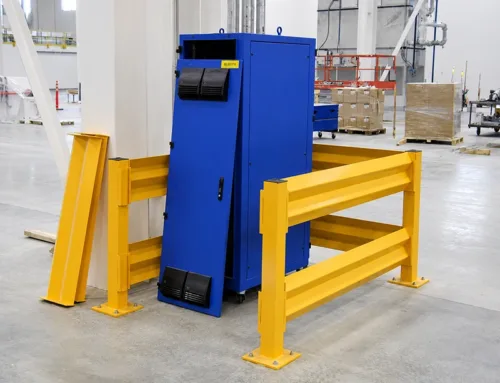
Instead of abandoning the project, she made a critical decision: to conduct her own, context-specific risk assessment. She analyzed the AGVs’ operational parameters: they moved at a controlled, low speed, were equipped with advanced LIDAR and emergency-stop sensors, and their routes were on a dedicated, flat floor. Her conclusion was a game-changer. The primary function of the physical barrier was not to stop a multi-ton, out-of-control vehicle. Its purpose was to delineate the AGV-only pathways and prevent plant personnel from inadvertently walking into them. The problem was one of traffic management and visual demarcation, not high-impact collision protection, which led her to seek a more appropriate Cerca de segurança industrial solution.
The Solution: A “Right-Sized” Approach to Delineation
This insight fundamentally changed her procurement strategy. She stopped searching for “heavy-duty robot guarding” and started looking for solutions in “industrial partitioning” and “warehouse zoning.” This led her to a modular, frameless fencing system. It was a perfect match for her real-world requirements.
- Fit-for-Purpose Design: The system was explicitly engineered for non-high-impact risk area isolation. It was designed to define work zones and create visual barriers, which was precisely what her risk assessment called for.
- Immediate Cost Savings: Because the system was not over-engineered for high-impact scenarios, its manufacturing cost was significantly lower than the heavy-duty alternatives—often by as much as 20-30%. This alone brought the material quote back within the realm of her original budget.
- Drastic Reduction in Installation Costs: Maria discovered she wouldn’t need to hire a specialized and expensive contracting crew. The system was designed for simple, one-person installation and could save up to 50% in labor time. She scheduled her own two-person maintenance team to deploy the entire system during a planned weekend shutdown, eliminating contractor overhead and operational disruption.
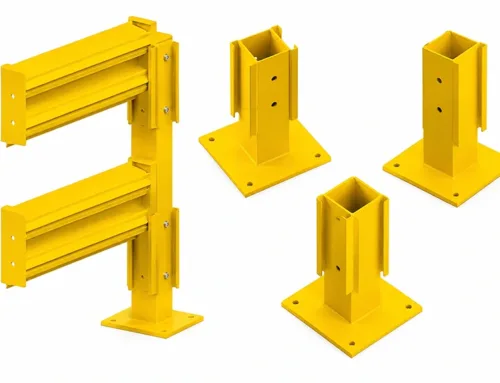
The installation was smooth and efficient. The team easily navigated the plant’s existing infrastructure, using the frameless panels’ on-site cuttability to create perfect fits around building columns. As a secondary benefit, they utilized the grooves in the posts to neatly run the low-voltage wiring for the AGV charging station indicator lights, resulting in a clean and professional finish that exceeded expectations.
The Results: A Win for Efficiency and the Bottom Line
Maria’s decision to challenge the initial recommendation and “right-size” her Cerca de segurança industrial solution yielded clear, measurable results that validated her strategy.
- Project Delivered Under Budget: By choosing a fit-for-purpose modular system and leveraging her in-house team for installation, the final cost for the 650-foot partitioning project was 48% lower than the initial quote. The AGV project was approved and successfully implemented.
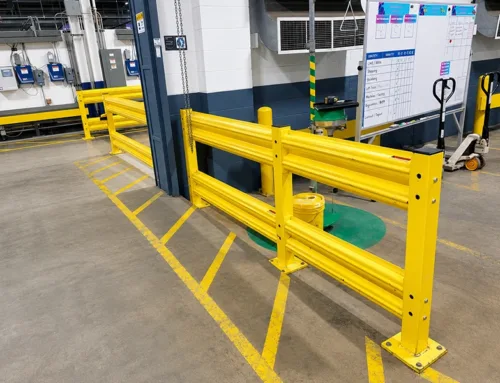
- Safe and Efficient Operations: The AGV pathways were clearly and professionally delineated. The bright yellow posts provided high visibility, and the physical barrier effectively guided foot traffic, eliminating the risk of accidental incursions. As projected, the new automated workflow increased parts delivery efficiency by 20%.
- Long-Term Agility: Six months after the initial install, a new CNC machine was added to the production line. This required a minor rerouting of the AGV path. Maria’s team spent a single afternoon disassembling and reconfiguring a 50-foot section of the same fence. This level of agility would have been impossible with a welded system, proving the long-term value of the modular investment.
The Power of Questioning the Default
This case study demonstrates the immense value of aligning a solution with the true nature of the problem. By conducting a thoughtful risk assessment, Maria avoided the common pitfall of over-engineering, a primary driver of budget overruns in automation projects. A “right-sized” solution like a modular, non-safety-grade fence is not a compromise; it’s an intelligent, lean, and cost-effective strategy. It can be the key to unlocking critical efficiency projects that deliver a powerful return on investment for your facility.