PT
PT  EN
EN  DE
DE  RU
RU  JA
JA  ES
ES  IT
IT 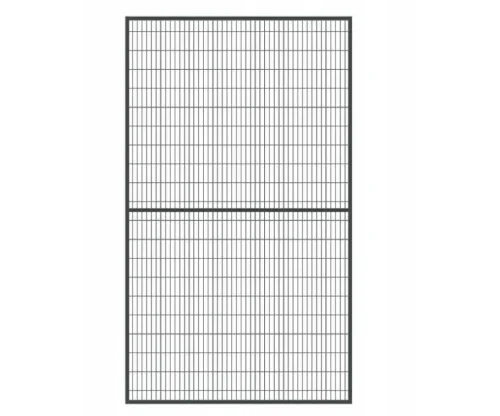

When designing a safe and efficient automated workspace, the choice of materials for your machine guarding is not just a detail—it’s a fundamental decision that impacts safety, operational visibility, and long-term durability. Understanding the distinct advantages of steel mesh, polycarbonate, and solid panels is the first step toward building a physical barrier that truly serves your operational needs.
The Workhorse of Industrial Safety: Welded Steel Mesh Fencing
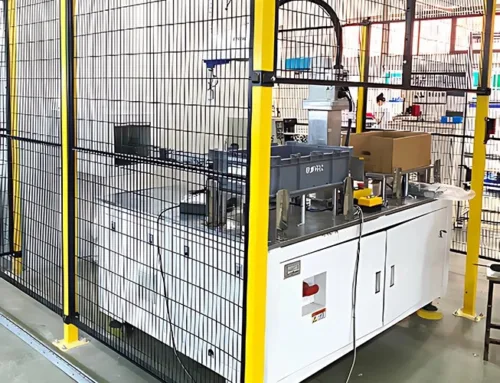
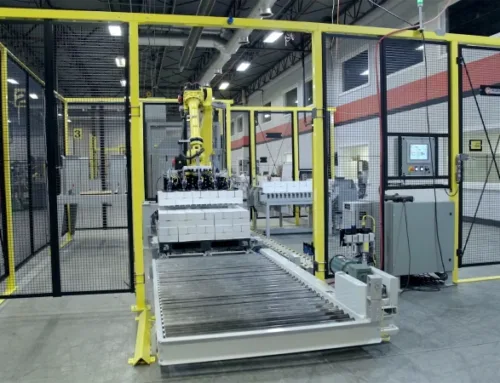
For the vast majority of industrial applications, from Cerca de Segurança para Robôs to general machine guarding, welded steel mesh is the default and most robust choice. Its prevalence is due to a combination of superior strength, durability, and cost-effectiveness. However, not all steel mesh systems are created equal; the specific grade of steel, panel construction, and surface treatment are critical differentiators.
Material Deep Dive: The Significance of Q235 Carbon Steel
The foundation of a high-performance safety fence lies in its raw material. Systems built from Aço carbono Q235 offer an optimal balance of strength and ductility. This material is specifically chosen for its excellent weldability and its ability to absorb kinetic energy during an impact—a critical feature in dynamic environments with industrial robots or material handling equipment. In the event of a severe collision, such as a forklift impact or a robot malfunction, a Q235 steel post is engineered to deform and absorb the energy rather than fracturing brittlely. This controlled failure mode prevents catastrophic failure and contains the hazard within the cell, protecting both personnel and high-value assets.
Structural Integrity: The Power of a Framed Panel Design
A key structural element that dramatically enhances impact resistance is the use of a framed panel. Unlike simple wire mesh, a framed panel consists of steel wire mesh fully welded inside a rigid steel tube frame (e.g., 20 x 30mm tubing). This construction transforms the panel into a single, robust structural unit.
- Energy Distribution: When an object strikes the mesh, the frame distributes the impact load across the entire panel and into the supporting posts, preventing localized failure. This is crucial for containing projectiles from machining operations or withstanding direct force.
- Enhanced Durability: The frame protects the edges of the mesh from damage during transport, installation, and daily operation, significantly increasing the system’s lifespan and reducing maintenance costs.
- Manufacturing Process Matters: Advanced systems utilize a flat welding technique where the wire mesh is welded flush with the frame’s interior. This eliminates sharp edges and burrs—a common cause of minor injuries and snagged clothing in industrial settings—and ensures a smooth, professional finish.
Surface Protection: Powder Coating for Harsh Environments
Industrial environments often involve exposure to moisture, cutting fluids, and cleaning chemicals. A superior surface treatment is essential for longevity. High-quality powder coating provides a durable, corrosion-resistant finish that significantly outperforms standard paint. This process involves electrostatically applying a dry powder to the steel components, which is then cured under heat to form a hard, protective layer. Systems validated through rigorous testing, such as the ISO 9227 salt spray test, guarantee a high level of corrosion resistance, ensuring the structural integrity and appearance of the fence are maintained even in demanding conditions.

For Maximum Visibility and Containment: Polycarbonate Panels
While steel mesh offers excellent protection and airflow, certain applications demand full visibility or the containment of very small particles or liquids. In these scenarios, polycarbonate (PC) panels are the ideal solution.
When to Choose Transparency
Polycarbonate panels are integrated into the same modular frame and post system as steel mesh, allowing for hybrid configurations. They are specified for applications such as:
- CNC Machining Centers: To contain coolant spray and flying chips while allowing operators to safely monitor the machining process.
- Quality Inspection Cells: Where clear, unobstructed views are necessary for visual inspection systems or manual checks without entering the hazardous area.
- Assembly and Testing Stations: To protect personnel from small, high-velocity moving parts while maintaining full process visibility.
High-grade polycarbonate also offers impressive impact resistance, providing a safe and clear barrier that meets international safety standards like ISO 14120.
Specialized Applications: Solid Steel and Aluminum Panels
For applications requiring complete physical and visual isolation, solid panels made of steel or aluminum are the answer. These are used when containment needs go beyond what mesh or PC can provide.
Solid Panels for Total Isolation
Solid steel panels are the material of choice for the most hazardous applications. They provide an impenetrable barrier ideal for:
- Welding and Robotic Welding Cells: To completely block dangerous UV radiation (arc flash) and contain all sparks and spatter, protecting nearby workers and equipment.
- Laser Cutting Applications: To contain stray laser reflections and provide a certified light-tight enclosure.
- High-Pressure Washdown Areas: To contain water and cleaning agents, preventing contamination of other parts of the facility.
While aluminum is sometimes used in lighter-duty profile-based systems for its low weight, heavy-duty industrial safety applications typically rely on the superior strength and impact resistance of solid steel panels integrated within a robust, Q235 steel framework.
| material | Primary Advantage | Best For | Key Consideration |
|---|---|---|---|
| Welded Steel Mesh | High strength-to-cost ratio, impact resistance, visibility, airflow. | General robot cells, perimeter guarding, material handling areas. | Framed construction provides superior durability over frameless mesh. |
| Polycarbonate (PC) | Maximum visibility, containment of liquids and small particles. | CNC machining, quality inspection, assembly lines. | Ensure it meets fire safety standards (e.g., UL94V0) if required. |
| Solid Steel / Aluminum | Total physical and visual isolation, containment of hazardous energy (light, sparks). | Welding bays, laser cutting, high-security areas. | Steel offers the highest level of impact and penetration resistance. |
Perguntas Frequentes
What is the most durable material for a machine guarding fence?
For overall durability and high-impact resistance, Q235 carbon steel used in a framed panel system is the most robust and widely used material. Its ability to absorb energy and withstand physical collisions makes it ideal for protecting against heavy equipment like robots and forklifts.
Can I combine different panel materials in one fencing system?
Yes. A key advantage of a modular Cerca de Segurança Industrial system is the ability to mix and match panel types. You can use steel mesh for general areas, polycarbonate panels for inspection points, and solid steel panels for hazardous zones like welding cells, all using the same standardized posts and fixings.
How does the panel material affect compliance with safety standards like ISO 14120?
The standard ISO 14120 focuses on the overall performance of the guard, including its strength, rigidity, and the size of any openings. All materials—steel mesh, polycarbonate, and solid steel—can be used to build a compliant system, provided the system as a whole has been tested and certified to withstand specified impact forces and that mesh openings are sized correctly to prevent reach-through.
Is steel mesh fencing suitable for environments with chemical splashes?
Yes, provided it has a high-quality surface treatment. A robust powder coating that has passed corrosion tests like the ISO 9227 salt spray test will protect the underlying steel from rust and degradation caused by exposure to moisture and many common industrial chemicals and cutting fluids.
How difficult is it to replace a damaged panel in a modular system?
It is very simple. In a well-designed modular system, a damaged panel can be replaced in minutes. The process typically involves loosening the fixing bolts that hold the panel to the posts, removing the damaged panel, inserting a new one, and retightening the bolts. No cutting or welding is required, minimizing production downtime.