PT
PT  EN
EN  DE
DE  RU
RU  JA
JA  ES
ES  IT
IT 

|
In high-speed automotive assembly and robotics integration, a fraction of a second matters. When operators cannot clearly see inside a robotic work cell due to optical glare from poorly designed barriers, minor tooling jams turn into major downtime. By engineering a two-tone optical barrier, we eliminate the “prison bar” effect, giving your team a crystal-clear view of the production line while maintaining strict ISO 14120 compliance and absorbing up to 1600 Joules of impact. |
Guarding Fence Visibility for Operators: Eliminating the “Prison Bar” Effect
In dedicated manufacturing lines, EHS managers and system integrators face a constant dilemma: how to physically separate humans from high-speed mechanical assembly machines without blinding the operators. Traditionally, facilities install galvanized or bright yellow wire mesh around a CNC machining center or an automated welding station. However, under the 5000K cold-white LED lighting typical of modern factories, bright mesh reflects light directly into the operator’s eyes. This creates severe eye fatigue and an optical illusion where the mesh blurs the background—hiding misaligned engine blocks, robotic arm faults, or jammed conveyors.
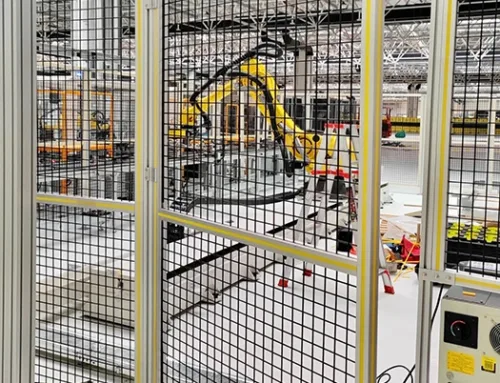
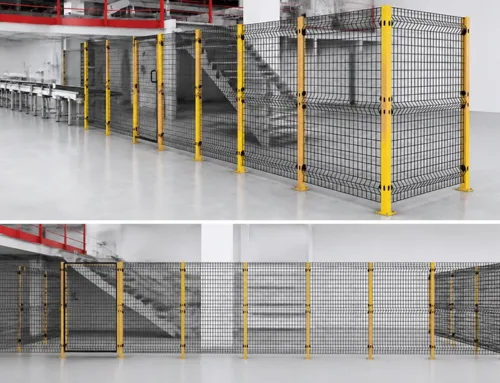
To solve this, our Cerca de Segurança Industrial system employs a highly specific optical engineering approach. We utilize RAL 9005 (Deep Black) for the wire mesh and RAL 1023 (Safety Yellow) exclusively for the 60x60mm Q235 carbon steel posts. Because black absorbs ambient light rather than reflecting it, the mesh acts like a theatrical scrim. The human eye naturally looks past the black wires to focus on the brightly lit robotics layouts inside the cell. The result? Operators can monitor servo movements and HMI screens with zero eye strain, diagnosing issues instantly before executing a Lockout/Tagout (LOTO) procedure.

Shrinking the Footprint While Expanding the View
Visibility is useless if the operator is forced to stand too far away from the process. Standard 2″ x 2″ (50x50mm) cheap wire mesh fails the ISO 13857 finger-safe reach tests, forcing integrators to install the barrier up to 33.5 inches (850mm) away from the hazard. This massive safety gap eats up premium floor space on the assembly line and pushes the operator too far back to visually inspect the precision machining process.
Our framed panels feature a tightly welded 0.78″ x 3.93″ (20x100mm) mesh spacing. This anti-climb, finger-safe geometry legally allows the Sistemas de Proteção de Máquinas to be installed as close as 4.7 inches (120mm) from the pinch point. By bringing the operator closer to the machine safely, they gain an unobstructed, intimate view of the tooling and part transfer process. This close-proximity visibility drastically reduces the Mean Time To Repair (MTTR) because technicians can pinpoint the exact location of a jam without having to defeat safety interlocks to get a better look.
Managing Traffic in Automated Material Handling Areas
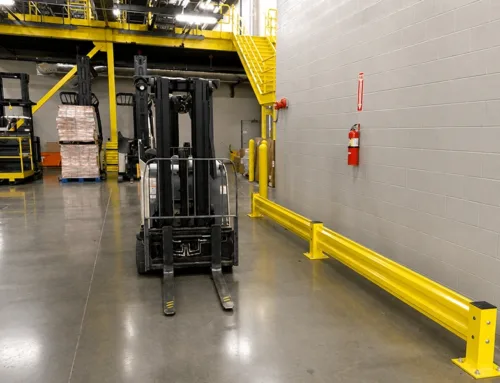
In a turnkey automotive plant, visibility isn’t just about stationary operators; it is critical for forklift drivers and AGV (Automated Guided Vehicle) navigation. Solid sheet metal guards or thick aluminum profiles create dangerous blind spots at intersections, increasing the risk of a 10,000 lbs forklift colliding with a multi-million dollar robotics cell.
By integrating our Cerca de Segurança para Robôs with transparent polycarbonate panels and black mesh, we eliminate these blind spots. For areas with limited clearance where wide access is required for tooling changes or material feeding, our single sliding doors run smoothly on heavy-duty bearing rails. The driver can clearly see the status of the automated cell and the position of the robotic arm before approaching the loading zone, ensuring seamless and safe material flow.

Visual Confirmation of Safety Interlock Status
Modern automation integration relies heavily on PLC logic and safety interlocks (like Omron D4NL or Pizzato switches). When an operator needs to enter a cell to clear a fault, they must visually confirm that the machine has achieved a safe state (Safety Torque Off). If the fence blocks their view of the control equipment or the robotic arm’s home position, they are entering blindly.
Because our system is engineered with pre-fabricated lock carriers and maintains high structural rigidity (preventing door sag), the safety switches align perfectly every time. Combined with the high-visibility black mesh, the operator can stand at the door, verify the red/green status lights on the machine control panel inside, and visually confirm the robot is stationary before turning the key. This logical workflow prevents accidental machine restarts and keeps cycle times optimized.

Operational Impact: Before vs. After
| Operational Metric | Traditional Fencing (Yellow/Galvanized Mesh) | Mdfence System (Black Mesh + Yellow Posts) |
|---|---|---|
| Operator Visibility | High glare; difficult to see tooling details and HMI screens. | Zero glare; high transparency allows clear view of the CNC cycle. |
| Space Utilization | Requires up to 33.5″ safety distance due to large 2″x2″ mesh. | Can be installed just 4.7″ from hazards due to 0.78″ slot design. |
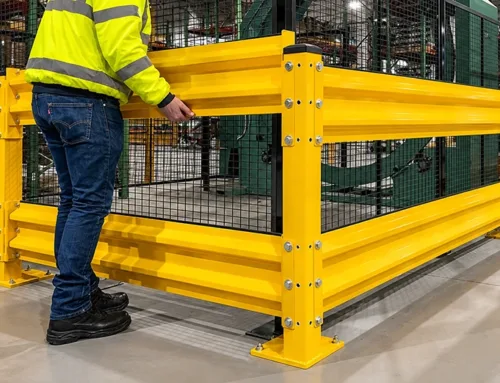
| AGV/Traffic Safety | Creates blind spots at intersections; high risk of forklift impact. | Clear sightlines through corners; posts absorb up to 1600J impacts. |
Perguntas Frequentes
1. Why does the color of the mesh affect operator visibility in a robotic cell?
Bright colors like yellow or silver reflect factory LED lighting, causing the human eye to focus on the fence itself rather than the machinery behind it. Our RAL 9005 black mesh absorbs light, making the barrier visually recede so operators can clearly monitor high-speed assembly processes without eye strain.
2. Can we still maintain OSHA and ISO compliance if we use black mesh instead of yellow?
Yes. Safety standards require the hazard boundary to be clearly marked, not the entire screen. We use Safety Yellow (RAL 1023) on the robust 60x60mm posts to clearly delineate the restricted area, while the black mesh provides the necessary ISO 14120 physical protection and ISO 13857 reach compliance.
3. How does the 20x100mm mesh size improve both safety and visibility?
The narrow 20mm (0.78″) slot prevents fingers from reaching through, allowing you to install the fence much closer to the machine (up to 120mm away). This closer proximity actually improves the operator’s viewing angle of the internal tooling and saves valuable factory floor space.