PT
PT  EN
EN  DE
DE  RU
RU  JA
JA  ES
ES  IT
IT 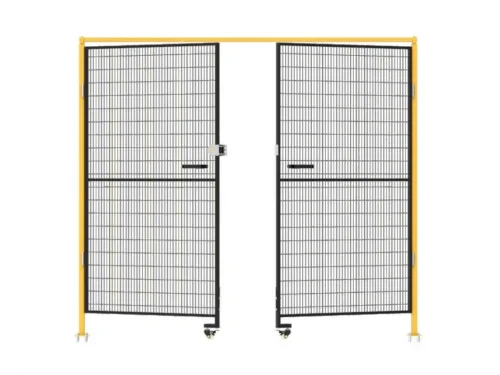

|
A forklift breach just took down your robot cell guard. Is that a 10-minute panel swap or a 4-hour hot work shutdown with angle grinders and welders? Your OEE is bleeding. Every minute of downtime on your automated line is a cost you can’t recover. The difference is in the design. |
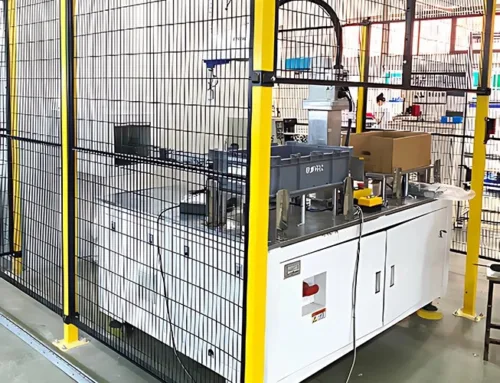
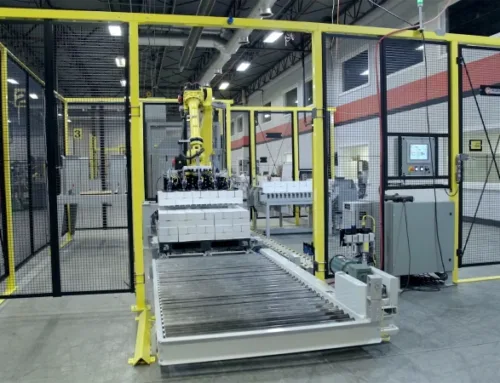
It’s 2 PM on a Tuesday. A loaded AGV misjudges a turn, or a forklift operator cuts a corner too tight. The result is a loud bang and a mangled Machine Guarding Fence Panel. Your high-speed robotic welding station is now exposed, triggering an immediate line stoppage.
The real damage isn’t the bent steel; it’s the cascade of operational failures that follows. The maintenance team is called, a hot work permit is requested, and production forecasts for the shift are suddenly in jeopardy. Traditional welded or unitized safety fences turn a simple physical breach into a multi-hour, high-cost crisis.
But what if a catastrophic failure could be reduced to a minor inconvenience?
The 10-Minute Panel Swap: From Downtime to Uptime
The core issue with welded-in-place or low-cost “Anping” style mesh barriers is that they are designed as permanent structures. Repair means destruction. It requires cutting, grinding, welding, and repainting—a “hot work” process that introduces fire hazards and requires the production line to be completely shut down for hours.
A truly modular Robot Safety Fencing System, however, treats each component as a replaceable part. The Mdfence system is engineered for Mean Time To Repair (MTTR) that can be measured in minutes, not hours.
Here’s the process:
- Isolate and Lockout/Tagout the area.
- Using a standard Allen key, loosen the four M8 bolts on the connection clips holding the damaged panel.
- Slide the damaged panel out.
- Slot in a spare panel from your maintenance stock.
- Tighten the four bolts on the clips.
That’s it. A task that takes a skilled maintenance technician about 10 minutes. No sparks, no fumes, no fire watch, and no hours of lost production. This is the difference between a system designed for manufacturing reality and one that only looks good on the initial quote.

Beyond Rapid Repair: Engineering to Prevent Damage
The fastest repair is the one you never have to make. While accidents happen, the structural integrity of your Cerca de Segurança Industrial determines whether an impact is a minor deflection or a catastrophic failure.
The Power of a Framed Structure
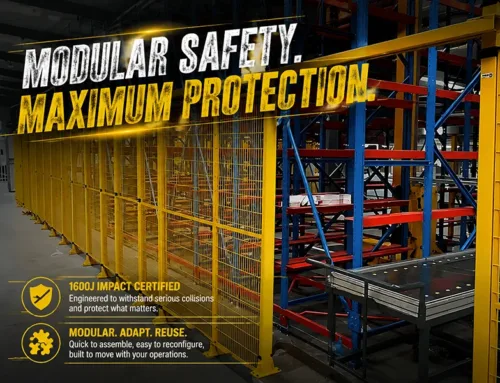
Unlike frameless mesh that deforms easily under load (often called “chain-link” style in the US), every Mdfence panel features a full 20x30mm tubular steel frame. This isn’t just for looks; it provides immense out-of-plane stiffness.
When an object strikes the mesh, the impact force is distributed across the welded steel wire and immediately transferred to the rigid outer frame. The frame then channels this energy into the 60x60mm posts and down to the concrete anchors. This architecture is certified to withstand an impact of 1600 Joules—equivalent to stopping a 220 Lbs object moving at 12.5 Mph. In many low-speed incidental contacts from pallet jacks or carts, the panel won’t even deform.

Material Science That Matters: Q235 Carbon Steel
Our system is constructed from high-tensile Q235 carbon steel. Unlike brittle cast iron or softer aluminum, Q235 steel has excellent ductility. In the event of a severe impact (like a direct forklift strike), it is engineered to bend and absorb the energy, much like a car’s crumple zone. It will not shatter into sharp projectiles that could cause secondary injuries, a critical consideration in any risk assessment.
The Workflow Transformation: Before and After Mdfence
For any Plant Manager or EHS Engineer, the difference is stark. It’s a fundamental shift from a reactive, costly repair cycle to a proactive, controlled maintenance strategy.
| Dimension | Before: Traditional Welded / Low-Cost Mesh | After: Mdfence Modular System |
|---|---|---|
| Damage Scenario | A forklift impact requires immediate, multi-hour shutdown of the entire production cell. | A damaged panel is noted, and a 10-minute replacement is scheduled during the next planned changeover or break. |
| Repair Process | Requires hot work permit, angle grinder, welder, and repainting. Creates fumes, fire risk, and extensive cleanup. | “Cold assembly” process using only a standard Allen key. No sparks, no hazards, no specialized labor. |
| Impact on OEE | Significant, unplanned downtime directly hits production targets and increases operational costs. | Minimal impact. Repair time is so short it can often be absorbed into standard line stoppages, protecting OEE. |
| Asset Value | Welded fences are a sunk cost. When the line layout changes, they become scrap metal requiring costly removal. | A reusable asset. The entire system can be unbolted and reconfigured for new layouts, offering a 95%+ asset reuse rate. |
Your safety fencing should be a resilient asset, not a fragile liability. When damage inevitably occurs, your response capability is what defines your operational excellence. Don’t let a bent panel dictate your production schedule.
Perguntas Frequentes
1. How long does it really take to replace a single damaged Mdfence panel?
For a trained maintenance person with a spare panel on hand, the physical process of unbolting the four clips, swapping the panel, and re-securing it typically takes 10 to 15 minutes. This does not include the time for safety lockout/tagout procedures.
2. Do I need specialized tools or a certified welder for repairs?
Absolutely not. All assembly and repair operations are performed with a standard metric Allen key set. This “cold assembly” process eliminates the need for hot work permits, fire watches, and the associated hazards and delays of welding.
3. What if a support post is damaged by a major forklift collision?
The same modular principle applies. The damaged post can be unbolted from the floor anchors and detached from the adjacent panels. A replacement post can then be anchored in its place and the panels re-attached. While more involved than a panel swap, it is still a bolt-out, bolt-in process that avoids on-site cutting and welding.
4. Can we stock spare parts to make repairs even faster?
Yes, and we highly recommend it. For any large installation, we advise clients to stock a small number of the most common panel sizes and a few spare posts and connection clip sets. This turns a potential supply chain delay into an immediate, on-the-spot fix, maximizing your line’s uptime.
5. How does the Mdfence system hold up to impacts compared to cheaper, frameless mesh?
The difference is significant. The 20x30mm full steel frame on our panels provides a structural backbone that frameless mesh lacks. Frameless mesh relies on the tension of the wire itself, which easily deforms and can pop out of its clips under moderate impact. Our framed system is engineered and tested to withstand 1600 Joules of impact, ensuring it provides a far more robust and reliable barrier against common industrial accidents.