PT
PT  EN
EN  DE
DE  RU
RU  JA
JA  ES
ES  IT
IT 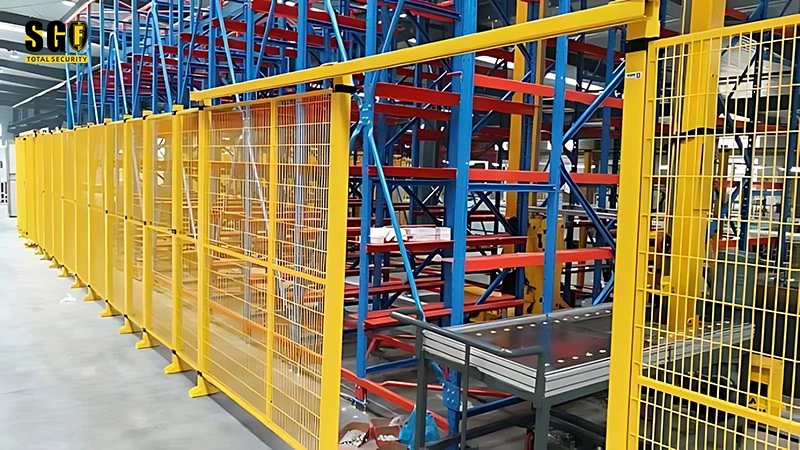
Mdfence robot safety fencing helps automation builders solve a common factory problem: high floor-space cost inside plants where every extra millimeter around a robot cell reduces aisle width, forklift circulation, and usable production area. In many layouts, ordinary 50×50 mm mesh forces a much larger fence setback from the hazard zone. Mdfence uses a framed 20×100 mm machine guard fencing concept that supports a far more compact legal installation distance, helping integrators deliver safer cells with smaller footprints and better internal traffic flow.
Why floor-space cost is really a machine guarding decision
When an integrator bids a palletizer, conveyor island, or robotic transfer cell, the guarding line is rarely treated as a major cost driver at the quotation stage. Yet on the plant floor, the fence envelope decides whether the finished machine blocks a forklift lane, crowds a maintenance walkway, or consumes production space that could have held another workstation. In tight factories, that invisible footprint penalty becomes more expensive than the fence itself.
The real issue is not simply fence height or gate type. It is the relationship between mesh opening and safety distance. If the guarding system uses a larger opening, the fence usually has to stand farther back from the danger point. That larger setback increases the total envelope of the machine, sometimes by hundreds of millimeters around several sides of the cell. Multiply that perimeter expansion across a robot line, and the customer can lose several square meters of valuable indoor area on every installation.
How Mdfence changes the layout equation in cramped plants
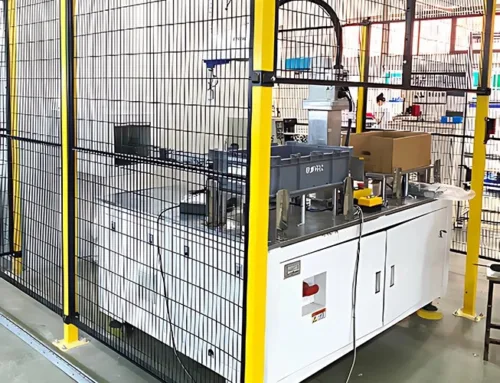
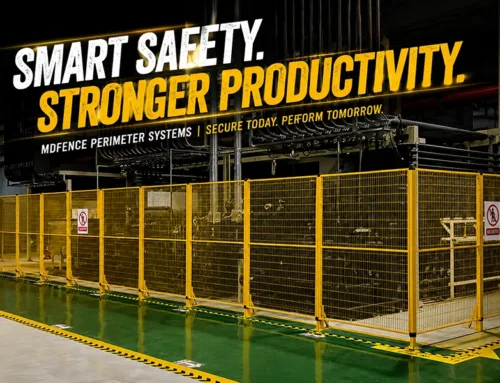
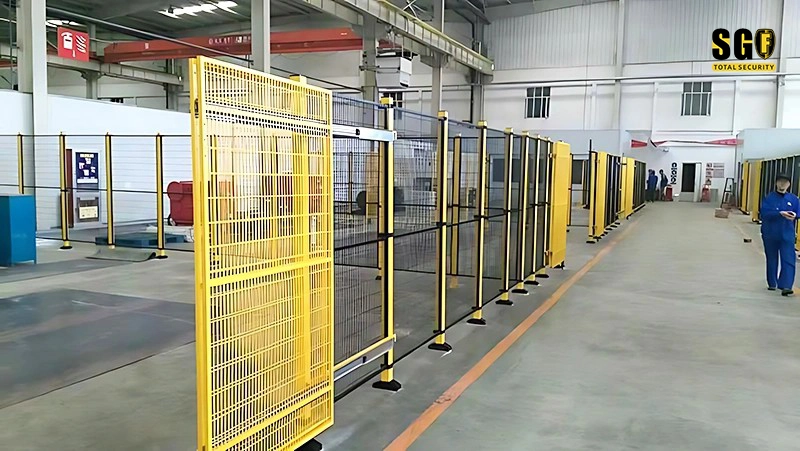
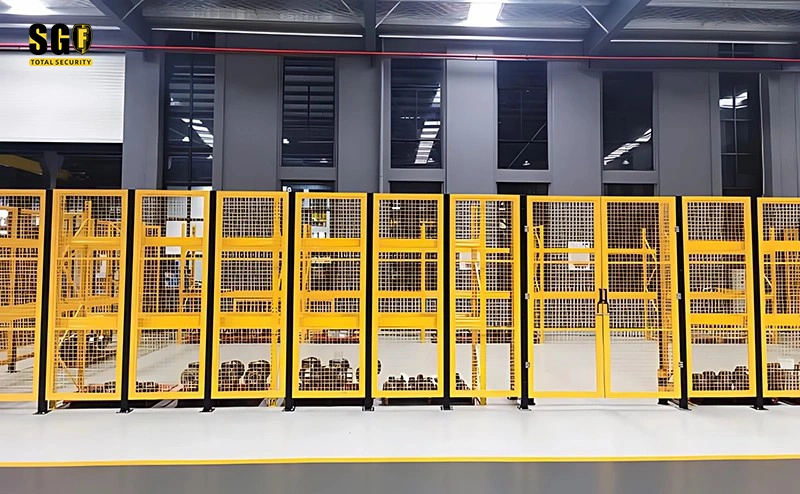
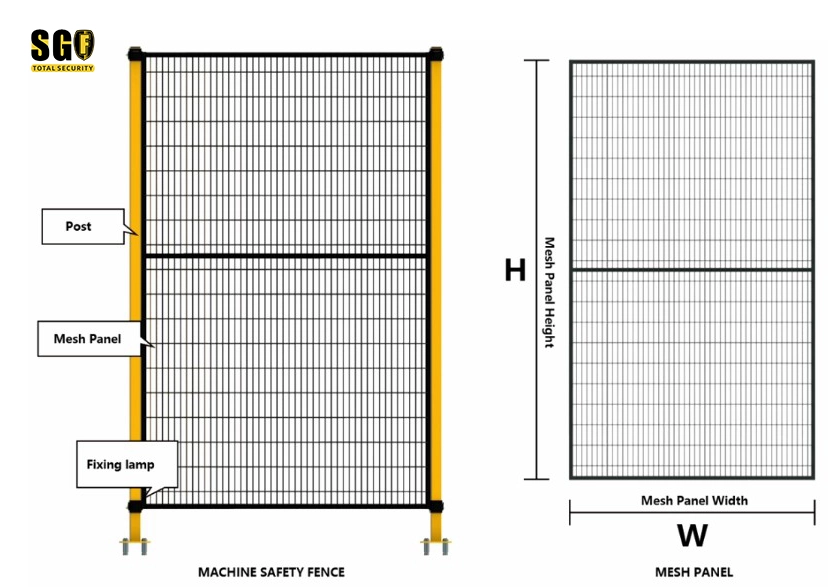
Mdfence is designed as Cerca de Segurança Industrial for robot cells, conveyors, palletizers, and automated equipment where layout density matters. The framed steel panel structure, powder-coated yellow-and-black visual contrast, and modular posts all support industrial machine-guard applications rather than light partitioning. Most importantly for compact projects, the system is commonly positioned around a 20×100 mm finger-safe mesh concept instead of generic large-opening wire panels.
That smaller opening allows the fence to be positioned much closer to the hazard zone within the documented application logic. In practice, this is what lets an automation builder offer a more compact cell to the end user. Instead of giving away expensive factory area to a conservative oversized envelope, the project team can keep the safety boundary tight, maintain service access where needed, and still protect operators from reach-in risk.
What the customer avoids
- Forklift aisles squeezed by oversized guarding offsets
- Production lanes narrowed by fences placed far away from the machine
- Last-minute site arguments about blocked doors, columns, or rack aisles
- Retrofit compromises that weaken workflow around the equipment
What the customer gains
- More usable square meters around each automated cell
- Cleaner circulation for pallets, bins, and maintenance carts
- Higher chance of fitting automation into an existing building
- Stronger commercial value for OEMs selling compact turnkey systems
Compact guarding does not mean light-duty guarding
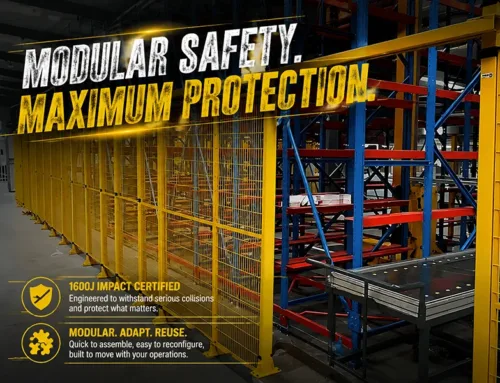
One reason some buyers hesitate to bring a fence closer to the machine is the fear that a compact layout must be mechanically weaker. Mdfence addresses that concern by using a framed panel approach instead of a flimsy frameless screen. The product brief consistently positions the system around Q235 steel construction, framed mesh panels, powder-coated surfaces, and modular clamp assembly suitable for industrial automation projects.
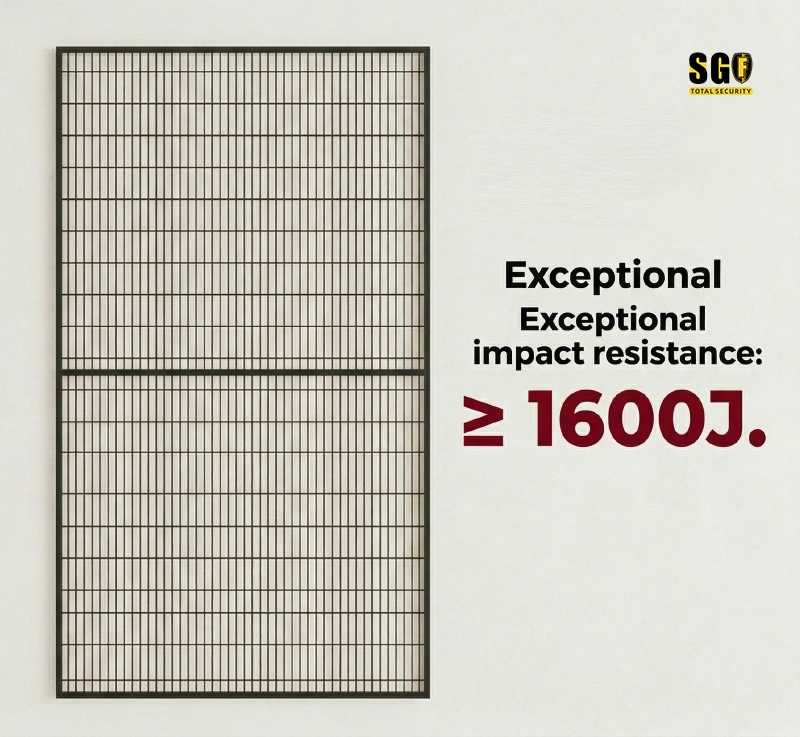
Documented source claims also repeatedly reference impact resistance at or above 1600 J for machine-risk applications. That matters in real plants where guarding may face accidental contact from moving loads, maintenance trolleys, or surrounding activity. The value of a compact layout disappears quickly if the fence bends, gate alignment drifts, or interlock hardware becomes unreliable. A dense footprint needs stable panels and gate geometry, not just reduced distance.
Where the saved space shows up on the plant floor
| Scenario | Typical space problem | Why Mdfence helps |
|---|---|---|
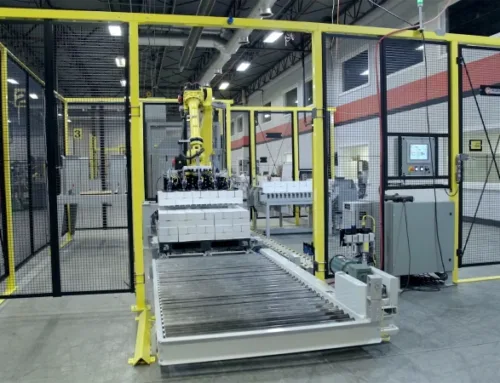
| Robot palletizer cell | Outfeed conveyor and pallet handling already consume aisle width | Compact guarding reduces the fence envelope so pallets and operators keep cleaner circulation paths |
| Conveyor transfer zone | Long guard runs eat into internal logistics lanes | Modular framed panels keep the perimeter tight while preserving visibility into the line |
| ASRS or warehouse automation area | Racking, pedestrian crossings, and maintenance paths compete for limited floor area | Sliding-gate and compact-panel logic help protect the zone without wasting rack-adjacent space |
| Retrofit project in an existing plant | Columns, drains, and old equipment limit barrier placement options | Close-in fence positioning and modular assembly improve fit without on-site welding changes |
Why integrators like the commercial story behind a smaller footprint
For the end user, the direct result is saved indoor space. For the automation integrator or OEM, the result is broader project feasibility and a stronger proposal. A machine that fits into the customer’s existing building without expensive layout concessions is easier to approve, easier to install, and easier to defend against competing quotations.
That is why compact robot cell guarding has a commercial effect beyond safety compliance. It helps the seller present a more efficient automation package: one that protects the hazard zone while reducing hidden building cost. In sectors where floor area is expensive and expansion is difficult, even a few square meters saved per machine can become a persuasive business advantage during procurement review.
Design details that support a high-density machine layout
Panel planning
Mdfence panel modules support structured perimeter planning, making it easier to build tight rectangles, corners, and equipment-adjacent runs without the field improvisation common with welded barriers.
Access planning
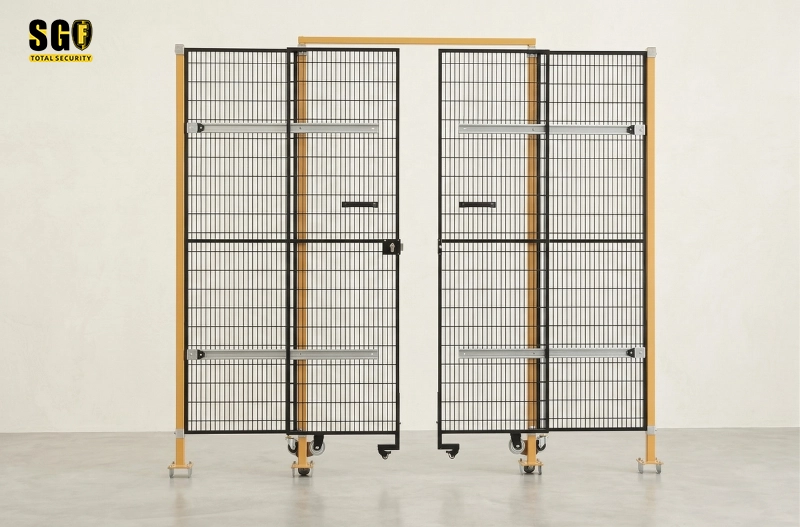
In narrow internal spaces, a poorly chosen gate can waste as much room as the fence itself. Sliding or double-sliding access can preserve working clearance better than a large swing arc where pallets, columns, or traffic lanes sit close to the cell.
Questions buyers should ask before choosing a generic large-mesh fence
- How much extra perimeter setback will this mesh force around the machine?
- What does that setback do to forklift passage, operator aisles, and service clearance?
- Will the chosen gate type consume additional floor area when open?
- Can the fence be reconfigured later if the line layout changes?
- Will the panel strength and gate alignment remain stable in a high-cycle industrial environment?
These questions matter because the guarding purchase is not isolated. It shapes throughput, installation feasibility, and future reconfiguration. A lower purchase price on generic fencing can become expensive once the plant gives up usable floor area or must redesign the layout around an oversized safety perimeter.
Build safer automation cells without wasting factory space
If your project team is fighting cramped internal layouts, expensive plant area, or narrow forklift aisles, Mdfence offers a more space-efficient machine guarding approach for robot cells, conveyor lines, palletizers, and warehouse automation zones. The combination of compact mesh logic, framed steel construction, modular assembly, and flexible gate options helps create a safety boundary that protects people without unnecessarily enlarging the machine footprint.
For OEMs and integrators, that means a guarding package that supports both compliance goals and a stronger commercial offer.
Mdfence is positioned for industrial machine-guard and automation-perimeter applications. Final safety distance and layout decisions should always be verified against the actual hazard, reach path, and applicable project standards.