PT
PT  EN
EN  DE
DE  RU
RU  JA
JA  ES
ES  IT
IT Machine guard fencing for dense scrap sorting halls
Machine guard fencing for space-starved metal recycling centers
Machine guard fencing helps dense scrap halls reclaim legal safety clearance without loosening compliance. With a 20x100mm precision mesh and a minimum legal separation of 120mm, Mdfence is built for recycling plants where every square meter counts.
Why dense recycling sites need a tighter, legal boundary
In an indoor sorting center, scrap stacks, forklifts, conveyors, and inspection points compete for the same floor. Traditional guarding often solves the safety question by pushing the line too far back. That creates dead space, reduces storage density, and forces operators to choose between compliance and throughput. Mdfence is positioned for the opposite outcome: keep the boundary legal, keep the layout compact, and keep the aisle usable.
| O que o site precisa | Resposta do Mdfence |
|---|---|
| Protect dense material handling zones | Machine guard fencing with a compact footprint that preserves working space |
| Stay compliant without oversized setbacks | 20x100mm precision mesh supports an extreme legal separation distance of 120mm |
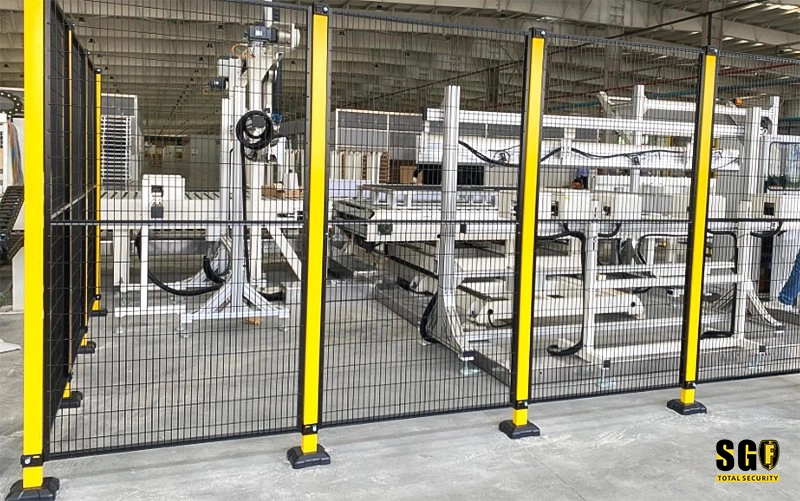
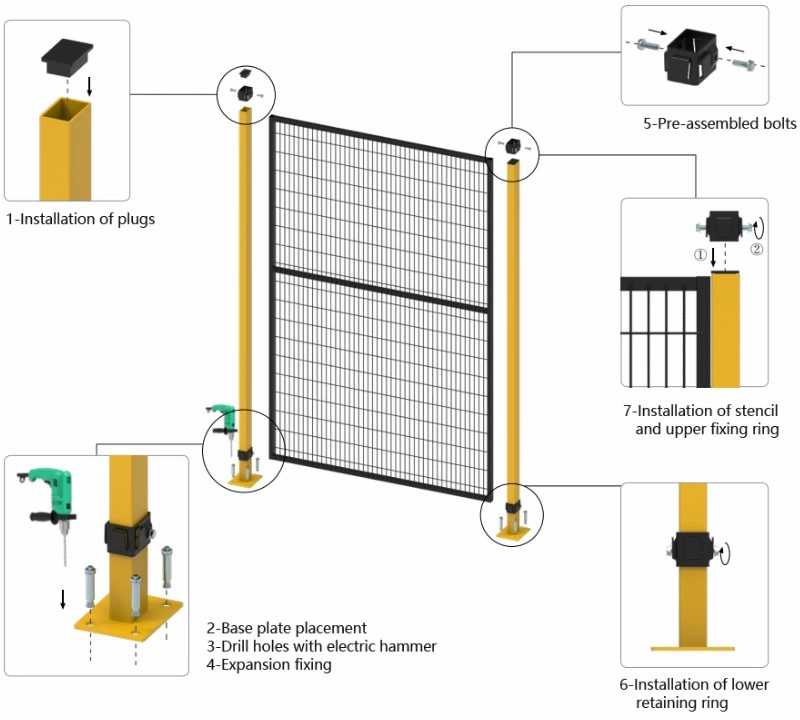
| Keep heavy-use boundaries stable | Welded frame, coated finish, and fixed base plate detail shown in the product proof image |
| Support fast site rollout across many locations | Modular fence structure suited to repeated layouts across multi-site networks |
Where the product fits the job
1. The problem is not only safety; it is space loss
Indoor metal recycling and scrap sorting centers usually run with tight circulation routes. The old answer is a bigger offset, a larger guarded envelope, and less usable floor. That approach may satisfy a drawing, but it hurts operations. Mdfence is suitable because it is designed as machine guard fencing for controlled separation, not as a bulky barrier that consumes the very space the plant needs for stock, staging, and movement.
2. Why the structure matters in a high-density plant
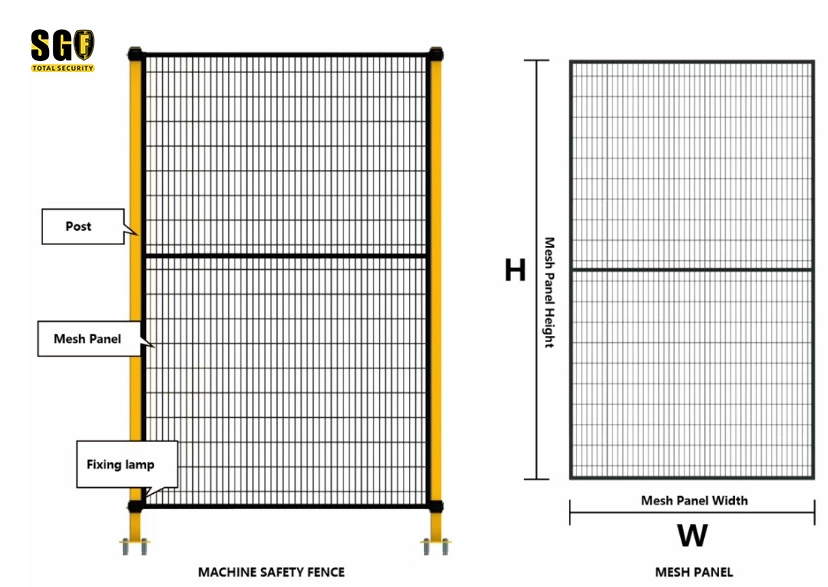
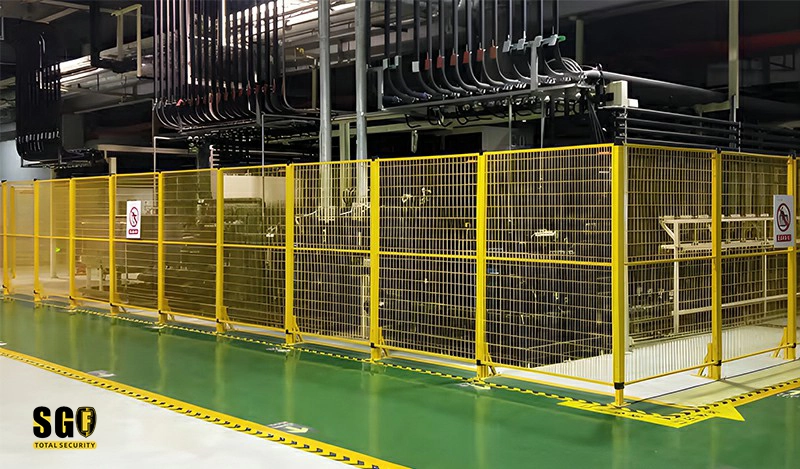
The deciding factor is not only mesh appearance. The installed system must hold its line, accept repeated access, and still be easy to document and audit. The technical front view shows the post, mesh panel, and fixing clamp relationship clearly. That is the kind of structure that makes machine guard fencing predictable in layout: the panel line is visible, the components are standard, and the boundary can be repeated across multiple cells without improvisation.
3. Proof on the floor: compact boundary, clear workflow
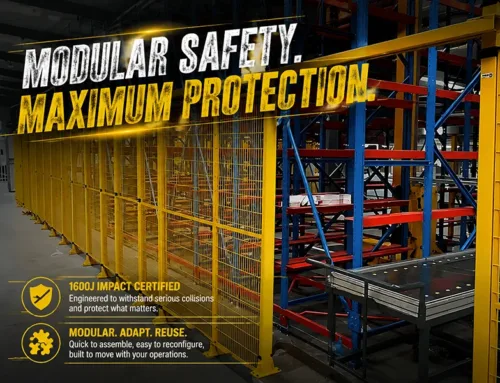
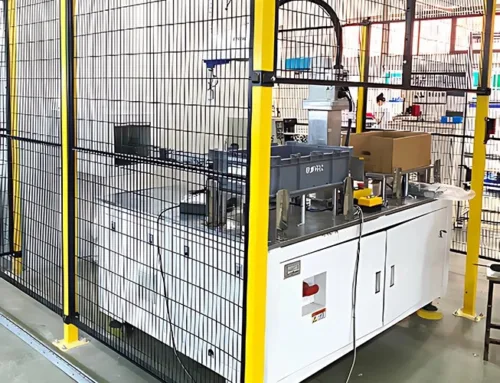
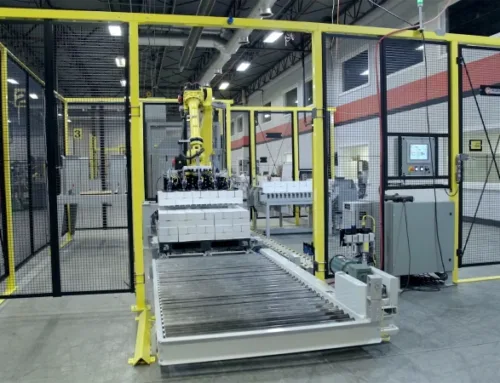
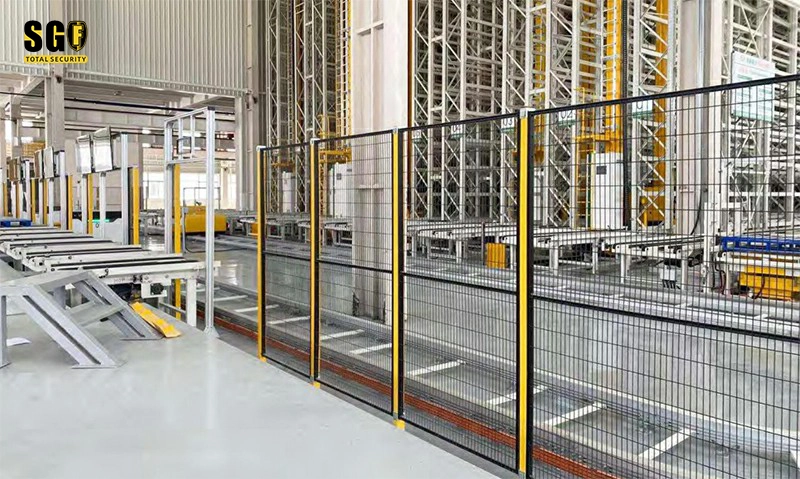
The wide factory view and the conveyor-side shot show the real value. The fence keeps the work cell cleanly separated while leaving the aisle and transfer path open. For a site that handles heavy scrap and frequent movement, that means fewer conflicts between safety perimeter and logistics flow. This is where the 120mm legal separation becomes commercially important: across a network of 135 sites, every reduced setback can add back meaningful storage and turnover space.
Aplicações de melhor ajuste
- Indoor scrap sorting centers where storage density is critical
- Metal recycling halls that need compact machine guard fencing around equipment
- Conveyor and transfer zones that must remain separated from pedestrian or forklift flow
- Multi-site operations that need the same boundary logic repeated across many plants
For these sites, the outcome is straightforward: tighter compliance boundary, less dead area, clearer routing, and a cleaner operational layout. The visual evidence from the product set supports the same conclusion from different angles: installation detail, structural detail, and real factory isolation.
What makes the result durable
The product advantage board shows the weld seam, coating, caliper check, and base plate detail in one frame, which is exactly what a high-traffic guarding line needs. Mdfence is not trying to be decorative. It is built to make machine guard fencing practical in a crowded industrial environment: precise enough to save space, robust enough to stay in service, and simple enough to scale across a network of sites.
Plan the boundary before the layout gets fixed
If your plant is already crowded, the guarding line must be designed as part of the workflow, not added after the fact. Mdfence helps convert compliance pressure into recovered floor area, which is the right result for space-starved recycling operations.