PT
PT  EN
EN  DE
DE  RU
RU  JA
JA  ES
ES  IT
IT Guarding fence planning for dense scrap sorting centers
When floor space is expensive and equipment is packed tight, a guarding fence must protect workers without eating into the aisle width needed for material flow, staging, and maintenance access.
Why the old answer wastes the best part of the plant
In indoor scrap sorting centers, the old habit is to overspec the safety distance. That approach may look conservative on paper, but in the real plant it steals storage lanes, narrows turning space, and forces operators to move scrap further than necessary before the next process step. For a facility that already stores large volumes of metal waste, every extra 100 mm multiplied across multiple lines becomes lost capacity.
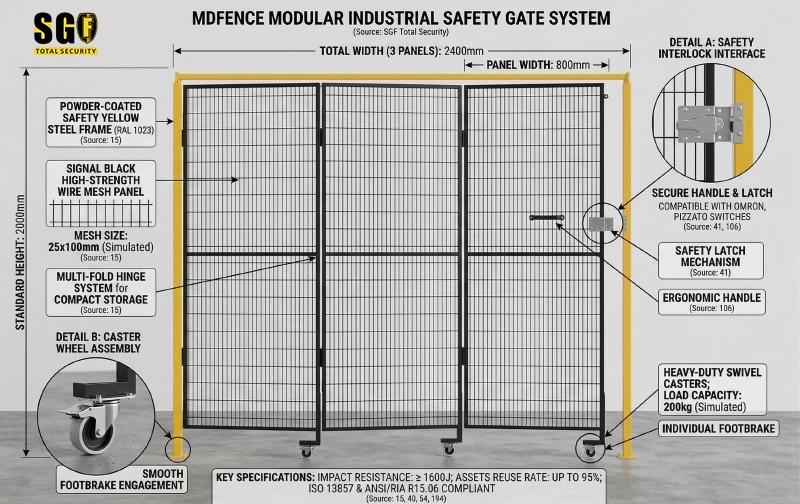
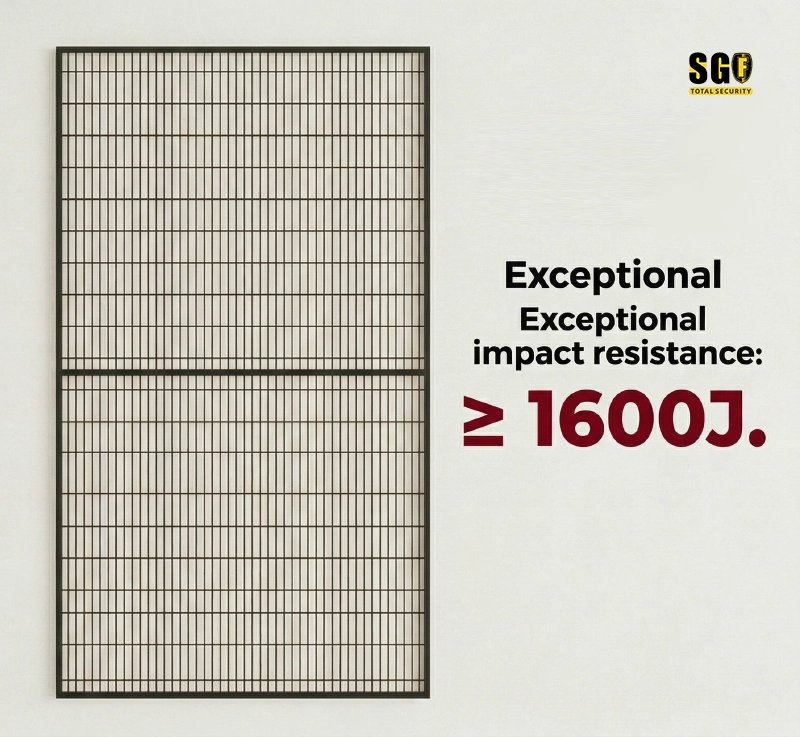
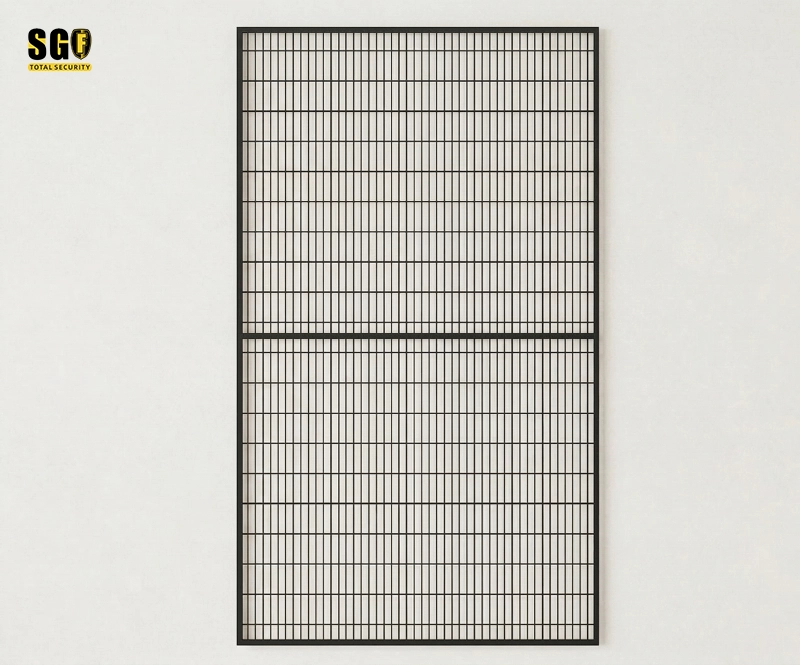
Mdfence was built for that exact pressure point. Its guarding fence structure uses a precision 20×100 mm mesh layout, which lets the layout stay compliant while shrinking the lawful isolation distance to an extreme 120 mm. In practical terms, the fence protects the cell, keeps the route open, and preserves the working footprint that a recycling site actually needs.
Why Mdfence fits dense industrial layouts
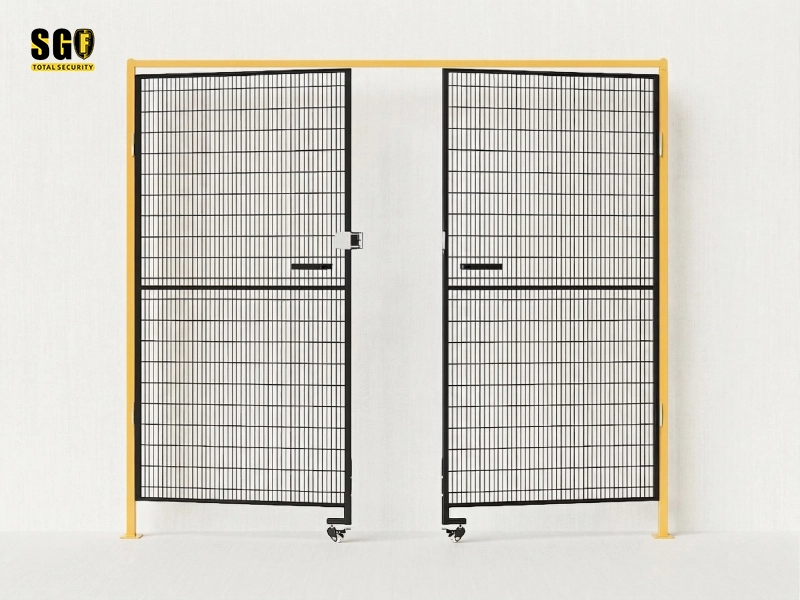
The key difference is not simply that the fence is strong. It is that the geometry is purposeful. The mesh opening supports visibility and separation, while the frame and post system keep the guarding fence compact enough for tightly packed equipment zones. That makes it easier to place the barrier beside sorting equipment, conveyor paths, transfer points, and buffer areas without forcing a large setback that the site cannot afford.
For a global operator with 135 locations, the same design logic scales fast. Saving a small strip at one gate is useful. Saving that strip at every guard line, across every site, turns into real floor area for staging, movement, and throughput.
| Problema de planta | Old solution | Resposta do Mdfence |
|---|---|---|
| Space is too valuable to lose | Large safety offsets eat aisle width | Guarding fence can work with a 120 mm legal isolation distance |
| Equipment is arranged densely | Bulky barriers block access | 20×100 mm mesh keeps the line compact and visible |
| Multi-site rollout needs consistency | Different local layouts create uneven loss | Standard guarding fence logic scales across 135 sites |
Structure evidence you can point to
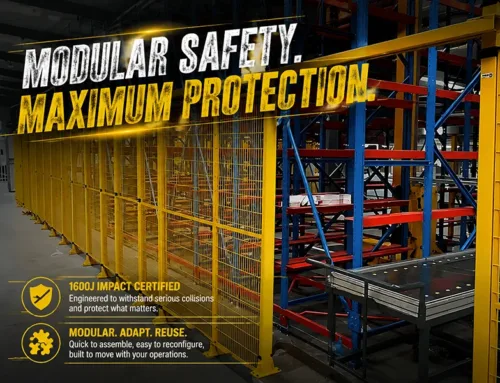
Compact perimeter next to storage and flow routes
This image shows how the guarding fence sits beside racking and conveyor space instead of taking over the aisle. That is the whole point: protection without sacrificing circulation.
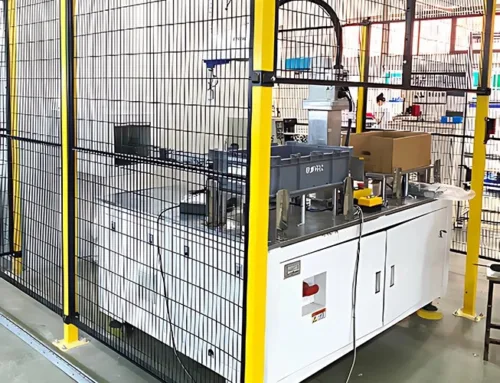
Corner closure that keeps the barrier tight
The corner detail proves the fence is designed as a real industrial boundary, not just a visual separator. Clean corner closure matters when every centimeter of floor area is already committed.
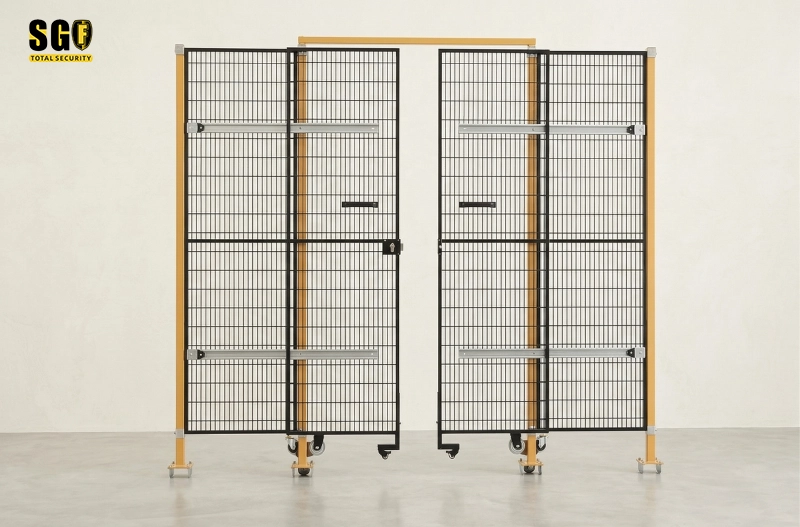
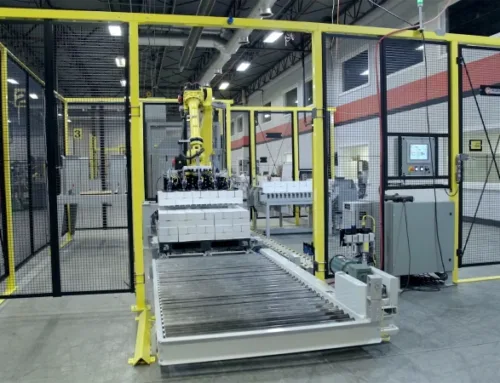
Machine-cell isolation with clear visibility
The automation cell photo shows the guarding fence doing two jobs at once: keeping the work zone separated and letting operators see the machine condition from outside the boundary.
Where the result shows up first
In indoor scrap sorting, the first win is usually not a dramatic new machine. It is recovered space. Once the guarding fence is tightened to the actual compliant distance instead of an inflated safety offset, the facility can reclaim room for bins, pallets, inspection access, and movement around the line.
That matters most where waste is staged in bulk and every square meter has a cost. The savings are not abstract: less dead corridor, fewer awkward detours, and better use of the same building envelope.
What the decision should look like
If a site is already crowded, the question is not whether safety is important. The question is whether the guarding fence can meet the compliance requirement without draining the operating footprint. Mdfence answers that by pairing the 20×100 mm mesh specification with the 120 mm legal isolation distance target, so the barrier is both practical and space-efficient.
That is why the product is a fit for dense recycling halls, indoor sorting centers, and any line where steel, scrap, and equipment all compete for the same floor.
Need a guarding fence layout that protects the line and protects the floor area?
Mdfence is built for exactly that balance: compliant separation, compact structure, and measurable space recovery.
Solicite uma revisão do layout da cerca de proteção