PT
PT  EN
EN  DE
DE  RU
RU  JA
JA  ES
ES  IT
IT Airside Stand Perimeter · Flexible Safety Barrier
Stand-Number Walk-Out Paths: Why FCBarrier ARMORFLEX Polymer Crash Barriers Replace Faded Apron Hold-Lines Beside the Jet Bridge
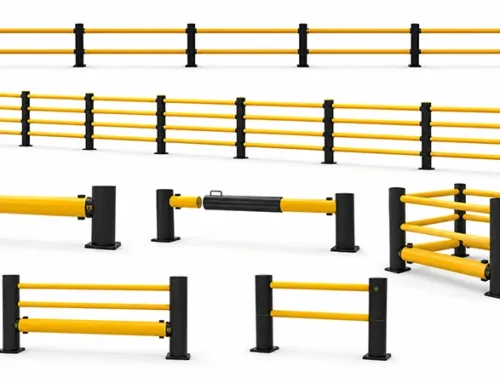
Faded apron paint and a single rotating marshaller cannot keep baggage tugs, fuel trucks and walk-out crews apart at every stand number around the clock. FCBarrier ARMORFLEX polymer flexible safety barriers install a permanent, self-rebounding hold-line beside the jet bridge that absorbs up to 28,950 J of strike energy and recovers its profile — with a slim cross-section that does not crowd the GSE convergence lane or the stand-equipment corridor.
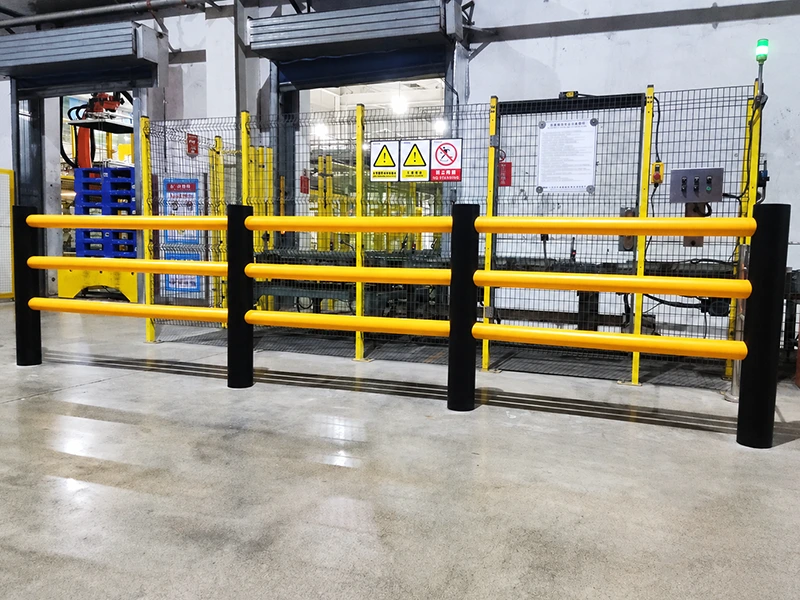
What an ARMORFLEX Polymer Flexible Safety Barrier Publishes on an Apron Stand-Number Layout
An apron hold-line is not a cosmetic line — it is a load-bearing physical boundary between a parked aircraft and the people who walk out to it. The table below is what FCBarrier ARMORFLEX polymer flexible safety barrier brings to that boundary, written against the metrics an airside safety manager can verify on a stand-number site walk.
| Operating Condition on the Apron | FCBarrier DR / TR / SR Series Response |
|---|---|
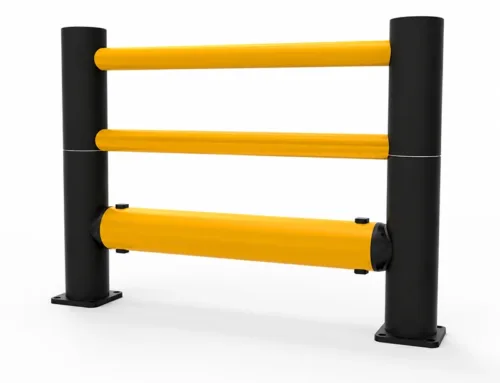
| 28,950 J rated impact (8 t forklift @ 9.6 km/h) | Covered by DR190 double-rail and TR190+ traffic-rail polymer segments |
| Self-rebounding energy absorption on GSE strike | ARMORFLEX polymer absorbs roughly 80% of strike energy and recovers its profile; no permanent deformation |
| Apron footprint beside the jet bridge | Slim baseplate + slim upright cross-section preserves stand-equipment clearance and GSE lane width |
| Secondary-injury hazard on striker contact | Polymer posts eliminate the weld-on-weld ridges that turn a struck guard into a laceration source |
| Stand-side segment swap after a hard strike | Mortise & tenon quick-release pulls one segment without torch-cutting the anchor pattern |
| Continuous run between adjacent stands | Modular DR rail joins segment to segment along the entire hold-line; no anchor re-drilling for rebalance |
| Fuel-spill, hydraulic-fluid, de-icing-fluid exposure | ARMORFLEX polymer does not require repaint cycles after fuel or de-icing contact |
| End-of-life scrap stream | Polymer segments recovered at end of service life; no painted-steel waste stream to dispose |
Three Engineering Decisions That Move the Stand Perimeter From a Painted Line to a Self-Rebounding Boundary
A Slender Baseplate That Preserves GSE Convergence Clearance Beside the Jet Bridge
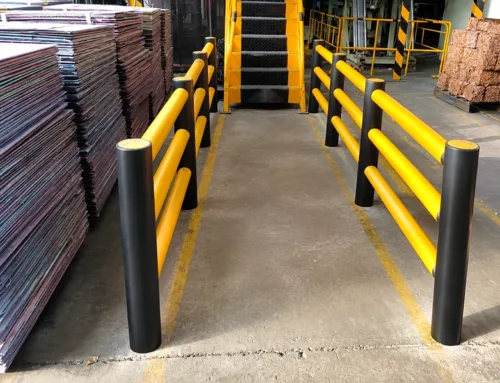
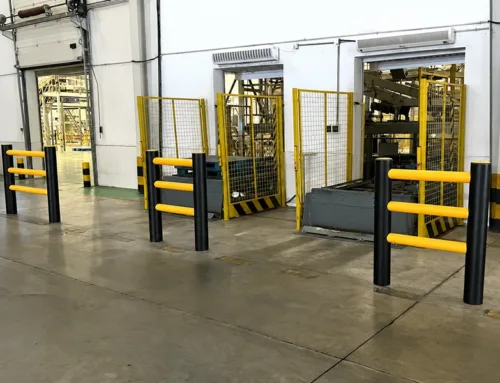
The widest stand-number layout fails when the barrier eats into the GSE convergence lane or the walk-out crew path. FCBarrier’s ARMORFLEX polymer uprights sit on a slim, bolted baseplate that occupies only the footprint the stand-number concrete allows — there is no oversized rebar-cage foundation and no welded-steel gusset sticking out into the apron surface. Where a marshaller cone cluster and a 150 mm painted line used to leave the walk-out crew squeezing past belt loaders, a single DR190 double-rail polymer segment draws a clean physical boundary without widening the hold-line footprint, and the baseplate stays below the GSE wheel scrub radius.
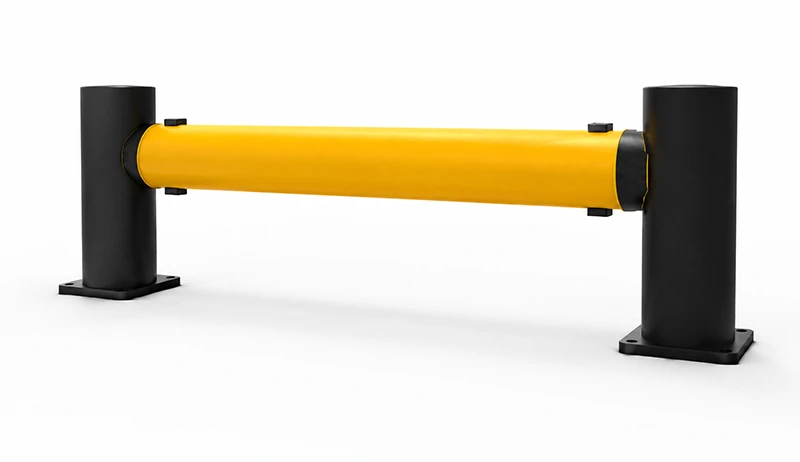
Self-Rebounding Strike Energy That Reaches the 28,950 J Forklift Envelope on the GSE Lane
A belt loader or pushback tug does not arrive at apron-congestion speed at 5 km/h with an empty load — it arrives heavy, often off-centre, with a pilot focused on the aircraft nose. FCBarrier ARMORFLEX polymer flexible safety barrier absorbs roughly 80% of that strike energy and rebounds; the polymer post bends, recovers, and the GSE lane stays open for the next pushback. A painted line and a marshaller’s whistle do none of that work. Under the stated 8 t forklift at 9.6 km/h condition, the DR190 double-rail and TR190+ traffic-rail segments reach the 28,950 J rating — a number an airside safety manager can put next to the stand’s normal GSE load profile and read as a public, comparable specification.
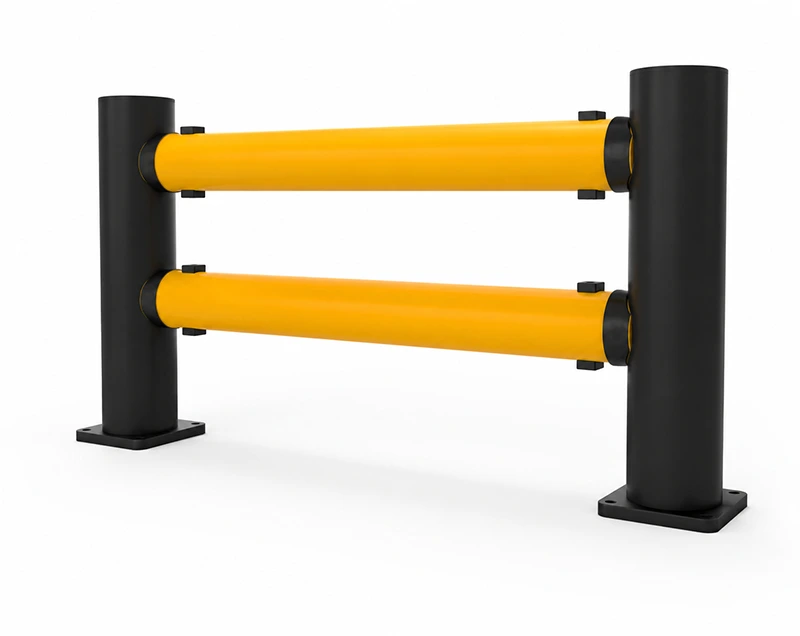
Mortise & Tenon Quick-Release That Lets One Stand’s Segment Swap Without Closing Adjacent Stands
When a strike does bend a polymer post past the rebound limit on a single stand, the mortise & tenon quick-release cell pulls that segment out without drilling out the anchor pattern, and the replacement segment locks back in without closing the adjacent stand’s hold-line or the GSE convergence lane. A welded-steel guard would force a torch-cut and a fresh concrete pour, and the stand would be off-line for the repair cycle. On a 7-day-a-week apron where every stand turnaround pays for the airline schedule, that single-segment swap is what keeps a hard strike from cascading into a stand-closure and a flight delay.
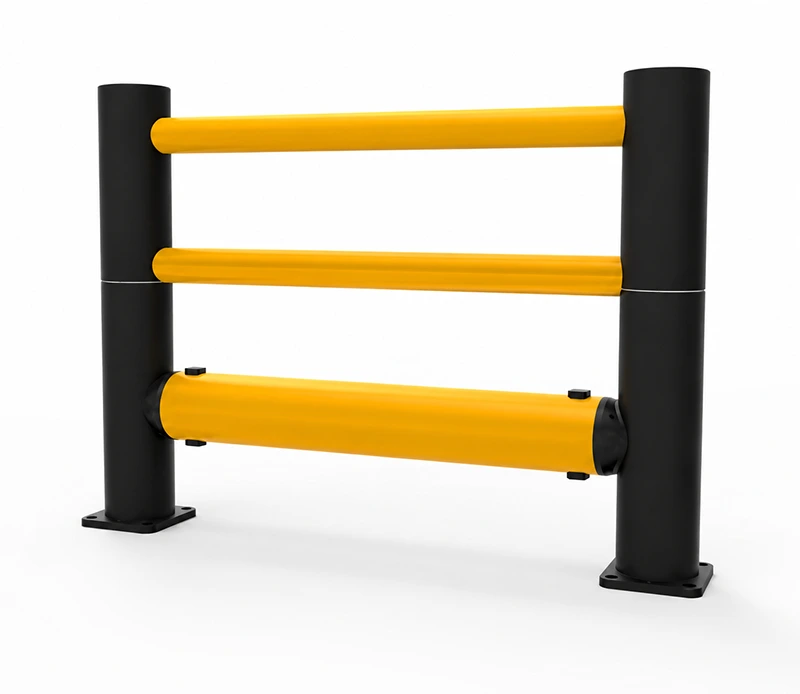
Where FCBarrier ARMORFLEX Polymer Flexible Safety Barriers Replace Painted Hold-Lines on the Apron
- Jet bridge stand-number perimeter — DR190 double-rail polymer segments replace faded paint between parked aircraft and the crew access door
- GSE convergence lane beside the stand — TR190+ traffic-rail holds the line while baggage tugs, belt loaders and pushback tugs queue for the next push
- Fuel hydrant pit apron edge — polymer uprights replace steel posts that fail inspection after fuel-spill corrosion cycles
- De-icing pad perimeter — slim polymer base does not interfere with glycol recovery drains or the de-icing truck arc
- Catering-truck staging area — modular DR rail expands and contracts with the daily wide-body / narrow-body mix on the apron
- Walk-out crew path between remote stands — SR single-rail draws the boundary without adding a second pedestrian crossing
- Apron-column protection at terminal pier ends — CTR series column protector absorbs stray GSE strikes at the building edge
Across every one of these zones, the same ARMORFLEX polymer flexible safety barrier specification replaces a painted line that has faded, a marshaller who has rotated, and a welded-steel guard that has corroded. The output is a permanent physical boundary that absorbs the strike, recovers, and stays in service across the next turnaround — and the one after that.
Spec Sheet & Datasheet
FCBarrier ARMORFLEX polymer flexible safety barrier datasheet, Joule rating table from 3,850 J to 28,950 J across the SR / DR / TR / CTR series, mortise & tenon quick-release install sequence, and apron stand-number layout worksheet. Contact safetyfencesystems.com for the engineering pack and the stand-perimeter layout template.
Spec the Stand-Number Perimeter Before the Next Apron Hold-Line Audit
Send your stand-number layout, GSE convergence lane widths, walk-out crew path, and fuel-hydrant pit perimeter — we will return a DR190 / TR190+ / SR / CTR layout that replaces every faded painted hold-line with a self-rebounding ARMORFLEX polymer flexible safety barrier, sized against the 28,950 J (8 t @ 9.6 km/h) forklift envelope and matched to the stand’s normal GSE load.