PT
 EN
 DE
 RU
 JA
 ES
 IT
PLANT TOOL CONTROL · ISSUE AND RETURN
The Tool Crib Only Starts Working When One Door Owns Every Transaction
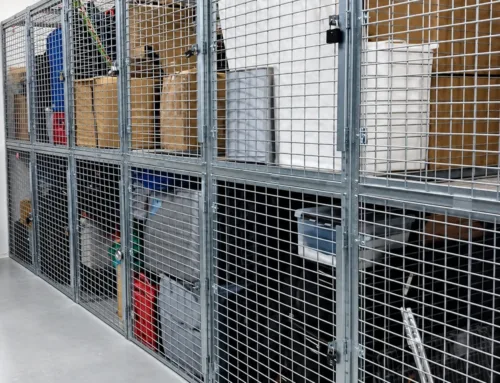
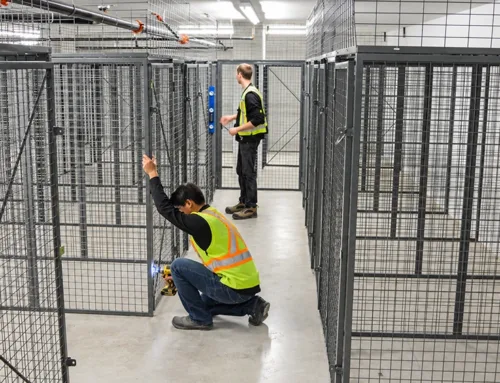
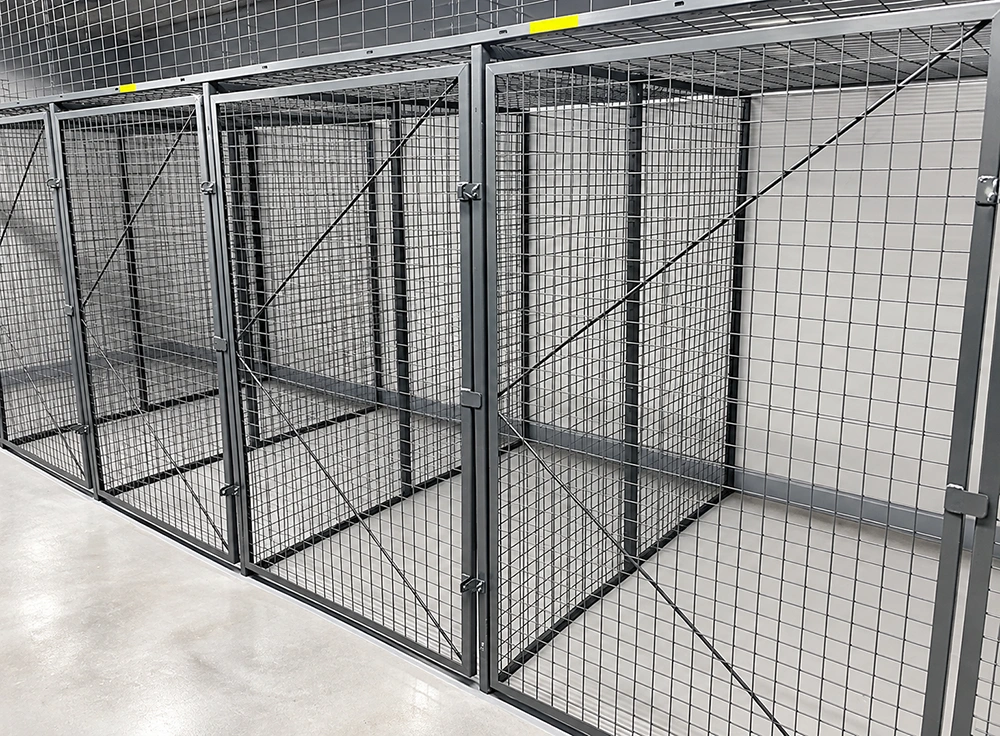
Tool-room trade material is blunt about where the value sits: MH-USA writes that a tool room is not only about theft — the efficiency arrives “when you can assign responsibility for every issue and return.” That needs a physical address, not another paragraph in the procedure. A lockable wire mesh storage cage gives the crib one door per bay and one standard lock position, so a sign-out sheet, a badge swipe or a key log has something specific to point at. Galvanised steel welded mesh panels bolt to steel posts, two people assemble the run, and expansion bolts go into the slab — no welding, no wet trades, no shutdown of the stores.
Confirmed Build Facts Behind a Single Issue Point
A register only works if there is one door to register against. These are the build facts that decide whether an industrial tool storage cage can carry an issue-and-return process: a hinge line per bay, a lock position that is set before the lock is fitted, and a frame that a supervisor can read from the aisle without unlocking anything.
| Artigo | Confirmed specification |
|---|---|
| Mesh panel to post | Panels are fixed to the posts with 90-degree angle screws, set at 90 degrees to the post and tightened on site. |
| Panel to panel splice | Adjacent flat panels are joined with straight bolts and nuts drawn back to back, then tightened with a wrench. |
| Posição da porta e fechadura | A long-strip hinge connects the mesh door to the panel. The lock position is marked by line so the lock bolt lands on the door bar before the handle and bar are fixed. |
| Top closure | A storage cage with a ceiling panel uses a top mesh panel on a top rail. Where the cage runs straight to the ceiling, no top mesh and no rail are needed. |
| Ancoragem | After the run is squared, base corners are drilled, spoil is cleared and expansion bolts are driven in and tightened. |
| Material | Galvanised steel welded mesh panels fixed to steel posts; all-steel construction, corrosion resistant. |
| Instalação | Two people with a step ladder, hand drill, hammer, wrench, utility knife and tape measure. No welding, no wet trades, no back wall or ceiling required for a free standing storage cage. |
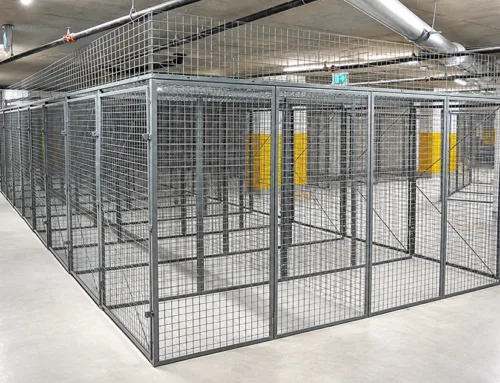
| Footprint and form | Roughly 1 m² or slightly more per bay, laid out in rows; either half-enclosed against existing walls and ceiling, or six-sided mesh on all faces. |
| Custom options | Multiple heights, widened and deepened bays, base plinths, shelves and different fill and mesh options are specified per project. |
| Not published | Mesh aperture, wire diameter, standard sizes, load ratings, certification numbers and warranty terms are not published — send the bay list and the drawing is answered item by item. |
Three Details That Turn a Cage Into an Issue Point
One Hinge Line, One Marked Lock Position
The failure mode in most plants is not a missing padlock, it is twelve padlocks on twelve unrecorded doors. A storage cage with a door gives each bay one hinge line and one lock position, scribed onto the door bar before the handle is fixed so every bay locks the same way. That single, repeatable lock point is what a key board, a padlock register or a shift handover sheet attaches to: the cage door is the transaction, and the tool list on the bay is the entry. Where a cage run replaces open shelving without a lock, the register has nowhere to land; where it replaces a solid metal locker, the supervisor loses the sightline that makes a fast cycle count possible. Open mesh keeps both — the accountability of a lockable storage cage and the visibility of a shelf.
A Frame and Mesh That Read From the Aisle
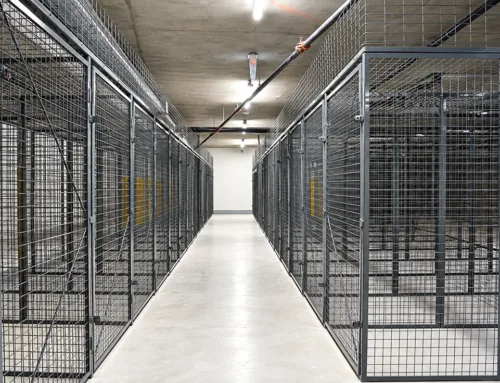
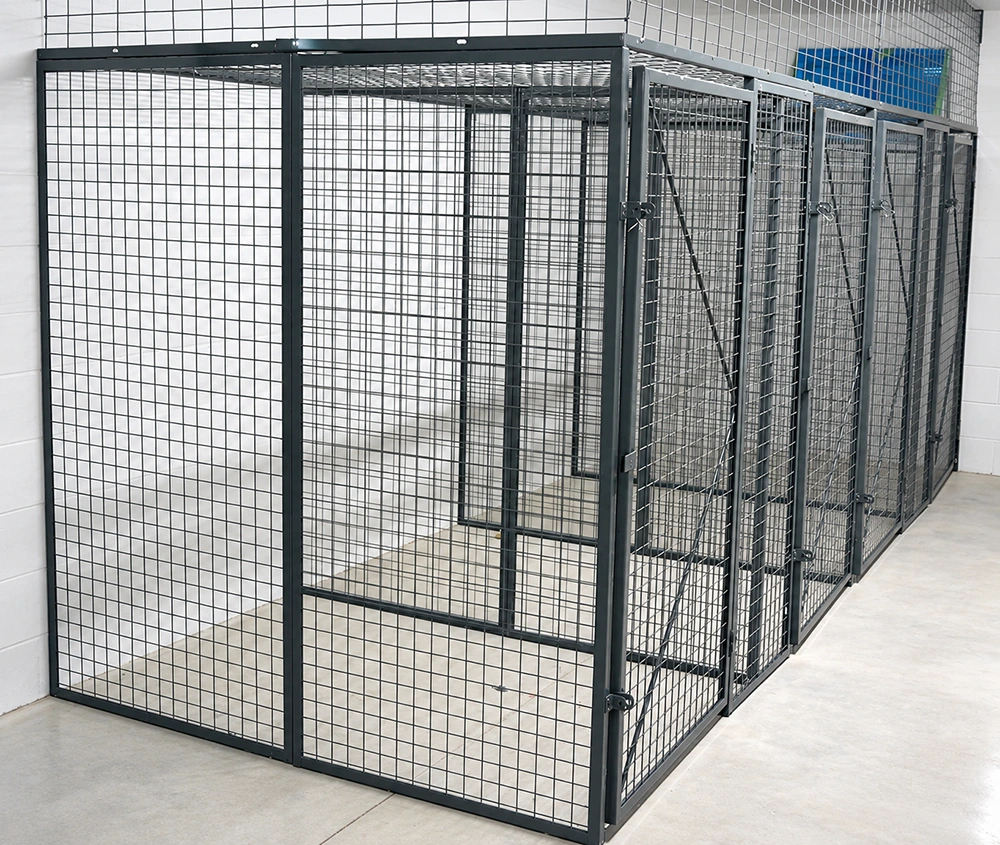
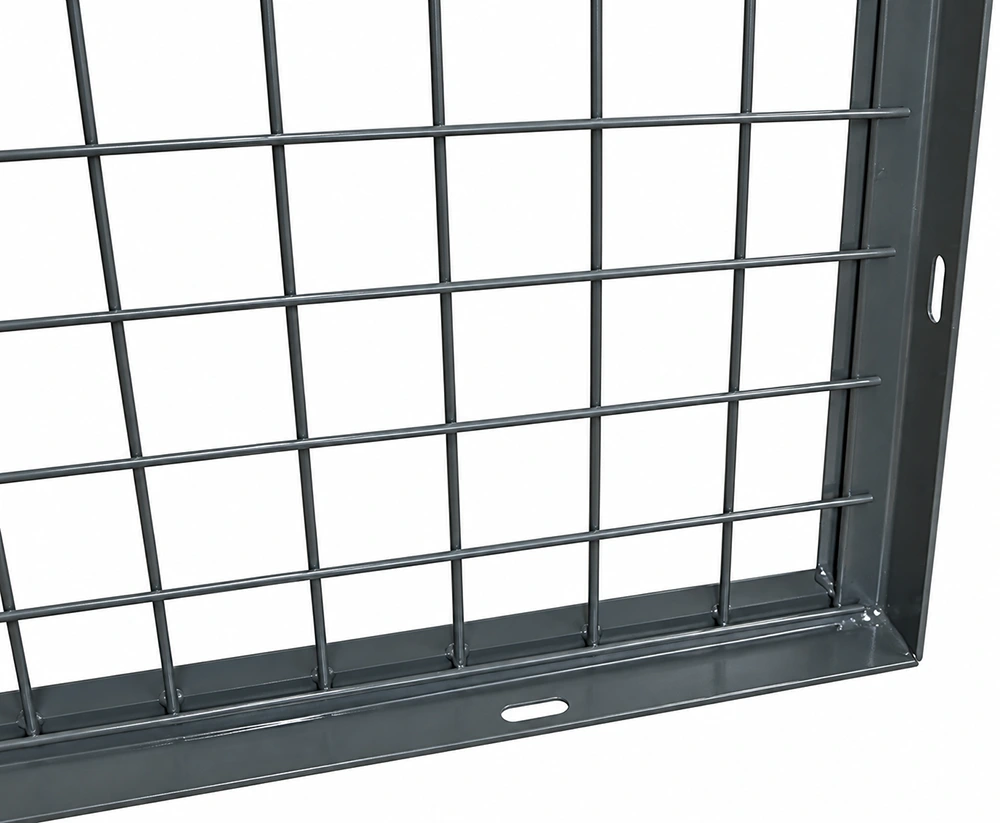
Counting tools is the expensive half of tool control: someone has to open a door, look inside and close it again. A ventilated wire mesh storage locker changes the cost of that check. The welded grid is set in a reinforced bent frame with oblong mounting slots pressed into the frame edge, so panels land on the posts without field drilling every hole, and the open face keeps the contents readable at walking pace. A stores keeper can confirm a torque wrench is back on its bay without breaking a seal, and the aisle view keeps the camera and the patrol read honest. That is the difference between a daily check that happens and a monthly audit that is always deferred.
A Count of Parts, Not a Cured Wall
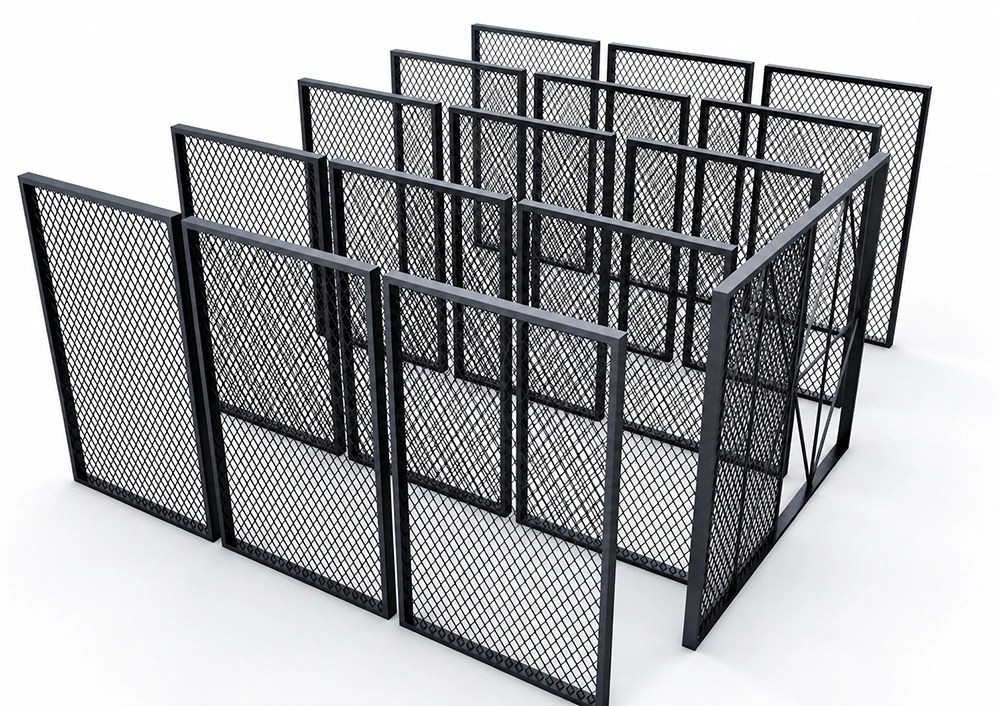
Tool inventories change faster than buildings do, and a storage cage vs storage room decision usually comes down to that. A bolt together storage cage is a count of galvanised panels, posts, doors and lock hardware, all joined by angle screws and back-to-back through-bolts. When the crib absorbs a second shift’s tool kit, another bay is bolted onto the end of the run; when the stores moves across the plant, the same panels come apart, the anchors are re-drilled and the run is squared again. Modular storage cages are also how a custom size storage cage gets specified in the first place — height, bay width, depth, plinth and shelves are project inputs, not catalogue compromises.
Where One Door Per Bay Solves the Tracing Problem
- Plant tool crib and maintenance stores: power tools, torque wrenches and diagnostic instruments issue through one door per bay instead of twelve unlocked places on the shop floor.
- Industrial tool storage cage for spare parts: consumable and spare-part bays carry the same bay number on the cage as on the stores list, so a return is filed, not dropped.
- Equipment storage cage for shared instruments: calibration-tracked instruments get a lockable bay whose door log doubles as the calibration custody record.
- Employee storage locker runs: a shift locker block built from the same parts keeps personal kit separate from company assets without a second procurement stream.
- Security storage cage in a warehouse corner: a small, fully enclosed cage for the items that cannot sit in an open bay at all.
The result is not a stricter policy — it is a shorter question. Instead of asking where a tool went, the stores asks which door it left through, and the answer already exists in the register, the badge log or the key board. Responsibility stops being an argument and becomes a line item.
What to Send Us for a Tool Crib Layout
Send the bay list — what is stored, how many bays, whether each bay is individual or shared — plus the available height, the run length along the wall or aisle, the number of doors, the lock type in use today and whether the cage runs to the ceiling or needs a top mesh panel. If the floor is uneven or the run stops short of a wall, say so in the same message; the anchor and bracing detail is chosen at that point, not after delivery.
Put a Name on Every Bay
Tell us how tools are issued today — paper sheet, badge reader or key board — and we will size a wire mesh storage cage run that gives that process one door, one lock position and one address per item.