PT
 EN
 DE
 RU
 JA
 ES
 IT
LOTO PADLOCK HASP / MECHANICAL LOCK SAFETY GATE
If the gate does not control machine power, an electronic interlock is the wrong budget line
A quality or logistics manager needs a zone that only one named person may enter. The proposal that comes back often includes an electronic safety switch, a safety relay and PLC integration, with a cost and lead time the project cannot carry. The opposite mistake is an ordinary door with a generic padlock that cannot support an isolation procedure. The decision point is simple: does opening this gate have to remove machine power? If it does, an interlocked switch belongs in the safety circuit designed by the integrator. If it does not, a LOTO padlock hasp or a mechanical lock safety gate, backed by the plant’s written isolation procedure, is the appropriate specification. One recorded project abandoned the PLC interlock route on exactly that basis, with three-key manual key control handled procedurally instead.
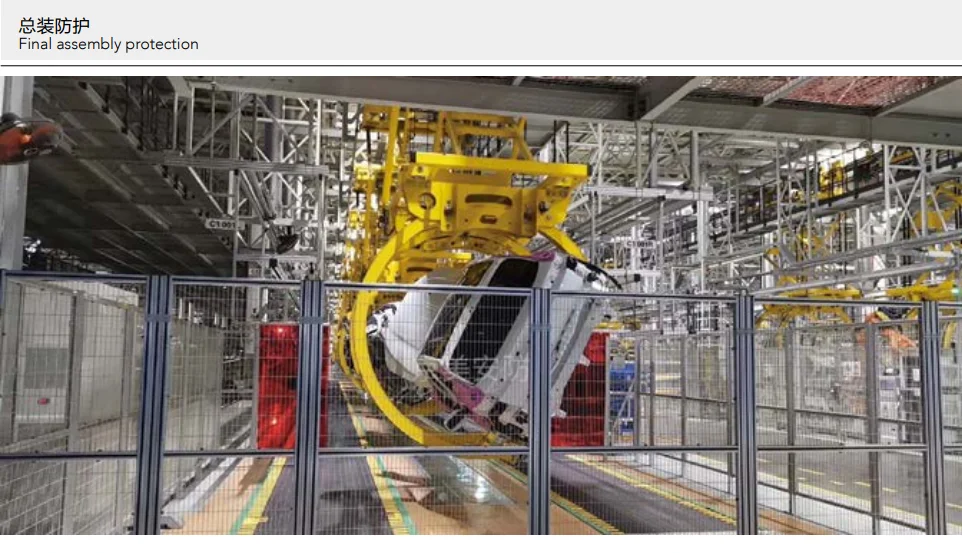
Tell us whether your gate controls machine power for a lock selection
The one question that splits the specification
Ask whether a person opening the gate is exposed to hazardous motion that must stop. If yes, the gate is part of the machine control system. If no, the gate is a physical and administrative boundary, and the lock is chosen for the procedure that governs entry.
- Yes, the gate controls machine power. Specify a safety interlock mounting carrier with a switch and actuator key chosen by the controls integrator, a deliberately reset restart inhibit, and validation under ISO 14120 and ISO 13849-1 as applicable. The door header beam and framed leaf hold the actuator on its datum.
- No, the gate controls access only. Specify a LOTO padlock hasp that accepts the plant’s own padlocks, or a mechanical lock safety gate with managed keys. The fence still closes the physical boundary; the isolation procedure governs who may enter and when.
- Record the choice. Write the decision, the lock type, the number of keys and the responsible role into the acceptance pack. A lock with no procedure behind it is a latch, not an isolation point.
- Keep the physical boundary intact. A mechanical lock does not reduce the required guard height, aperture or reach distance. Guard design and the local risk assessment still apply.
In one recorded project, a three-key manual key control arrangement was handled with a procedural lock and tag approach rather than a PLC interlock. That is a single project record for a specific isolation zone, not a recommendation for every plant or a claim that electronic interlocks are unnecessary.
What each lock type actually covers
Padlock hasp: several people, one isolation point
A LOTO padlock hasp lets each authorised person apply their own padlock to the same gate, so the zone cannot be reopened until every lock is removed. It suits inspection holds, quarantine areas and storage zones where the hazard is the material or the process state rather than live machine motion. The hasp is a mechanical fitting on a framed mesh gate; the padlocks, tags, key custody and written procedure belong to the plant. Framed mesh panels with a 20x30x1.5 mm tube border and a rigid gate leaf give the hasp a mounting face that does not deform under repeated use.
Mechanical lock, electromagnetic lock and interlock: three different jobs
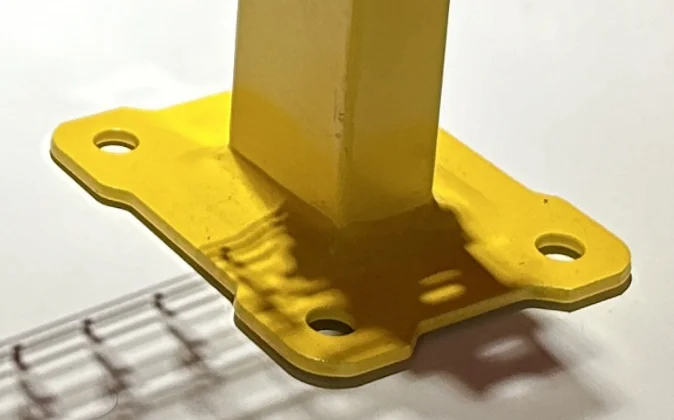
A mechanical lock controls who can open a gate and needs no electrical supply; a three-key manual arrangement can be managed entirely through key custody. An electromagnetic lock holds a door closed under power and needs its release and fail-state behaviour defined by the electrical team. A safety interlock switch reports gate position to the safety circuit and is part of machine stopping. Only the last one is a substitute for a stop function, and none of them replaces the fence geometry. Where a mechanical lock and an electronic safety lock are both required, both are listed on one drawing so their hole positions do not compete.

The gate’s role inside the LOTO procedure
In a written isolation procedure the gate is the access control point: it is closed, locked and tagged before work starts, and the locks are removed only by the people who applied them. The fence does not isolate energy, verify zero energy or authorise the work; those steps belong to the plant procedure and the machine builder. Guard height, aperture and reach distance are checked to ISO 13857, and guard design to ISO 14120. A 1600 J impact figure quoted for the standard configuration applies only to that tested build. This system is not intended for pure pedestrian guidance or office partitioning.
Zones that usually do not need a PLC interlock
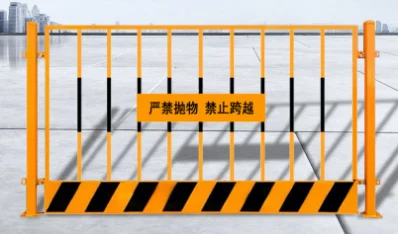
- Quality hold and inspection areas: access is restricted to named roles, with no live hazardous motion inside.
- Quarantine and storage cages in a 3PL or warehouse: the fence defines the boundary and the procedure defines the release.
- Smart warehouse zoning and automated material handling safety buffers: physical separation is needed, but the gate is not a stop device.
- Machine perimeter guarding where power is isolated elsewhere: the interlock sits at the electrical isolation point, not at this gate.
Specifying the lock from the power-control question keeps both the budget and the isolation procedure honest.
What to send for a lock and gate schedule
State whether the gate controls machine power, describe the zone and its hazard, provide the gate type and leaf width, the number of authorised users and padlock positions, the key custody rule, the lock or switch model chosen by the customer, floor and anchor conditions and the name of the EHS owner. The returned pack carries the general arrangement with the gate position, the lock and hasp schedule, the panel and post BOM and the acceptance checklist. The written LOTO procedure, electrical schematics and safety circuit validation remain with the plant and the integrator.
Buy the lock the procedure needs
Once the power-control question is answered on paper, a hasp and a tag can do more for a restricted zone than an interlock that nobody needed, and an interlock is specified without hesitation where motion must stop.