PT
PT  EN
EN  DE
DE  RU
RU  JA
JA  ES
ES  IT
IT Warehouse Operations / Industrial Safety Fencing
When Fencing Is a Pure Cost Line, Every Linear Meter Has to Earn Its Place
Contract logistics and 3PL operators run on thin operating margins and answer for every square foot. A perimeter fence does not generate revenue, so the procurement question is blunt: how much demarcation can we buy with the budget we have, and can the layout change next quarter without scrapping the panels we ordered yesterday. Mefence frameless 3D industrial safety fencing ships direct from the factory at roughly one-fifth the linear-meter price of the European benchmark brands, so the same fencing budget covers three to five times the linear run. The savings land directly on the warehouse P&L, not in a marketing line.
Engineering Specs: What Actually Shows Up on the Packing List
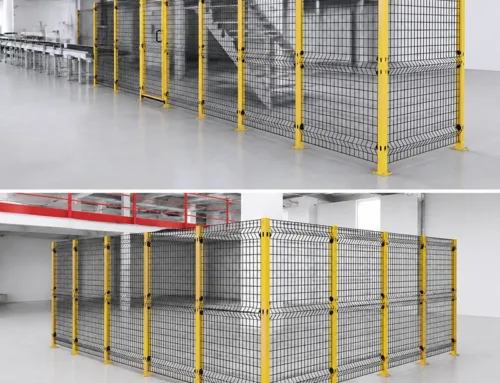
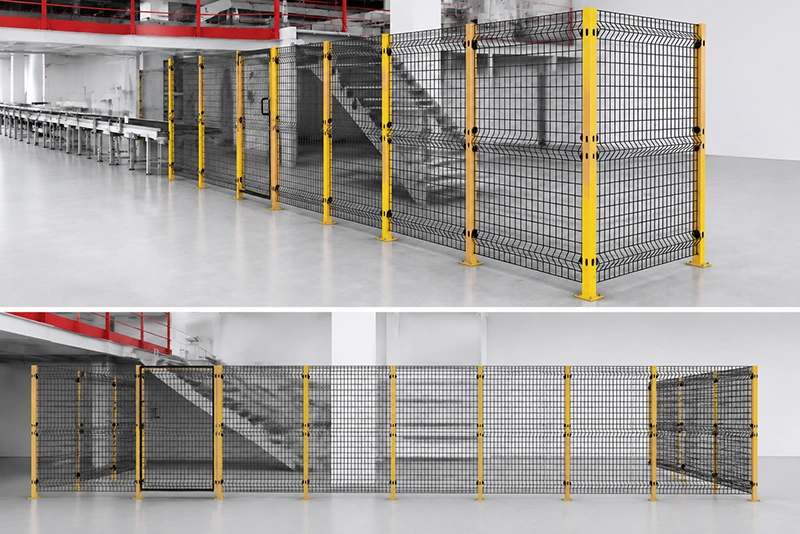
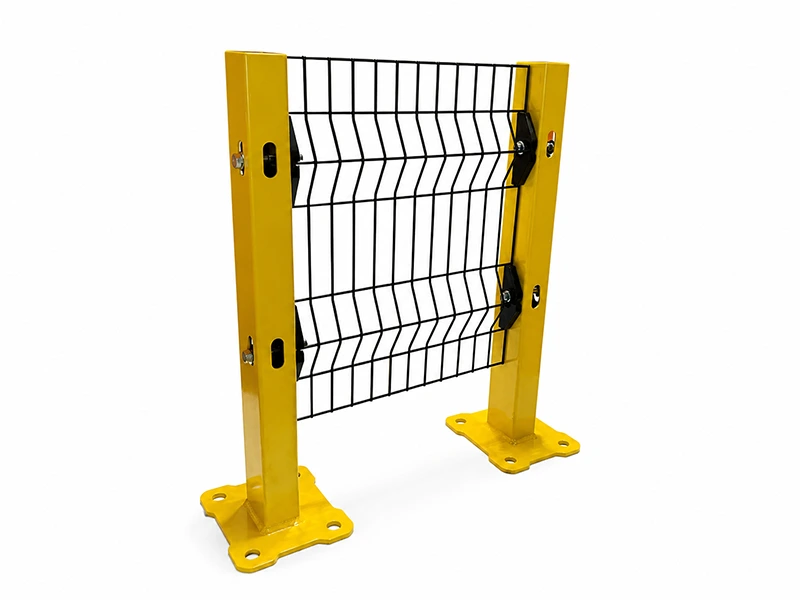
Before a 3PL operations manager signs off on a fencing PO, the spec sheet has to answer three questions fast: how much per linear meter, how much site work is needed, and what happens when the warehouse layout moves. Mefence is a frameless 3D welded wire mesh panel, bolted to powder-coated steel posts with a plastic clip and self-tapping screw. The numbers below are the ones the supplier has to put on the quotation, not on a brochure.
| Requisito | Mefence Spec |
|---|---|
| Material e acabamento | Q235 carbon steel, electrostatic powder coated (standard yellow plus black) |
| Wire diameter options | 3.0 mm or 4.0 mm welded wire |
| Mesh opening options | 20 mm x 100 mm or 50 mm x 50 mm |
| Panel width range | 200 mm to 1400 mm (cut to size on site) |
| Panel height range | 200 mm to 3000 mm |
| Opções de postagem | 40 mm x 60 mm or 60 mm x 60 mm steel post, base plate or expansion bolt fixing |
| Ground clearance | 140 mm |
| Método de conexão | Plastic clip plus self-tapping screw, no square-tube welding on site |
| Factory-direct price band | About USD 10 to 32 per linear meter, depending on wire diameter, mesh opening and quantity |
| Compliance posture | Designed for non-high-impact area demarcation, AGV and forklift lane separation, pedestrian-vehicle zoning; not a certified impact-rated machine guard |
Three Numbers That Matter to a 3PL P&L Review
One-Fifth the Linear-Meter Cost of Premium Brands
The benchmark pricing comparison is uncomfortable for the European incumbents. US retail channels list welded wire mesh safety panels at roughly USD 32 to USD 65 per linear foot, which works out to USD 105 to USD 213 per linear meter once posts and connectors are added. Mefence ships factory-direct at roughly USD 10 to USD 32 per linear meter. On a 5,000 linear meter warehouse fencing run, that is the difference between a six-figure capital line and a line item the operations team can approve inside a quarterly budget cycle. The savings are not a discount code; they come from a frameless panel design that removes the square-tube perimeter frame and the welding step from both production and installation.
Layout Changes Without Buying New Panels
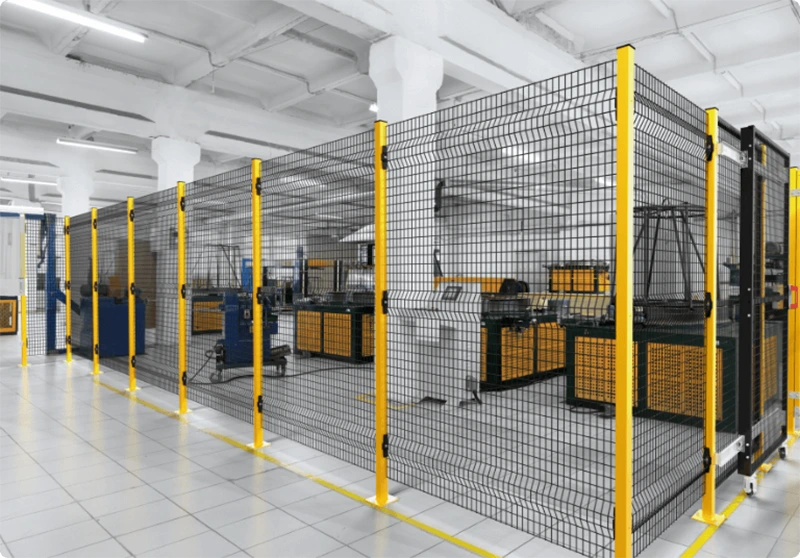
3PL warehouses reconfigure zones more often than they reconfigure racks. A new anchor tenant, an expanded cross-dock, a robot picking cell that needs a hard perimeter, a quarantine zone that moves every six weeks. The frameless 3D welded mesh panel is cut to width and height on site with standard tools, so a 1400 mm panel becomes a 960 mm panel against an irregular column line, and the offcut is reused on the next bay. The 3D T-shaped ridges on the panel carry cable routing for scanners and stack-light wiring, and they accept wood slat inserts when a section needs visual shielding from a customer tour. No welded frame means no scrapped frame when the layout moves.
One Person, Three Steps, No Welder on Site
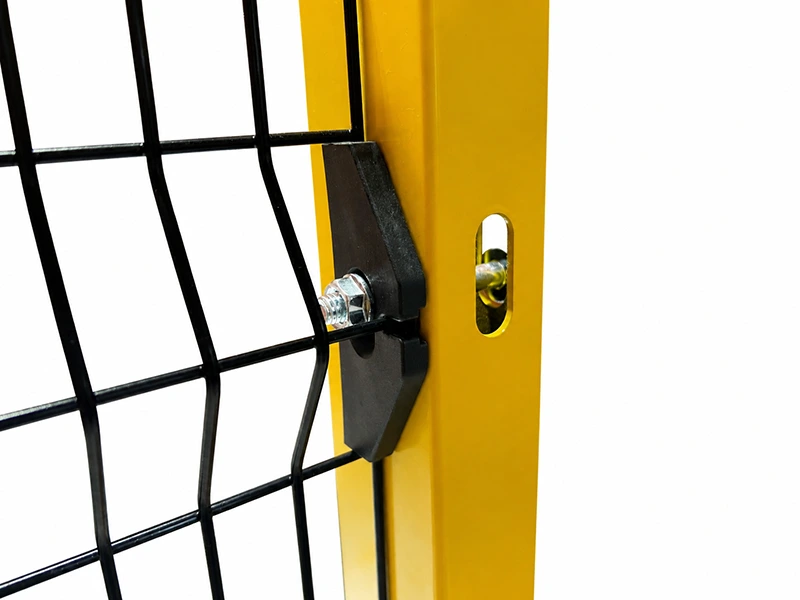
Site welding is a problem on a live 3PL floor. Hot work permits, fire watch, insurance endorsements, downtime on adjacent operations. Mefence clips to the steel posts with a plastic clip and self-tapping screw. The published installation figure is one person, three steps, and roughly 50 percent time saving versus a comparable framed panel that needs on-site welding. For a multi-site 3PL operator rolling out the same fencing across ten facilities, that delta is the difference between a six-week installation window and a ten-week one, with no hot work permit paperwork on the facility manager's desk.
Where a 3PL Operations Manager Actually Deploys It
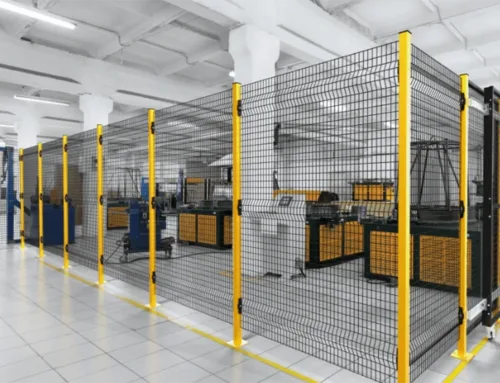
- Warehouse zoning between customer-dedicated storage, returns processing and value-added services
- Pedestrian-vehicle separation between picker aisles and forklift or AGV lanes
- AGV and AMR lane demarcation where routes must be readable to both humans and autonomous vehicles
- Cross-dock separation between inbound receiving, sortation and outbound dispatch
- Quarantine and inspection zones for damaged or recalled inventory
- Tool crib and consumables enclosures where access has to be visible from the supervisor desk
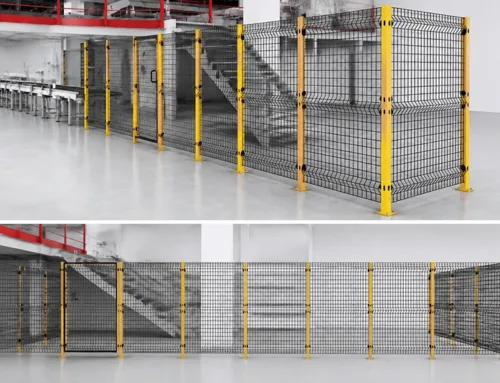
- Mezzanine edge and stair landing demarcation in multi-level 3PL facilities
- Temporary retrofit partitions during tenant changeovers without disturbing adjacent operations
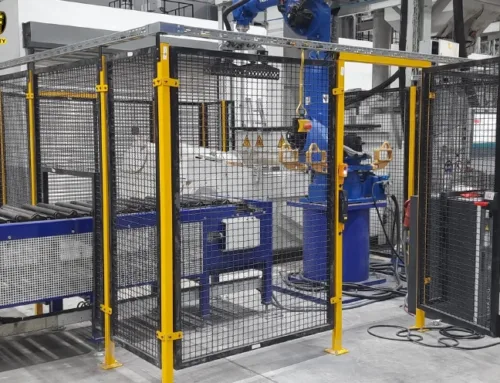
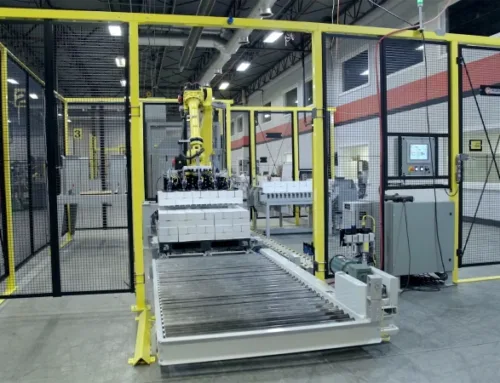
Every application above is a non-high-impact demarcation use case, which is the exact positioning boundary for the Mefence line. Where a robot arm, conveyor drivetrain or pallet flow rack carries a direct impact risk that needs a certified machine guard, the higher-spec Machine Fence line from the same manufacturer is the correct reference, with the access door system shared between the two lines so the low-cost demarcation and the certified impact perimeter can sit on the same floor plan.
Spec Checklist Before You Send the RFQ
Send the supplier four line items and you will get a quotation that actually compares on the warehouse P&L: total linear meters of fencing required, panel height range per zone (the 200 mm to 3000 mm band covers everything from AGV lane markers to mezzanine edge demarcation), preferred wire diameter (3.0 mm for pedestrian and zoning lines, 4.0 mm where forklift impact at low speed is plausible), and post fixing method (base plate on a finished concrete floor, expansion bolt on a structural slab). With those four numbers plus a sketch of the floor plan, the supplier returns a per-linear-meter price that is directly comparable to the European benchmark quotation sitting on the operations director's desk, and the saving shows up as a line item the finance team can audit, not a vague discount narrative.
Run the Linear-Meter Math on Your Own Floor Plan
Send the floor plan, the total linear meters per zone, and the panel height band you need. The quotation comes back with a per-linear-meter price, the post fixing method for your slab, and the panel options that fit the zone risk profile. No hot work permit, no welded frame to scrap when the next tenant moves in.