PT
PT  EN
EN  DE
DE  RU
RU  JA
JA  ES
ES  IT
IT MULTISITE MACHINE GUARDING | ALFENCE
A Common Machine Guarding Baseline for China, Czechia, Thailand and Germany
When four plants apply different fence dimensions, door details and replacement parts, every audit becomes a local engineering exercise. Alfence industrial safety fence systems use a common modular safety fence platform, designed around EN ISO 14120 and EN ISO 13857, with project documentation that can support CE and Machinery Directive compliance reviews while each site completes its own GB, European or OSHA-related verification.
What the Common Alfence Specification Controls
The objective is not to declare one fence automatically compliant in every country. It is to give EHS, automation and procurement teams one controlled design basis, then record the local risk assessment, safety distances and legal review for each plant.
| Specification area | Alfence baseline for the project file |
|---|---|
| Guarding design basis | EN ISO 14120 for physical machine guarding and EN ISO 13857 for safety-distance evaluation; local GB, EU/CE or OSHA-related requirements remain part of site approval. |
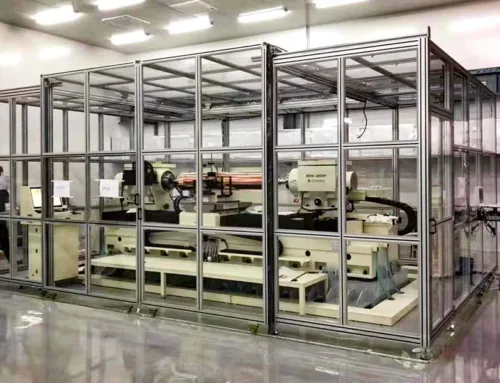
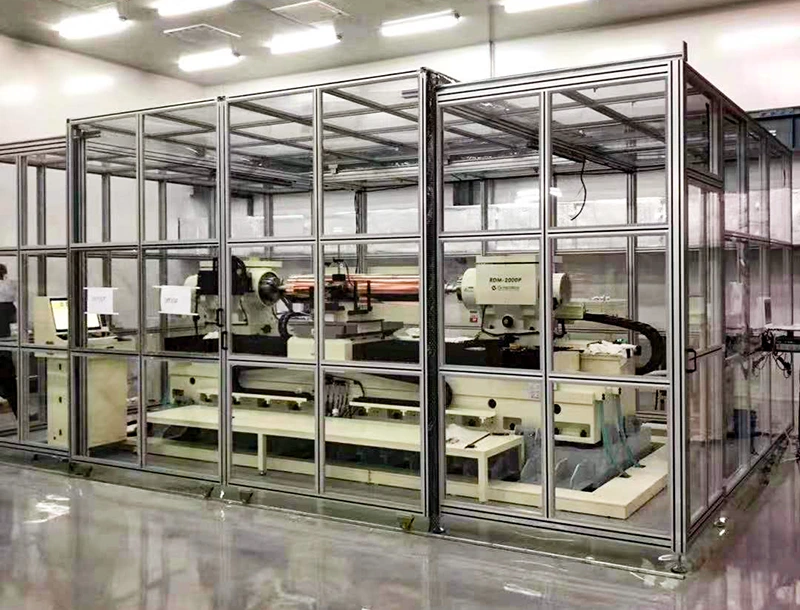
| Modular frame | 40×40 mm or 45×45 mm aluminum profile posts with T-slot connections, reusable post-and-panel layouts and project lengths up to 2200 mm where specified. |
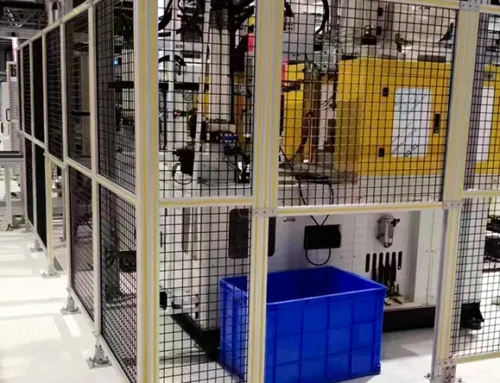
| Panel selection | 20×100 mm welded wire mesh, plus PC, polycarbonate, acrylic or metal panels where visibility, arc-light screening or process conditions require a different infill. |
| Floor installation | Mechanical connectors lock into the profile groove; foot connectors and expansion bolts or I-bolts provide the floor-mounted boundary. No on-site welding is required for normal assembly. |
| Acesso controlado | Hinged, folding, telescopic or sliding safety doors can be coordinated with safety interlock switches, magnetic handles and safety light curtains. |
| Common spare-parts family | One approved profile, mesh/panel, connector, foot and door family can be carried across plants, subject to the final site drawing and local approval. |
How Alfence Reduces Variation Between Plants
Replace Site-Specific Welded Steel with a Repeatable Modular Frame
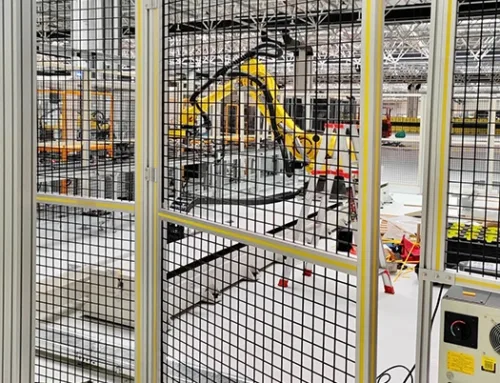
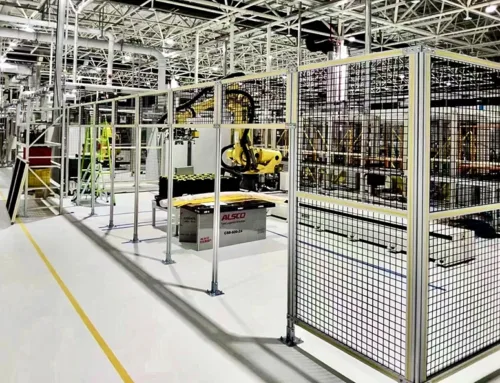
A welded steel fence often starts as a local fabrication job: one contractor chooses a post section, another changes the mesh, and a third fabricates a maintenance opening around the machine. The result may work at one robot cell, but the next retrofit creates a new bill of materials, new drawings and new spare parts. Alfence uses aluminum extrusion, T-slot posts and connector-based assembly instead. A 40×40 mm or 45×45 mm post-and-panel system can be specified once, then adjusted for robot cell guarding, CNC machine guarding, conveyor guarding or an AGV path without cutting and re-welding the perimeter. The system is lightweight and reconfigurable, but it should remain a light-to-medium indoor guarding choice rather than being presented as a high-impact steel barrier.
Keep the Hazard Boundary Visible While Access Stays Controlled
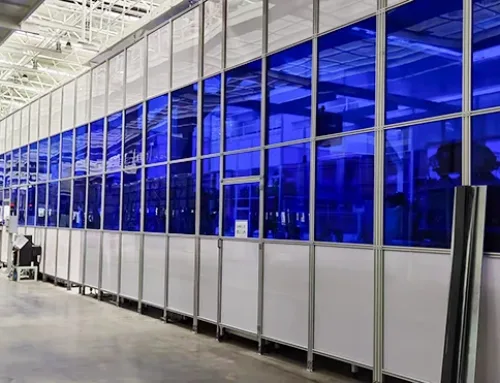
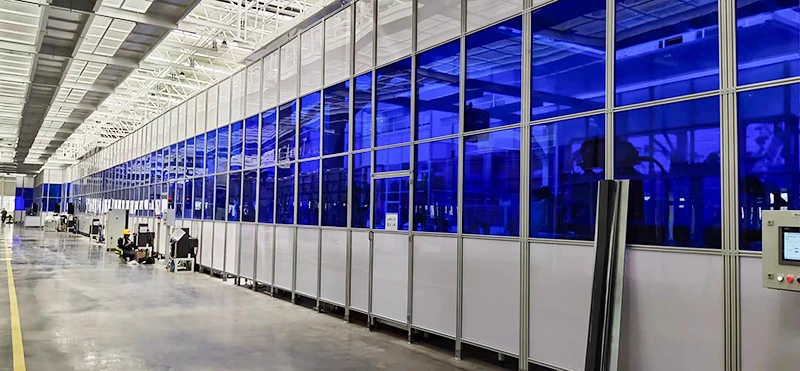
Multinational audits do not stop at the mesh. Reviewers also look at whether operators can see the hazard, whether maintenance access is defined, and whether a gate is integrated with the safety function. Alfence combines welded wire mesh with transparent PC or acrylic panels where visual supervision matters. Hinged, folding, telescopic and sliding doors can be laid out with a safety interlock switch or light curtain, while the final safety circuit remains part of the machine risk assessment. The result is a clear perimeter guarding arrangement for robot cells, automated production lines and machine tools—not a generic wire partition that leaves the access logic to the installer.
Standardize Parts Before You Standardize Sites
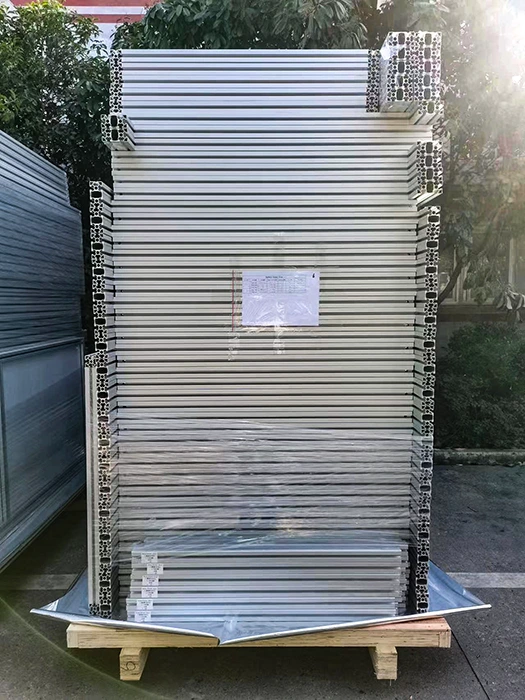
One common drawing package is useful only when the physical parts can be identified and replenished consistently. The Alfence family covers aluminum extrusion posts, welded wire mesh, PC or acrylic panels, foot connectors, nylon end caps and safety-door hardware. Aluminum extrusion is formed after heating at about 480°C and is powder-coated after processing; the documented coating process uses about 185°C for 15 minutes of curing. The palletized components shown here are delivery evidence, not an installation or impact test, but they illustrate why a controlled component family helps a China, Czechia, Thailand or Germany plant order the same replacement category instead of recreating a local fence specification.
Where a Multisite Alfence Baseline Fits
- Proteção de células robóticas: use the same modular frame, mesh or transparent panel logic for assembly, welding and material-handling robot cells, then document the local access and safety-control validation.
- CNC machine guarding and machine-tool areas: define consistent panel heights, maintenance doors and floor anchors instead of allowing each contractor to fabricate a different enclosure.
- AGV path guarding and automated warehouse zones: combine a visible perimeter with the project’s traffic, emergency-access and safety-distance review; the fence is not a substitute for vehicle-risk control.
- Retrofit and relocatable guarding: remove and reconfigure panels when a line changes, reducing downtime, on-site welding labor and repeat purchasing during plant upgrades.
- Cleanroom, energy and light-corrosion indoor areas: use corrosion-resistant aluminum and a selected panel finish where indoor appearance, cleanability and frequent layout change matter; outdoor suitability requires separate confirmation.
A common specification does not eliminate national differences. It gives each EHS team the same starting geometry, component names and evidence trail, so the remaining local questions are visible instead of being hidden inside four unrelated fabrications.
Build the Audit File Around the Same Hardware Family
For a multisite program, the project file can be organized around the approved Alfence layout, component list, door schedule, floor-fixing details and EN ISO 14120 / EN ISO 13857 design basis. SGF can provide CE and Machinery Directive compliance documentation for the configured project package. The responsible integrator or plant team must still complete the applicable GB, European, Thai, German or OSHA-related legal and machine-risk review; no standard fence drawing should be treated as a universal certificate.
Make the Common Specification the Starting Point
Alfence gives multinational manufacturers a practical industrial safety fence platform for standardized machine guarding: modular aluminum profiles, consistent panel and door families, documented design inputs and reconfigurable installation. That reduces compliance variation and spare-parts complexity without hiding the local approval work that every plant still needs.