PT
PT  EN
EN  DE
DE  RU
RU  JA
JA  ES
ES  IT
IT Industrial Safety Barrier for Multi-Site Beverage Operations
Industrial Safety Barrier for Multi-Site Beverage Plants: Standardize Protection, Document Every Deployment
FCBarrier is an Industrial Safety Barrier program for beverage groups with many independent bottling partners: a modular Flexible Safety Barrier with published impact data, PAS 13-aligned performance targets, global supply, and quick installation—while its current lack of a public third-party PAS 13 certificate remains a clear qualification gate.
What a Beverage Group Must Standardize Across Sites
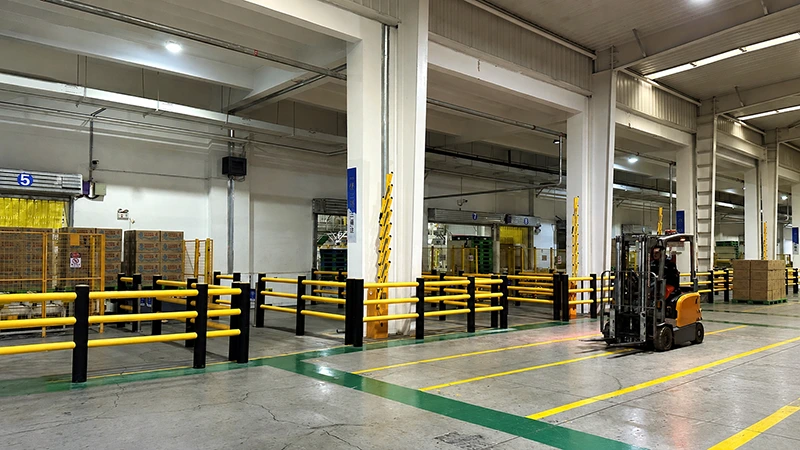
A head office can define a safety requirement, but local bottling partners still need a product that can be specified, installed, inspected, and replaced consistently. Steel Barrier and low-cost traditional guardrail purchases often vary by site, provide limited comparable test evidence, and create an audit trail that is difficult to consolidate. FCBarrier turns the requirement into a documented Industrial Safety Barrier specification rather than an informal purchasing preference.
| Multi-site requirement | Resposta da FCBarrier |
|---|---|
| Comparable impact performance | Published 28,950J-rated barrier data for an 8-ton forklift at 9.6 km/h; use the relevant series and layout for each risk zone. |
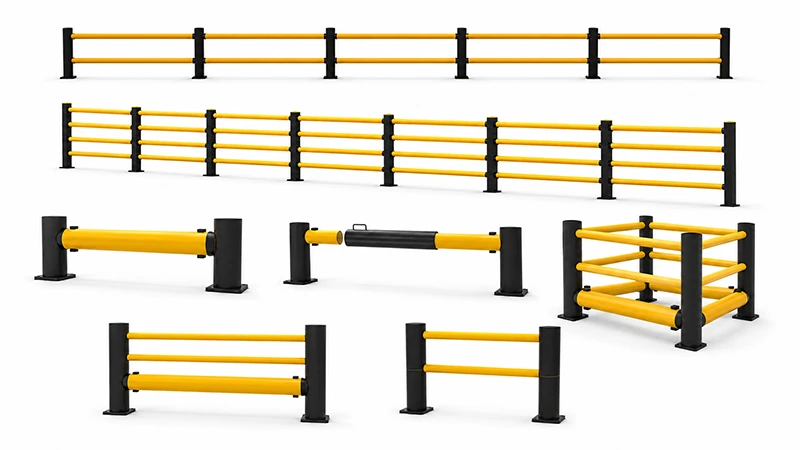
| Consistent product selection | SR Single Rail, DR Double Rail, TR Traffic Rail, and CTR Column Protector families cover different warehouse, pedestrian, and asset-protection needs. |
| Fast site deployment | Modular sections, floor-anchored bases, and mortise-and-tenon quick-install details support repeatable retrofit installation. |
| Audit-ready qualification | Supply a common specification and technical document set for group procurement; PAS 13 alignment is a target, not a claim of completed third-party certification. |
Why FCBarrier Fits Distributed Bottling Networks
Use the structure that matches the traffic zone
In a forklift aisle, pedestrian route, loading dock, or machinery access point, a single generic rail rarely answers every protection question. The FCBarrier range allows the group standard to map to SR, DR, TR, or CTR configurations. This supports Flexible Rack Protection, Warehouse Safety Barrier layouts, and Column Protector details without forcing every plant into one identical arrangement.
Make installation repeatable, not site-specific
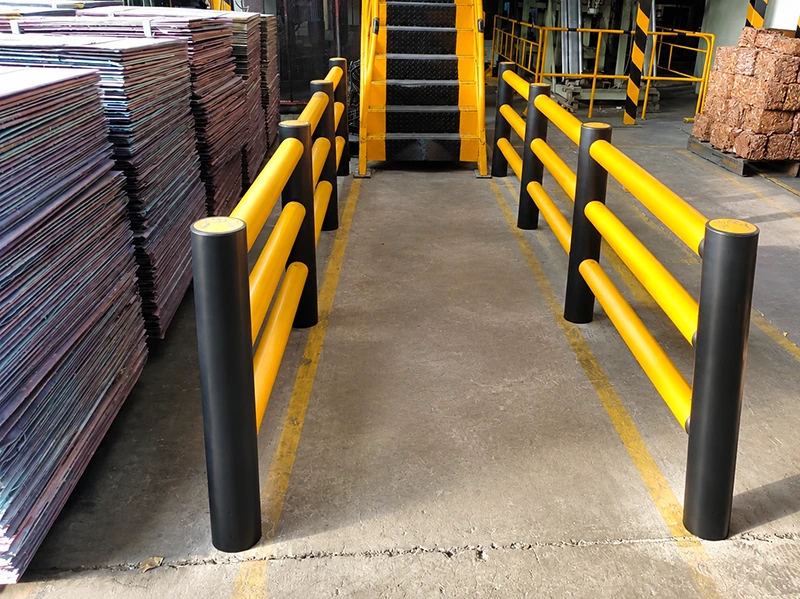
The modular barrier format uses floor-anchored base plates and quick-release, mortise-and-tenon connection logic shown in the product documentation. That gives local teams a practical Easy Install Safety Barrier route for retrofit work, while central engineering can issue the same layout rules, inspection points, and replacement references to every partner plant. ARMORFLEX polymer components are designed to absorb energy and self-rebound after impact, reducing the need for immediate steel straightening work.
Protect people, equipment, and production access
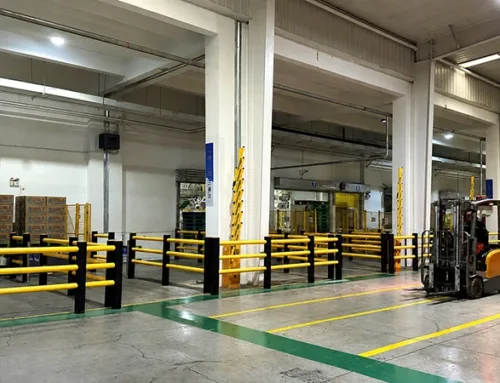
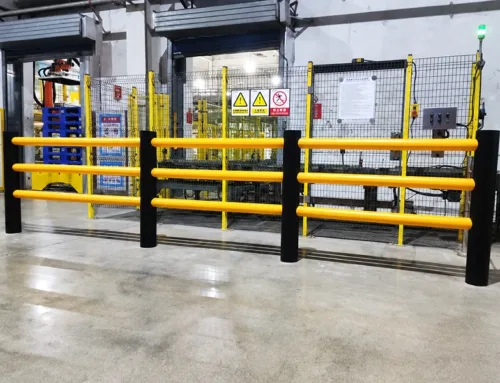
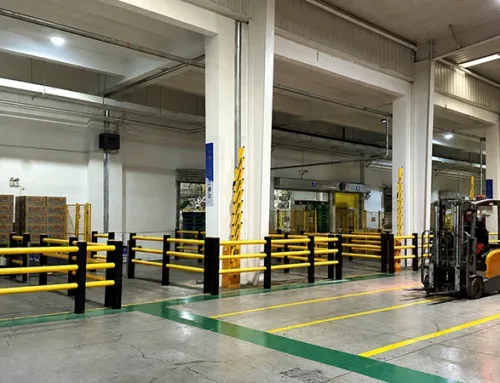
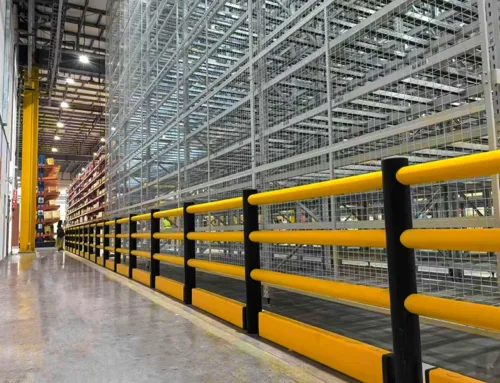
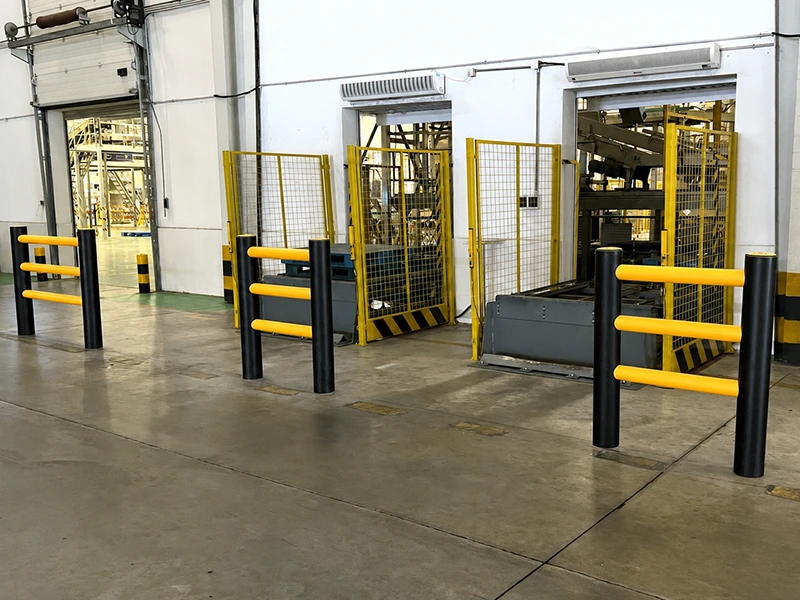
Food & Beverage Safety Barrier layouts need to separate pedestrians from forklift movements and protect machinery access without creating an undocumented one-off. Site photos show continuous barrier runs, dual-rail segregation, and mesh-gate interfaces around conveyor openings. The result is a defined Workplace Safety boundary that helps prevent vehicle and equipment damage, protect racking and building structures, and reduce accident downtime.
Where to Deploy the Group Standard
- Forklift Safety Barrier zones: protect racking, columns, loading bays, and distribution-centre routes from repeat vehicle contact.
- Pedestrian Barrier routes: define walkways and crossings where people and powered vehicles share the plant.
- Proteção de Máquinas: isolate conveyor openings, production equipment, and controlled access points.
- Proteção da Docas de Carga: create a consistent physical boundary for transfer and dispatch areas.
- Retrofit Barrier projects: upgrade existing plants in modules instead of waiting for a full-site rebuild.
Chinese scale manufacturing supports competitive cost, multiple specifications, customization, and consistent supply for multinational bottling networks. Polymer construction also offers corrosion-free, UV-resistant, recyclable, low-maintenance protection where steel corrosion and repeated repainting create avoidable upkeep.
Qualification Note: The Certification Gap Is Material
FCBarrier has public impact-performance data and performance indicators aligned with PAS 13, but FCBarrier does not currently publish a PAS 13 third-party certification report. For a beverage group with high safety thresholds and decentralized purchasing, independent laboratory impact testing and PAS 13 certification should be treated as a pre-award requirement. The practical procurement pack should therefore separate verified test data, design targets, installation instructions, configuration schedules, and the certification status. Closing this gap is the priority that will convert the product’s cost, customization, delivery, and quick-install strengths into a stronger approved-vendor case.
Build One Auditable Industrial Safety Barrier Standard
Share your bottling-site layouts, forklift routes, pedestrian interfaces, and required impact threshold. The FCBarrier team can map SR, DR, TR, and CTR modules, prepare a repeatable bill of materials, and identify the evidence still needed for your internal PAS 13 qualification gate.