PT
PT  EN
EN  DE
DE  RU
RU  JA
JA  ES
ES  IT
IT Proteção de Máquinas
Sistemas de Proteção de Máquinas
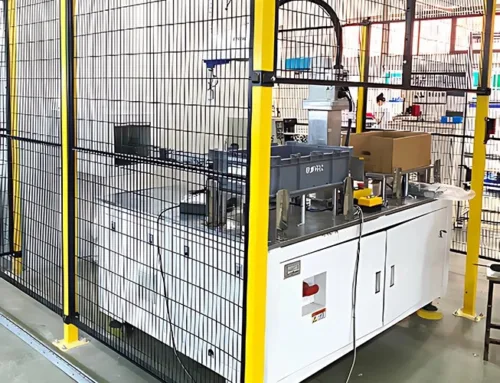
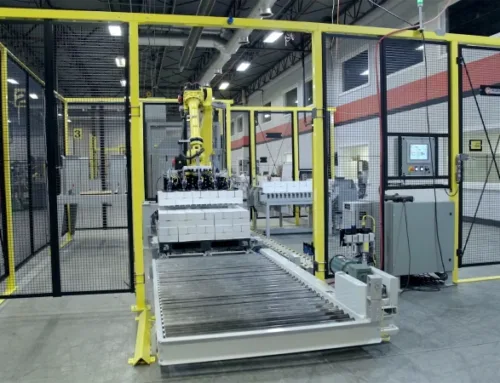
Automated pallet nailing lines and packaging lines need machine guarding that does more than block access. They need a fence that fits into the control system from day one, so a door-open event immediately drives a safe stop instead of creating a late-stage field fix.

Why integrators choose a guarded line that is already interface-ready
The hidden cost in a standard fence is not the steel. It is the hours spent on site measuring, marking, drilling, and reworking each gate until the interlock switch finally lines up with the automation team’s safety circuit.
| Requisito do projeto | What Mdfence is built to support |
|---|---|
| Standard safety interface | Reserved mounting positions for Omron D4NL and Pizzato interlock switches |
| Lower retrofit labor | Pre-planned gate holes reduce field drilling and repeated on-site fitting |
| Stable emergency stop logic | Supports a door-open safety response that can be integrated into the machine stop loop |
| Integrator handoff speed | Cleaner interface points make technical sign-off faster for the controls team and the safety owner |
Three reasons the fence works in automation projects
01. Gate hardware is considered before fabrication starts
The main problem with generic machine guarding is that the fence arrives first and the interlock decision comes later. Mdfence is designed with the interlock question already in mind, so the gate area can accept the safety switch layout instead of forcing a custom field workaround.

02. Less drilling means less hidden construction cost
On real projects, the hidden cost is often the extra labor spent drilling, aligning, and rechecking the gate after the fence has already been purchased. By reserving the right mounting positions for mainstream interlocks, the project team can keep the build cleaner and move faster from layout to commissioning.

03. The safety loop stays stable after installation
Automation teams care less about a fence’s appearance and more about whether the safety chain stays reliable after production starts. Mdfence supports a cleaner device-to-gate interface, which helps the electrical and controls team keep the stop circuit predictable during handover and later maintenance.

Where the fit matters most
- Automated pallet nailing lines that need a gate interlock tied into the machine stop sequence.
- Packaging lines where the safety gate must be checked and commissioned quickly without late drilling.
- Retrofit projects where the integrator must protect the line, reduce现场改造, and keep the schedule under control.
The product is a better match when the customer already knows the interlock brand, the gate swing direction, and the control cabinet handoff point. That is exactly where pre-engineered machine guarding saves time.
What to confirm before the final layout freeze
Before release, the integrator should confirm the safety switch model, the door direction, and the final control logic. With those details fixed early, the Mdfence interface can be matched cleanly and the project avoids the usual rework loop that follows a generic fence purchase.
Build machine guarding around the control system, not around a field fix
When the fence already supports the interlock hardware and the safety loop strategy, engineering gets less troubleshooting, purchasing gets fewer change orders, and production gets a safer line with a cleaner handoff.