PT
PT  EN
EN  DE
DE  RU
RU  JA
JA  ES
ES  IT
IT Proteção de Máquinas
Machine safety fence
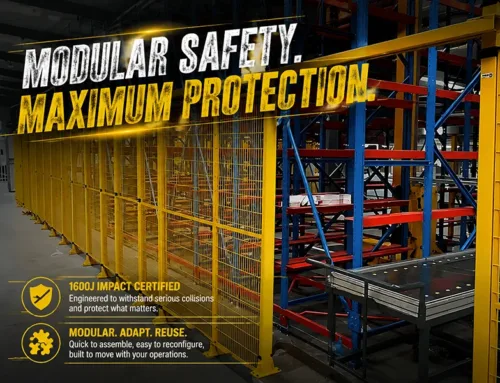
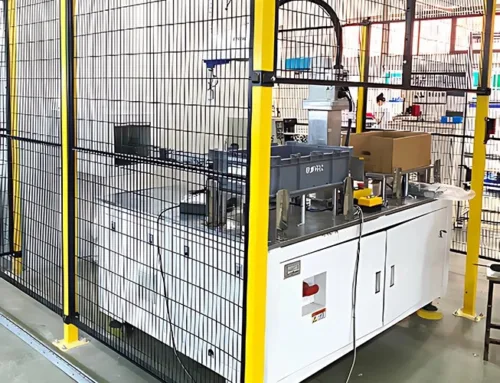
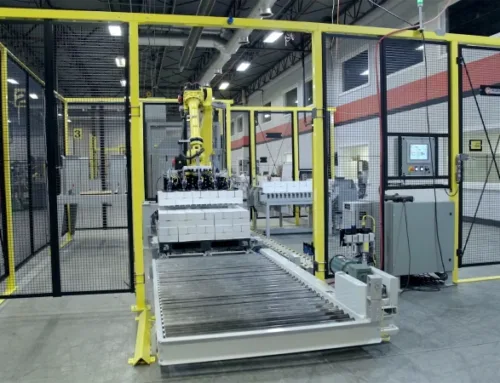
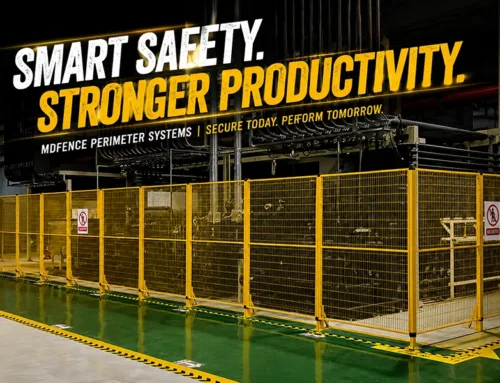
Machine safety fence built for high-frequency forklift traffic, where collisions, blind corners, floor debris, and unplanned downtime can put both production equipment and people at risk.

When pallet production depends on constant forklift movement, the barrier must do more than warn operators. It has to absorb impact, hold its line, and keep the core line running.
| Especificação | What it means on the floor |
|---|---|
| Estrutura | Q235 cold-rolled seamless square tube with full-welded framed construction |
| Resistência ao impacto | 1600J anti-impact performance for heavy forklift mis-reads and side swipes |
| Protection target | Automatic nailing lines, pallet handling zones, and personnel paths near dense vehicle traffic |
| Operating result | Higher continuity, fewer repair stops, and less exposure to collision-related injury risk |
01
Old warning-only fences fail when forklift traffic is constant
In pallet production, forklifts move raw wood, finished pallets, and transfer loads all day. Blind spots, tight aisle turns, and slippery dust or wood chips make contact events hard to avoid. A light-duty barrier may look correct on paper, but once it meets a real truck hit, it can buckle, open a gap, or become another maintenance problem.

02
Why the Mdfence structure fits impact-heavy machine protection
Mdfence replaces weak structures with a welded frame built from Q235 cold-rolled seamless square tube. That matters because the load path stays rigid when the fence receives a push from a heavy forklift. The result is not just visual separation. It is physical protection designed to stop the hit from reaching the automated line behind it.

03
1600J impact resistance supports uptime, not just compliance
The value of a machine safety fence is measured after the near-miss, not before it. A barrier that can withstand 1600J impact energy helps protect a high-value automated nailing line from a forklift strike that would otherwise trigger downtime, repair work, and downstream schedule loss. That is the difference between a warning line and a production safeguard.

Where this machine safety fence makes the most difference
- Forklift-dense pallet manufacturing floors where raw timber and finished pallet stacks move through the same traffic lane.
- Machine zones with blind corners, reduced sight lines, or mixed pedestrian and vehicle access.
- Production lines where a single impact can stop an automated nailing cell, create repair downtime, or expose workers to a strike hazard.
In these layouts, the right response is not a thinner barrier or a brighter warning color. It is a fence that is built to survive the hit and preserve the continuity of the line behind it.
What to specify before you choose a machine safety fence
Start with the actual collision scenario: forklift weight, travel speed, aisle width, blind spots, and what sits behind the barrier. Then match the fence to the job. For a heavy-impact machine area, Mdfence is the fit because the Q235 welded frame and 1600J impact resistance are aimed at the real failure mode: accidental truck contact that should not become a line stoppage.
This is the practical checklist. If the zone has frequent forklift movement, the protection layer must be structural, not decorative.
Need a machine safety fence that protects the line, not just the view?
Choose the structure built for collision risk, downtime control, and continuous operation in forklift-heavy production areas.