PT
PT  EN
EN  DE
DE  RU
RU  JA
JA  ES
ES  IT
IT Alfence | Hygienic machine guarding
Modular aluminum frame for cleanable food and pharma safety fencing
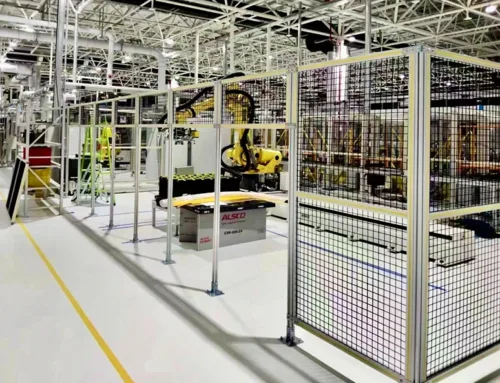
Food, beverage, pharmaceutical, and cleanroom facilities need machine guarding that resists corrosion, avoids rust-flake contamination, and can be cleaned without slowing production. Alfence uses a modular aluminum frame with corrosion-resistant aluminum alloy and a powder-coated finish to create a smooth, reconfigurable perimeter guarding system for indoor production areas.
Why a modular aluminum frame fits hygiene-sensitive production
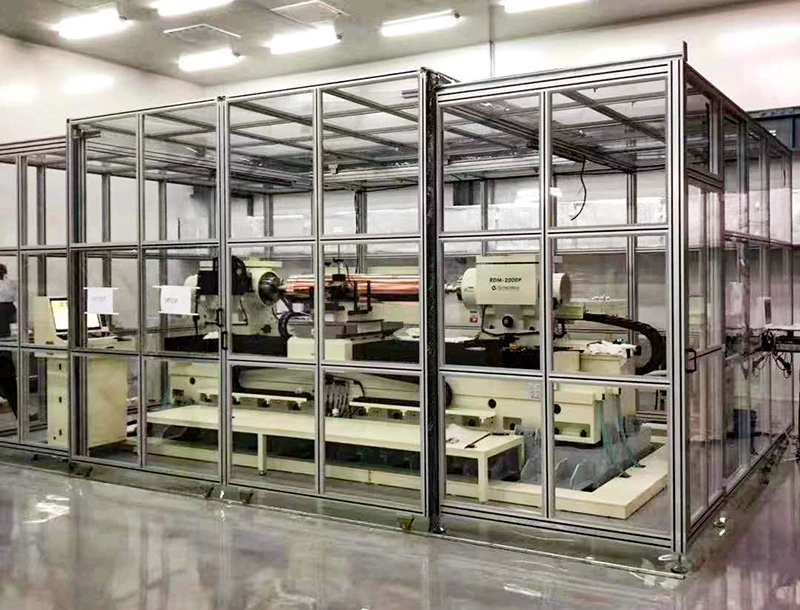
A welded steel fence or chain-link partition may isolate a machine, but corrosion at cut edges, joints, or damaged coatings can create rust and loose flakes. Stainless steel can address some corrosion concerns, yet it often brings a higher material cost and may still need project-specific surface treatment. In food and beverage plants, pharmacies, pharmaceutical production, and cleanroom areas, the guarding choice must also support routine wipe-down or wash-down procedures where the project requires it.
| Requisito do projeto | Alfence design response |
|---|---|
| Corrosion resistance for indoor production | Aluminum alloy profile with a powder-coated aluminum option provides two layers of surface protection: corrosion-resistant base material plus a finish cured at 185°C for 15 minutes. |
| Cleanable guarding surface | Smooth framed panels and removable components simplify access for cleaning. The panel selection and wash-down method should be confirmed against the application and hygiene protocol. |
| Line changes and retrofit work | The modular frame, T-slot aluminum posts, and post-and-panel system support bolt-free assembly, removable panels, and reconfiguration without on-site welding. |
| Different production-zone layouts | Steel wire mesh, transparent polycarbonate or acrylic panels, hinged or sliding safety doors, and custom RAL colors can be specified by zone. |
| High humidity or outdoor exposure | Alfence is designed for indoor use. Outdoor or high-humidity projects require additional corrosion protection and should be confirmed during project design. |
Structure and evidence for a cleanable machine guarding system
Aluminum alloy profiles reduce rust-flake risk
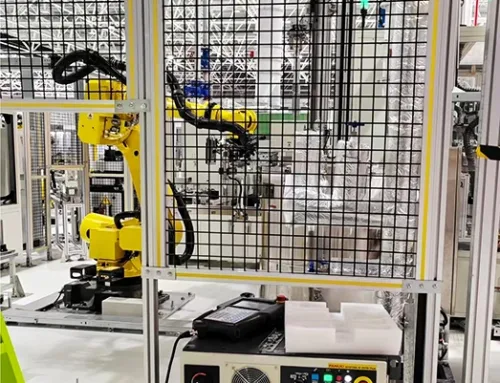
The modular aluminum frame uses aluminum extrusion for the posts and rails instead of relying on a painted steel perimeter. Alfence can add powder coating after shot blasting, with the coating cured at 185°C for 15 minutes. This combination helps protect the surface against corrosion and avoids the rusting and flaking problem that can develop when a steel fence coating is damaged. It is a practical material route for food and beverage lines, pharmaceutical areas, and indoor cleanroom guarding; the final hygiene specification remains project-dependent.
Panel choices balance visibility, isolation, and cleaning access
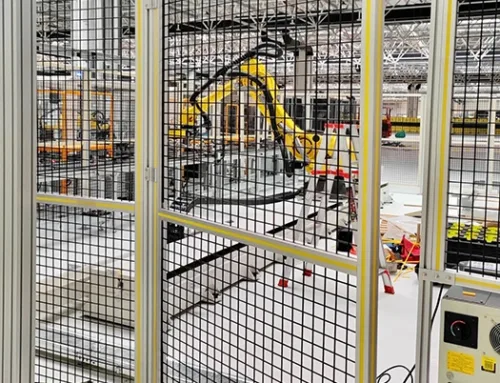
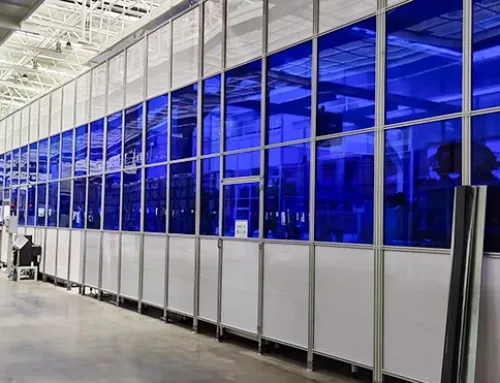
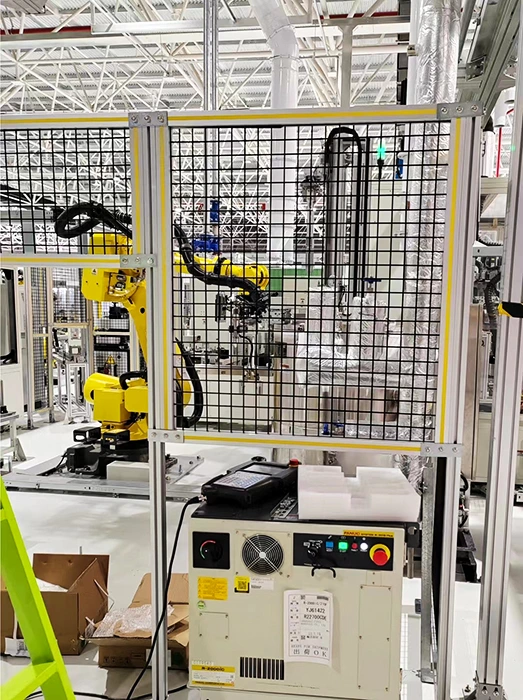
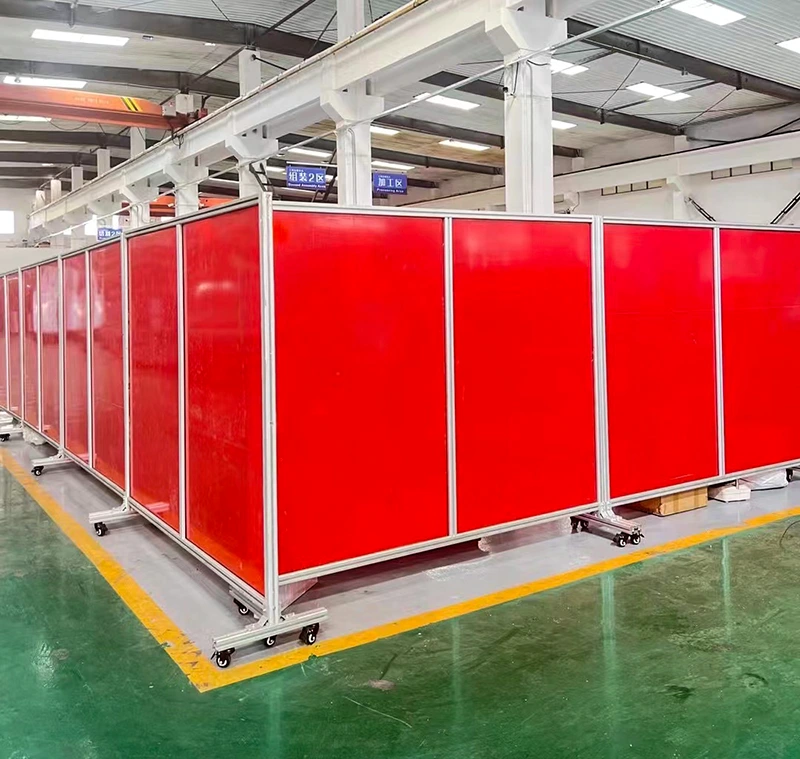
The post-and-panel system can use welded wire mesh where visibility and ventilation matter, or transparent polycarbonate and acrylic panels where the process needs a more enclosed visual barrier. A modular frame makes individual panels removable or reconfigurable, while hinged, sliding, or folding safety doors provide controlled access for inspection and maintenance. The image shows a continuous framed enclosure with a transparent upper zone and an integrated access door for production-line guarding.
Reconfigurable installation supports retrofit and plant changes
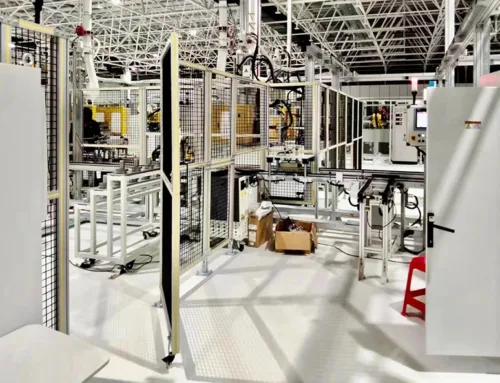
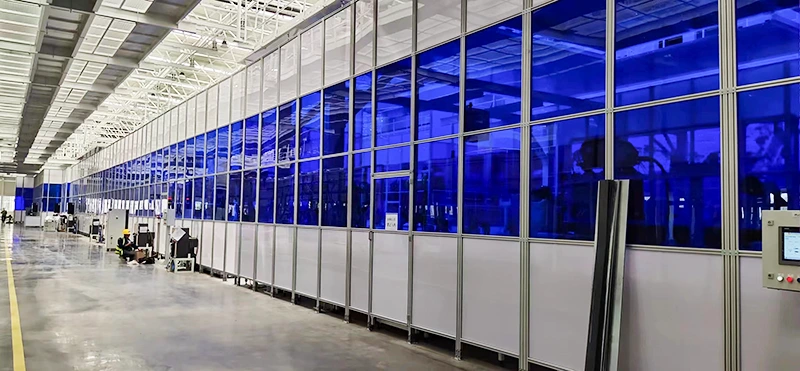
Alfence is suited to indoor plant installation, retrofit guarding, assembly-line separation, packaging-line guarding, and machine guarding around automated equipment. T-slot aluminum posts, foot connectors, expansion-bolt floor mounting, nylon end caps, and optional casters support different layouts. When a production cell moves, reusable components can reduce rebuild work instead of forcing a new welded fence. For controlled areas that need mobile segregation, the modular aluminum frame can also be configured with barrier panels and caster wheels.
Where Alfence supports hygienic perimeter guarding
- Food and beverage packaging lines where smooth, corrosion-resistant guarding supports scheduled cleaning.
- Pharmaceutical and pharmacy production areas that need to limit rust-flake and loose-particle concerns around automated equipment.
- Cleanroom guarding and indoor plant installations requiring a configurable machine safety fence.
- Conveyor guarding, palletizing zones, and material-handling robot guarding where access doors and visibility must be planned together.
- Retrofit guarding projects replacing a welded steel fence, chain-link fence, or temporary plastic barrier.
For projects involving wash-down, disinfectants, special hygiene classifications, or outdoor exposure, confirm the panel material, coating, connectors, cleaning chemicals, and additional corrosion treatment with the project team before release.
Define the guarding details before quotation
Share the equipment footprint, hazard boundary, access points, cleaning method, indoor or outdoor conditions, and required panel type. Alfence configurations can be planned around 40×40 mm or 45×45 mm posts, 20×100 mm mesh, typical 1000, 1800, or 2000 mm heights, 200–1200 mm panel widths, and door arrangements up to the project limits. EN ISO 14120 and the required safety distance under EN ISO 13857 should be reviewed as part of the guarding design rather than assumed from a standard panel size.
Choose a corrosion-resistant modular aluminum frame for your next retrofit
Replace rust-prone welded steel guarding with an Alfence modular safety fence specified for your food, beverage, pharmaceutical, or cleanroom environment. A project review can confirm whether powder-coated aluminum, transparent panels, welded wire mesh, wash-down requirements, and additional high-humidity protection are appropriate for the site.