PT
PT  EN
EN  DE
DE  RU
RU  JA
JA  ES
ES  IT
IT Cerca de Segurança para Robôs
Robot Safety Fencing for cube-based automation layouts
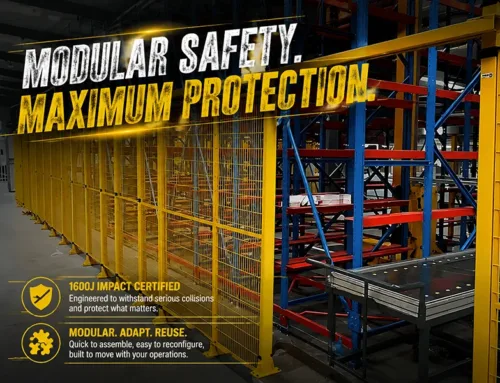
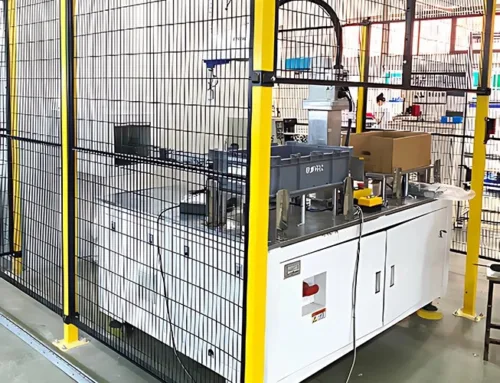
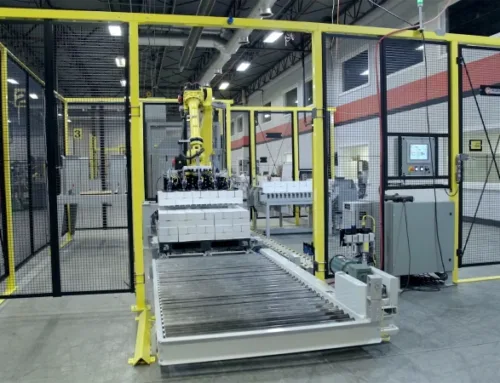
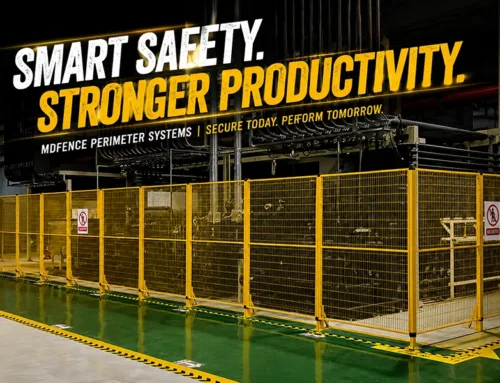
When every square meter matters, Robot Safety Fencing must protect the machine without forcing the cell to grow. Mdfence is built for tight automation footprints, close-in installation, and clean perimeter control.

Why the layout changes with the fence
The core problem is simple: traditional wide-aperture mesh forces a larger safety setback, so the dead zone around the robot cell grows fast. Mdfence uses a 20×100 mm narrow opening design that helps keep the guard close to the hazard while still supporting a practical robot safety fencing layout.
| Requisito | Suporte Mdfence |
|---|---|
| Space utilization | Close-in guarding helps reduce unused perimeter area around cube-based storage and automation cells. |
| Safety distance pressure | The 20×100 mm anti-reach mesh supports a tighter, more disciplined machine perimeter. |
| Installation evidence | Technical structure, fixing clamps, and base plate details are shown in the product visual set. |
| Deployment speed | Base plate positioning, drilling, and expansion bolt fixing simplify on-site installation. |
| Bid-stage value | A smaller footprint helps a solution team present a more competitive automation layout. |
Structure details that support close machine guarding
1. Anti-reach mesh for compact cells
The narrow 20×100 mm opening is the key reason the fence can work in tight robot cells. It is designed to reduce the chance of an operator reaching through the mesh, which helps the guard stay close and keeps the layout compact.

2. Installation hardware that locks the line down
The installation diagram shows base plate positioning, drilling, expansion bolts, and retaining rings. That matters because a compact safety layout is only useful if the fence can be fixed consistently and repeatably on the floor.

3. Specification proof for layout decisions
The advantage board combines caliper measurement, weld seams, coating, and base plate detail in one visual. For engineers and bidders, this is the proof layer that turns a safety claim into a layout decision.

Onde isso importa mais
- Cube-based storage systems that need to recover dead space around each automated cell.
- Robot workcells where a smaller safety setback directly improves the footprint.
- Machine lines with dense internal logistics, narrow aisles, and frequent layout changes.
- Bid-stage automation proposals that are judged on space utilization as much as safety.
In these environments, Robot Safety Fencing is not just a barrier. It is part of the layout strategy. Mdfence helps the engineering team keep the cell tight, preserve usable floor area, and still present a clear safety boundary around the hazard.
What to specify before you lock the layout
Start with the machine envelope, the service access path, and the available floor area. Then confirm the required guarding distance, opening size, and installation points. Mdfence is the right fit when the project needs close machine guarding, documented structure, and a fence system that supports a compact automation footprint.
Keep the robot cell tight
If your project is losing floor space to oversized safety setbacks, ask for a layout review and compare the result against a 20×100 mm close-in guarding approach.