PT
PT  EN
EN  DE
DE  RU
RU  JA
JA  ES
ES  IT
IT Cerca de Segurança para Robôs
Robot Safety Fencing for Scrap Lines Facing Heavy Impact and Flying Debris
Robot Safety Fencing is built for scrap processing and auto dismantling lines where flying metal fragments and forklift bumps are part of daily reality. Mdfence combines high-impact Q235 structure steel with a 20x100mm anti-entanglement micro-mesh to help keep the danger zone contained.
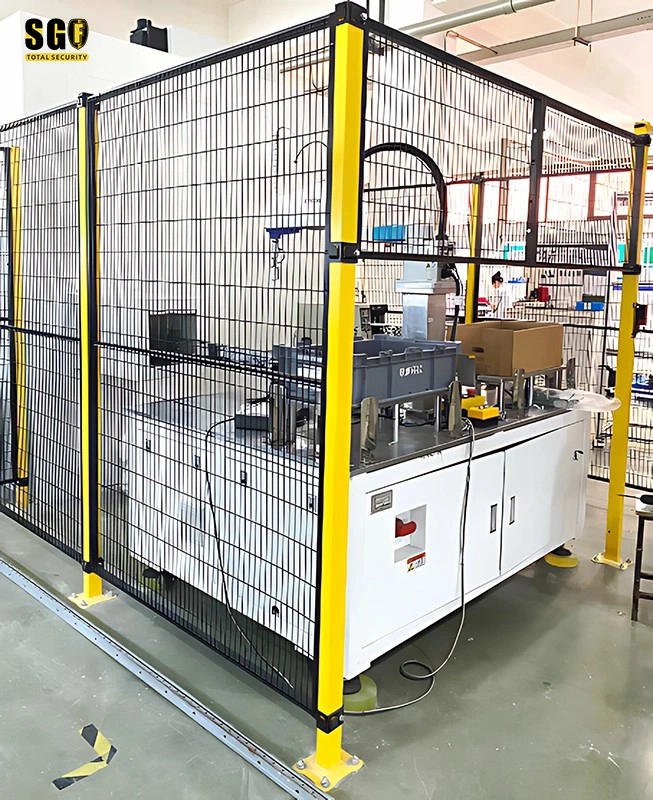
Why Scrap and Dismantling Sites Need a Different Fence Standard
In high-impact zones, the old assumption that a light guard is enough usually fails fast. Flying fragments from crushers, dropped steel chunks, and accidental vehicle contact can deform thin frames, open gaps, and turn a fence into a weak point. Robot Safety Fencing for these sites has to do two jobs at the same time: stop debris and survive impact without collapsing the line.
| Site problem | Resposta do Mdfence |
|---|---|
| Heavy metal fragments can fly out of the process zone | 20x100mm micro-mesh helps block small flying pieces and reduces hand-access risk around moving equipment |
| Forklifts or handlers may strike the barrier by mistake | Q235 carbon structural steel with 60x60mm posts is designed for strong impact resistance and stable enclosure behavior |
| Simple fences bend, crack, or loosen after repeated abuse | TÜV-certified structure and robust base hardware help the guard keep its shape and stay serviceable |
| Maintenance teams need a fence that is easy to verify and keep in service | Visible welds, base plate details, and clamp-based structure make inspection and replacement straightforward |
Three structure points that make the system fit the risk
1) Impact resistance that matches real site abuse
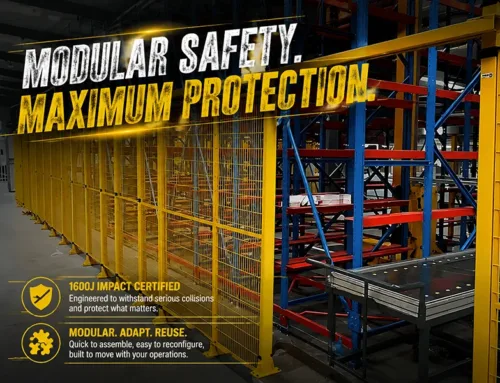
Scrap and dismantling zones are not static machine cells. They see shocks, nudges, and accidental hits from transport equipment. The fence core uses high-strength Q235 carbon structural steel and 60x60mm posts, with a tested resistance level up to 1600 joules. In practical terms, it is built to handle the kind of sudden collision that would flatten a light-duty barrier and expose the work area.
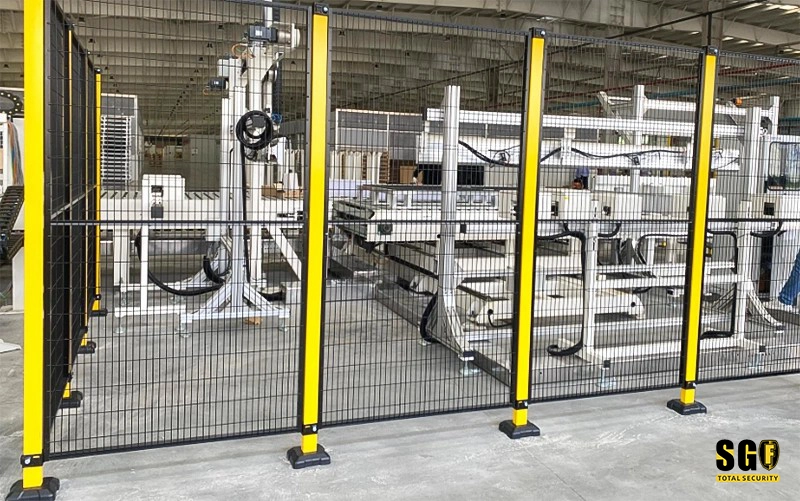
2) Micro-mesh that helps stop flying debris and finger access
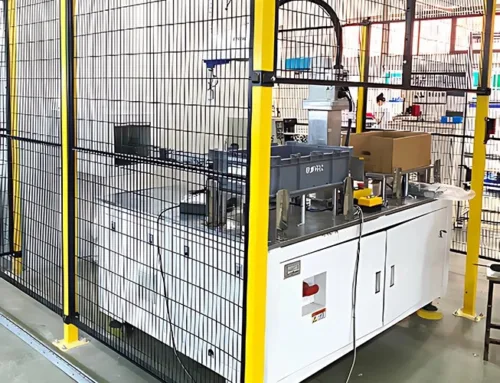
The 20x100mm anti-entanglement micro-mesh is a practical answer to two hazards at once. It helps hold back smaller flying fragments from the process side, and it also reduces the chance that hands or tools can slip into the guarded area. For facilities that want Robot Safety Fencing to do more than mark a boundary, this tighter mesh is the difference between a visual divider and a real safety layer.
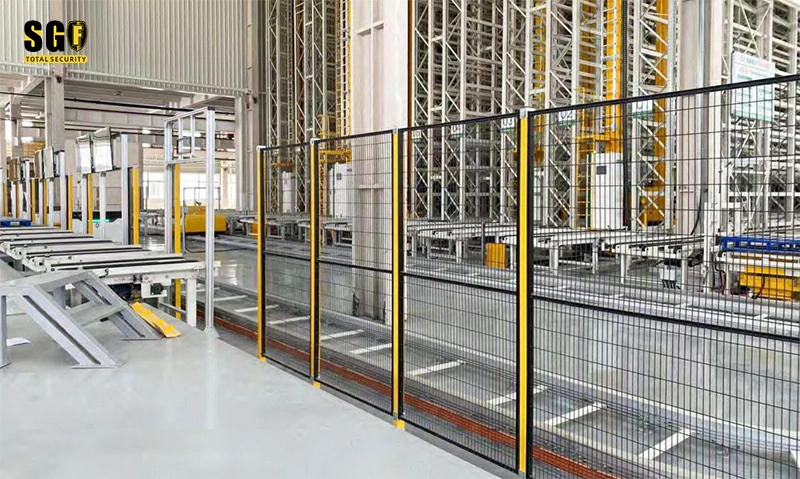
3) Hardware and installation detail that support long service life
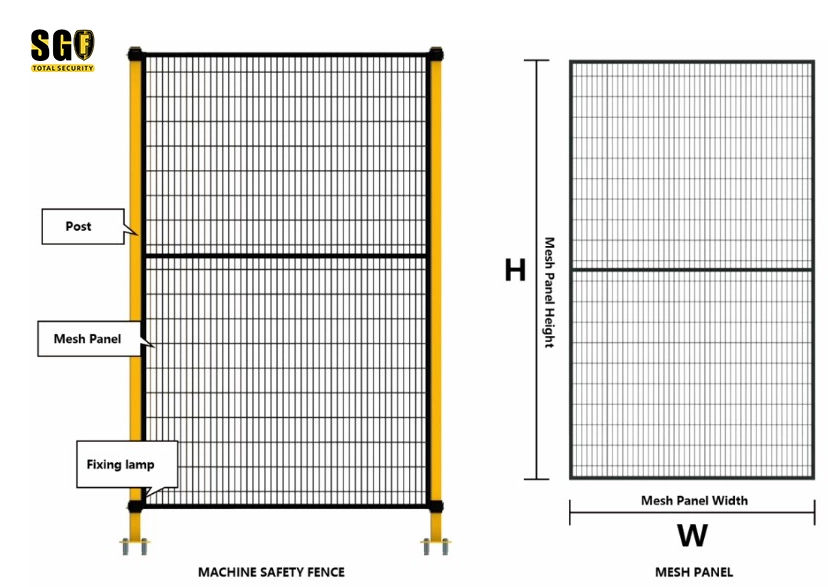
A fence in a harsh zone fails first at the weak points: the base, the connection, or the fasteners. That is why the structure details matter. The base plate, clamp layout, and bolt fixing method shown in the installation diagram explain why the system stays stable after repeated vibration and impact. When the line changes or the perimeter expands, the same modular approach also makes retrofit work cleaner and faster.
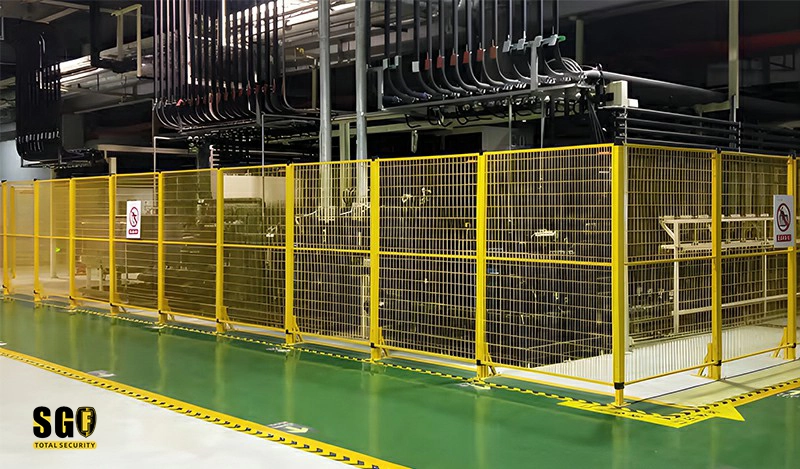
Where this Robot Safety Fencing fits best
- Scrap shredding and metal recovery lines with flying debris exposure
- Auto dismantling areas where uneven loads and moving handlers create collision risk
- Conveyor and transfer lanes that need a stronger boundary than a light mesh screen
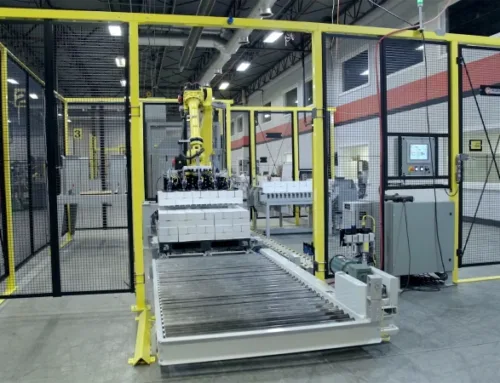
- Robot or automation cells installed near heavy material handling traffic
For these environments, the expected result is simple: fewer intrusion points, better containment of flying fragments, and a barrier that remains intact after accidental bumps. That is what makes Robot Safety Fencing a better fit than generic light-duty guarding when the site risk is defined by impact, debris, and daily movement.
O que especificar antes de fazer o pedido
To size a Robot Safety Fencing layout correctly, the key inputs are the impact zone, the vehicle route, the fragment throw direction, and the required access points for operators and maintenance. Once those are defined, Mdfence can be configured around the real risk map instead of around a generic fence line.
Final result: a safer perimeter for high-impact production areas
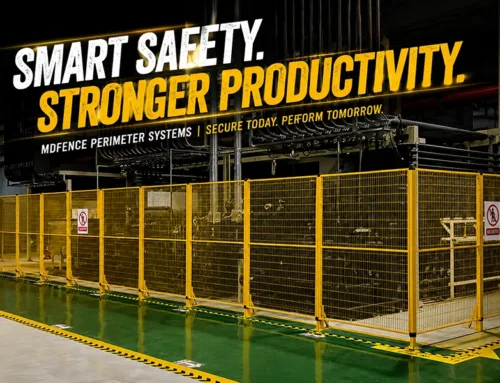
When a site combines flying metal debris with forklift collision risk, the fence cannot be decorative. Mdfence Robot Safety Fencing gives you a stronger post system, tighter mesh control, and hardware that supports stable long-term use. The result is a cleaner safety boundary, less damage from daily abuse, and better protection for people working beside the line.