PT
PT  EN
EN  DE
DE  RU
RU  JA
JA  ES
ES  IT
IT Cold-work machine guarding for woodworking plants
Robot Safety Fencing Systems for Woodworking Plants That Cannot Use Hot Work
Robot Safety Fencing Systems solve two problems at once in sawdust-heavy wood processing sites: no welding, no sparks, and no throwaway fence when the line needs to move. Mdfence uses a patented snap-fit modular cold-assembly design so the safety perimeter can be installed, removed, and rebuilt without turning the fence into scrap.
Why Robot Safety Fencing Systems fit relayout-heavy woodworking cells
In pallet and timber-processing plants, machine layouts rarely stay fixed. A line change can happen because throughput changes, product mix changes, or a new machine arrives. Traditional fence systems usually force the team to choose between fire-risk welding on site and accepting a rigid perimeter that becomes waste after the next rearrangement. Mdfence is built for that exact environment: cold assembly, no flame, no spark, and no unnecessary sunk cost.
| O que a planta precisa | Como a Mdfence responde a isso |
|---|---|
| No hot work in a wood-dust shop | Patented snap-fit modular assembly with no welding and no spark generation |
| Fast line changes without safety rebuild pain | Fence modules can be disassembled and reconfigured for the next layout |
| Lower lifetime safety cost | Reusable structure turns a one-time expense into a long-life asset |
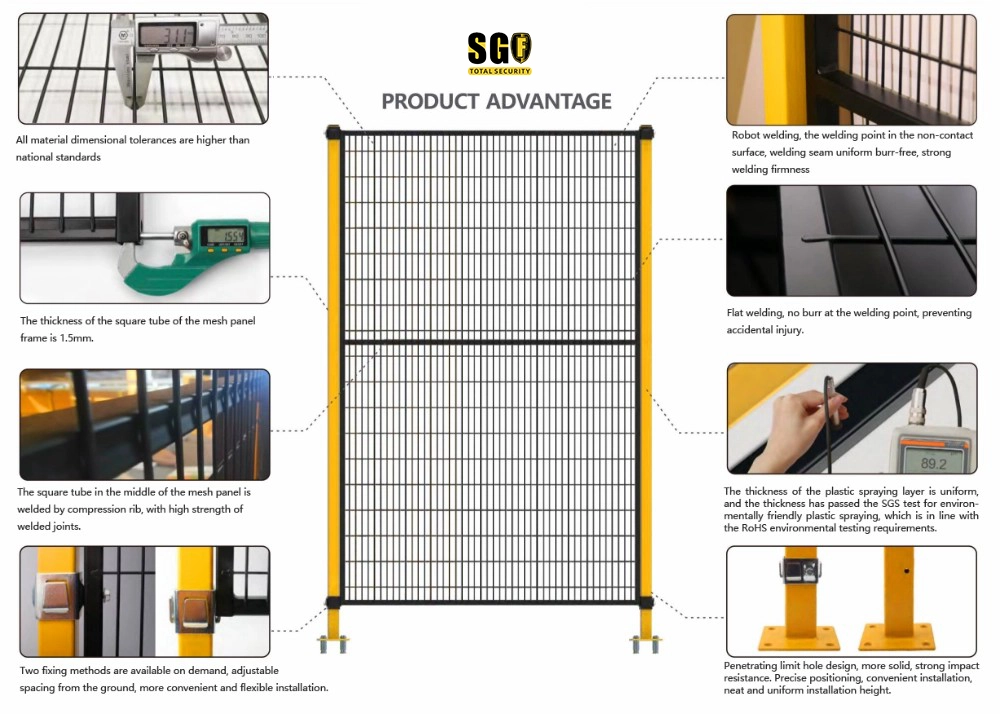
| Visible proof of structure and install method | Base plate, fixing clamp, and assembly sequence are shown in the product evidence images |
The structure behind the safety claim
1. Cold-work assembly avoids fire risk from day one
The first decision point is not the mesh. It is the installation method. In a woodworking environment, any field welding adds ignition risk to a site already full of fine dust. Mdfence removes that risk by using a snap-fit modular structure, so the fence can be assembled without hot work, flames, or welding fumes. That is the core reason Robot Safety Fencing Systems are a better fit than conventional welded barriers for timber processing cells.
2. The installation method supports future relayouts
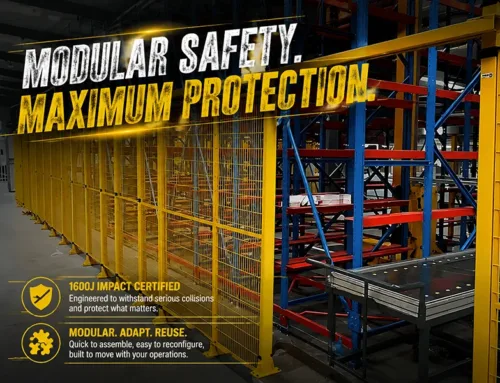
Many fence projects fail economically because the perimeter is treated as a disposable build. Mdfence is different. Its modular parts can be removed, stored, and rebuilt when the production line changes. That matters in pallet factories, where new work cells are often added, swapped, or rotated to match orders. Instead of scrapping the whole perimeter, the plant keeps the same safety asset and reuses it across new layouts.

3. The panel and clamp layout gives visible, repeatable proof
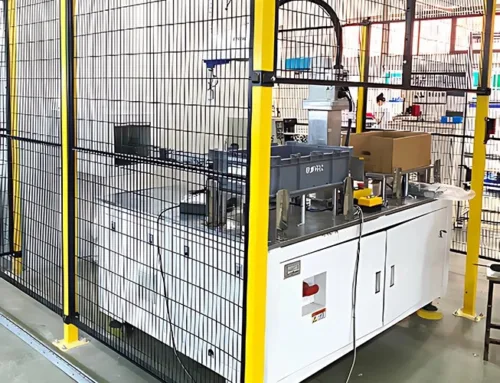
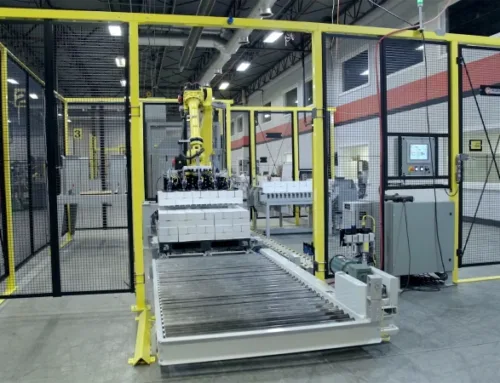
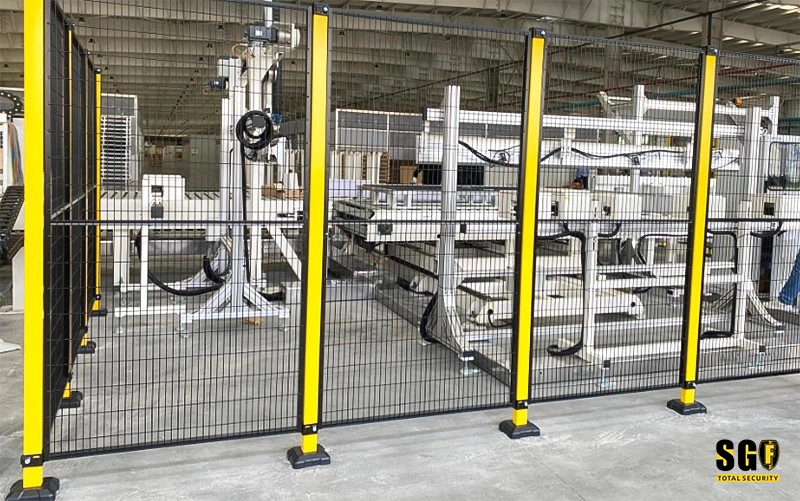
The technical front view matters because it shows the system is not a vague “guard rail” concept. You can see the post layout, mesh panel alignment, and fixing clamp relationship. That physical clarity is useful for maintenance teams and safety managers who need to document the perimeter, inspect the structure, and rebuild it with the same spacing after a line move. It is a practical safety system, not a decorative barrier.

Where woodworking plants use Robot Safety Fencing Systems
- Machine cells beside sawdust-producing cutting and trimming equipment
- Perimeter isolation around pallet assembly or handling stations
- Safety boundaries that must be moved when the production flow changes
- Retrofit projects where hot work is not acceptable in an active shop
These are the exact situations where a welded fence becomes the wrong kind of asset. Mdfence keeps the perimeter reusable, so the fence follows the line instead of forcing the line to obey the fence.

O que as evidências dizem
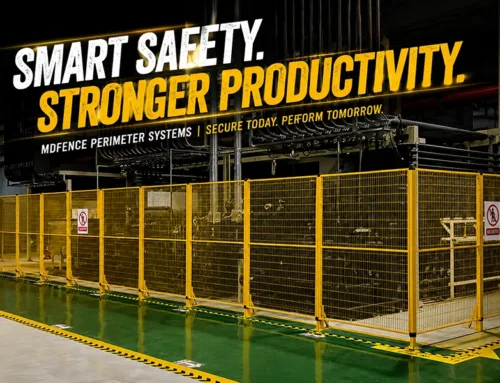
The product images do not just show a finished fence. They show the evidence behind the claim: structural detail, installation logic, and a clean installed perimeter. That is important because a woodworking plant does not buy a safety fence to admire it. It buys it to reduce fire risk now and preserve capital value later when the layout changes. Mdfence does both.
Need a cold-work fence that can survive the next relayout?
If your site cannot tolerate hot work and your machine layout keeps changing, Robot Safety Fencing Systems from Mdfence are built for that operating reality. The result is simple: safer installation, faster reconfiguration, and far less wasted hardware over the life of the plant.