PT
PT  EN
EN  DE
DE  RU
RU  JA
JA  ES
ES  IT
IT Industrial safety fencing for changing food and beverage lines
Safety fence for construction is often searched as a temporary word, but on a food and beverage plant floor the real job is permanent: protect people, separate traffic, and keep layouts flexible when SKUs, seasonal runs, and pilot batches keep changing.
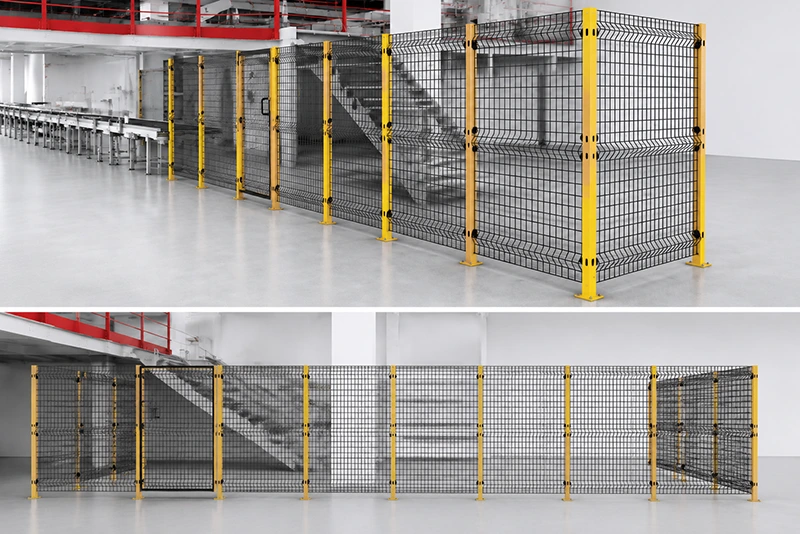
Why welded partitions become sunk cost in fast-changing plants
| Plant change pressure | What welded fencing forces | What Mefence changes |
|---|---|---|
| Frequent SKU rotation | Cut, scrap, and repurchase fixed partitions | Clip-fixed modules can be dismantled and re-used in the next layout |
| Seasonal and trial production | Long shutdowns while the fence is reworked | Fast install supports quick area demarcation and short changeovers |
| Columns, pipes, and odd corners | Waiting for a custom factory drawing | Frameless mesh can be cut on site to fit real obstacles |
| Plant restructuring | Old fencing stays behind as dead cost | Relocatable reusable fence can move with the new line or another factory |
Why this industrial safety fencing fits the job
For warehouse zoning, pedestrian vehicle separation, and machine guarding, Mefence uses a modular frameless safety fence layout instead of a welded one-piece barrier. That matters when production lines are not stable. Food and beverage operations usually need more than a fixed perimeter: they need a barrier that can be opened, shifted, trimmed, and rebuilt without turning every change into demolition work.
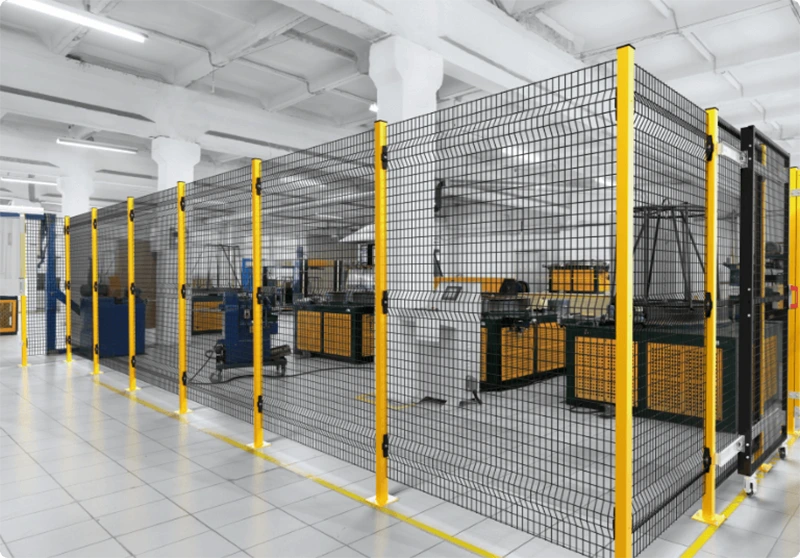
Machine guarding without locking the line in place
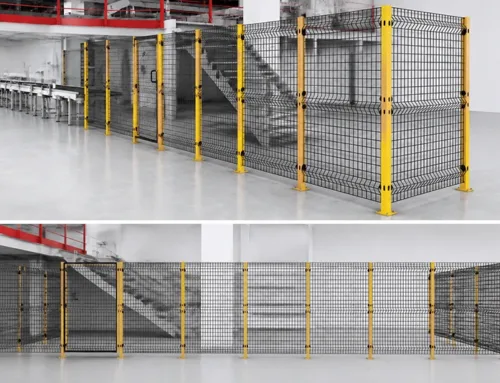
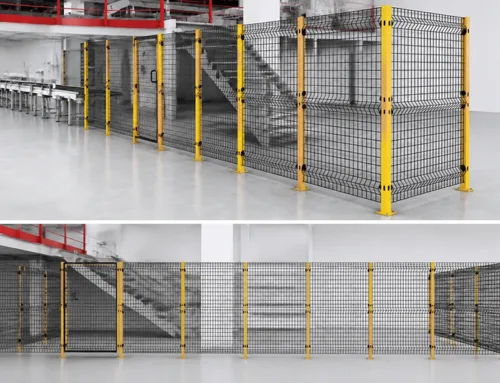
The image shows a modular enclosure around automated equipment. That is the core use case: keep people out of the hazard zone while leaving room for line optimization. When the conveyor, filler, or palletizing cell moves, the fence can move too.
Area demarcation for production line reconfiguration
This production-line view shows how industrial safety fencing creates a clean boundary around equipment. In a plant that keeps adding seasonal products, the real value is not just protection; it is the ability to redraw the boundary when the process map changes.
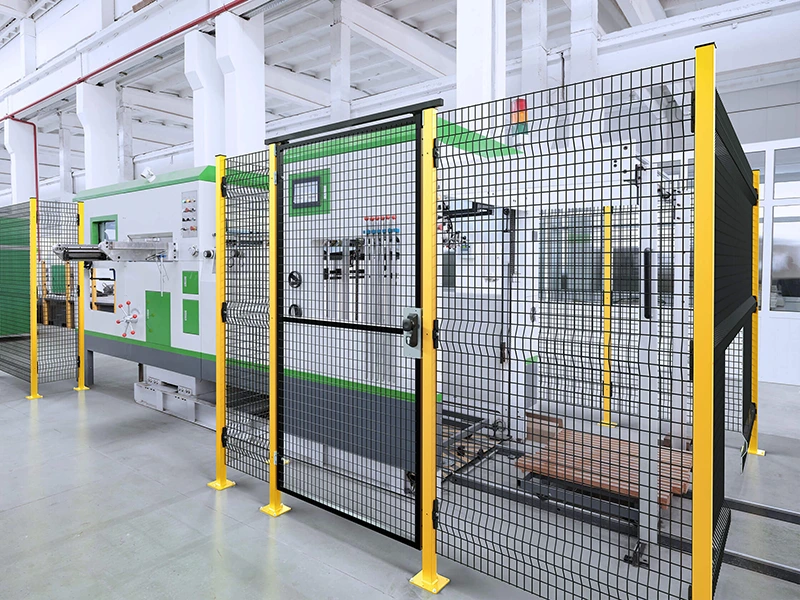
Access control stays simple
A single access gate is often enough for maintenance and operator movement. It keeps the enclosure practical instead of overbuilt, which is important when the plant may be re-split later or transferred to another site.
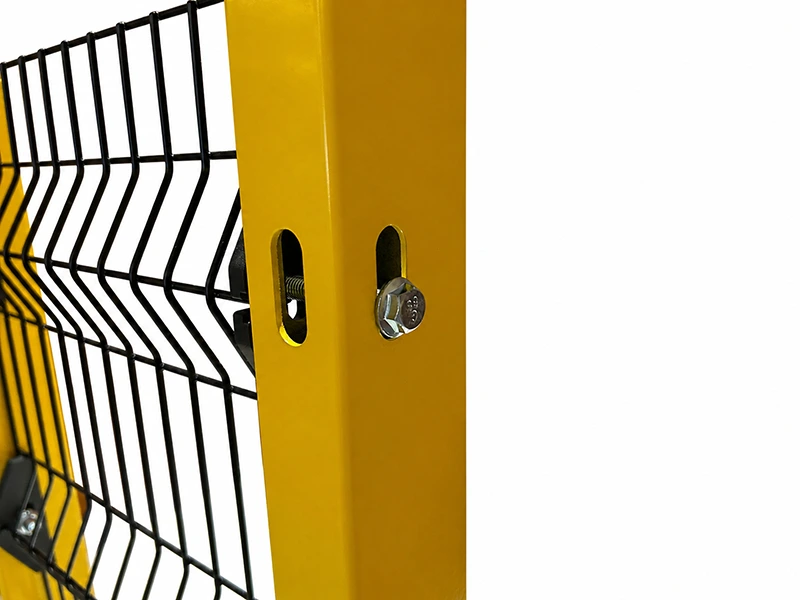
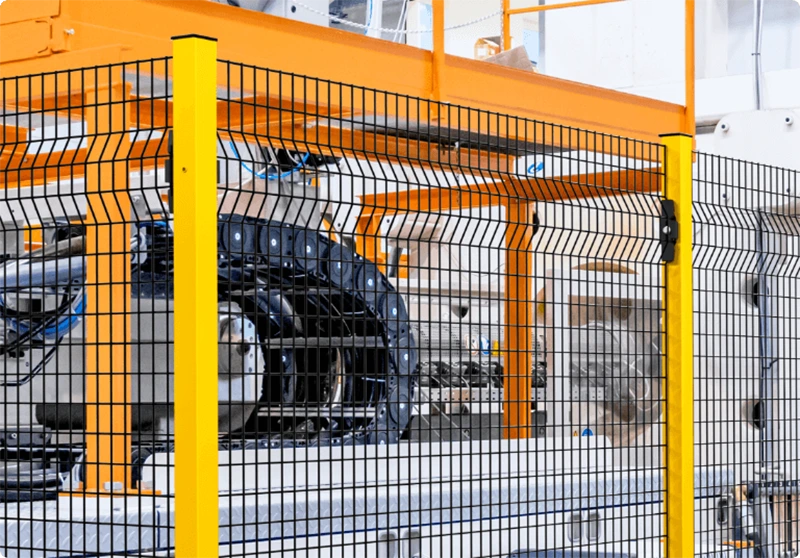
Hardware evidence: slotted holes, bolted connection, no welding
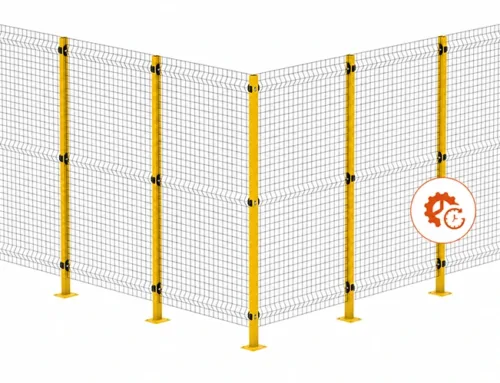
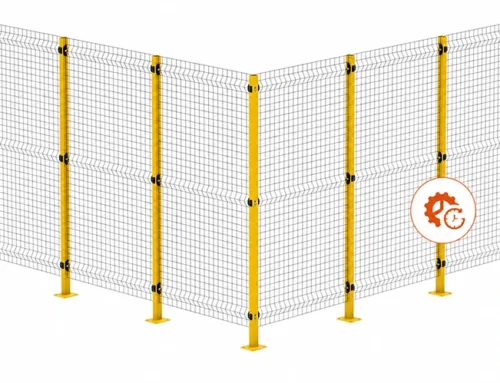
The close-up matters. You can see the powder-coated steel post, slotted mounting holes, and bolted connection. That is what makes disassembly possible, and why the system behaves like a reusable facility asset instead of a wall you abandon at the next layout revision.
Onde funciona melhor
- Food and beverage warehouse zoning
- Pedestrian vehicle separation around AGV and forklift routes
- Machine guarding for fillers, conveyors, and packaging cells
- Temporary partitioning during pilot runs or seasonal product launches
- Plant restructuring when lines need to move without new civil work
For these cases, Mefence is not sold as a decorative fence. It is a modular industrial safety fencing system built to protect people, support fast install, and survive repeated reconfiguration.
What the layout team gains
Instead of treating the fence as a sunk cost, the plant can keep it in circulation. The same panels can support the next product family, the next pilot line, or the next factory transfer. That is the difference between buying a fixed barrier and building a reusable zoning asset.
Need a safety fence for construction-style zoning that can live through plant changes?
Choose a frameless safety fence that can be dismantled, re-used, and trimmed on site around the real obstacles on your floor.