PT
PT  EN
EN  DE
DE  RU
RU  JA
JA  ES
ES  IT
IT Cold-work modular guarding for changing layouts
Safety Fence for Machinery: a faster way to protect a plant that keeps changing
Safety fence for machinery is not just about blocking access. For material-processing plants, it has to move with the line, protect people from moving equipment, and avoid the sunk cost of welded fences that become scrap the moment the layout changes.
Why safety fence for machinery fits plants with frequent layout changes
When a factory adds a new machine, shifts a storage lane, or reworks the flow around a cutting or machining cell, the fence is often forced to move too. If the fence was welded in place, the change becomes expensive twice: first you pay to demolish it, then you pay again to rebuild it. In a materials center where hot work is tightly controlled, welded rework also creates a safety and permit burden that slows the whole project.
| Requisito principal | Resposta do Mdfence |
|---|---|
| Layout changes without scrap loss | Modular clamp-ring assembly can be dismantled and reassembled with no destructive removal. |
| Hot-work control | 100% cold-work installation, with no onsite welding required. |
| Schedule pressure | Installation is typically 40%–70% faster than a traditional welded fence build. |
| Reutilização de ativos | Panels and posts can be reused at a new location, lifting asset reuse above 95%. |
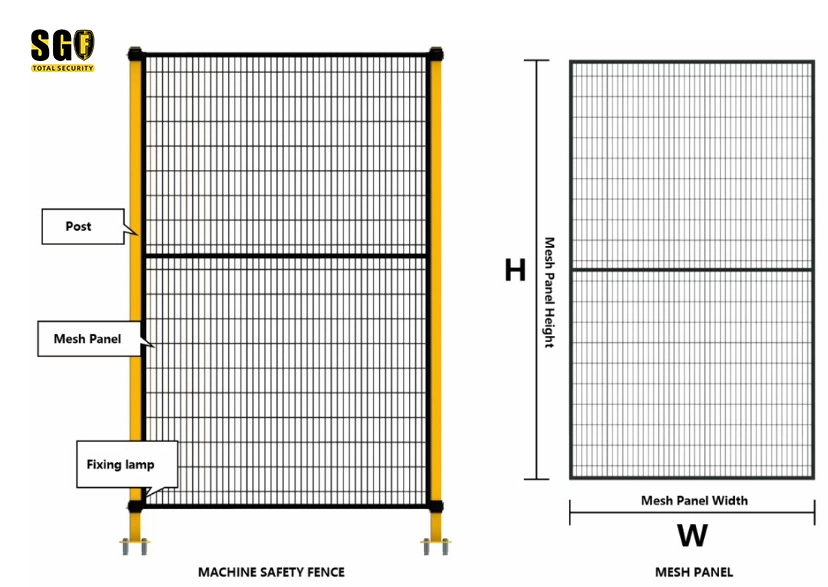
| Machine-cell protection | Black mesh and rigid post layout create clear separation around equipment, conveyors, and transfer zones. |
Three structural reasons the system stays flexible
1) Cold-work assembly replaces welding
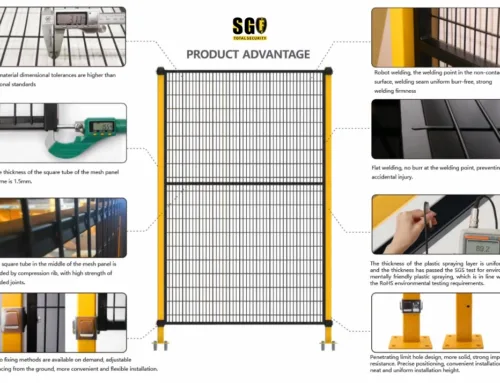
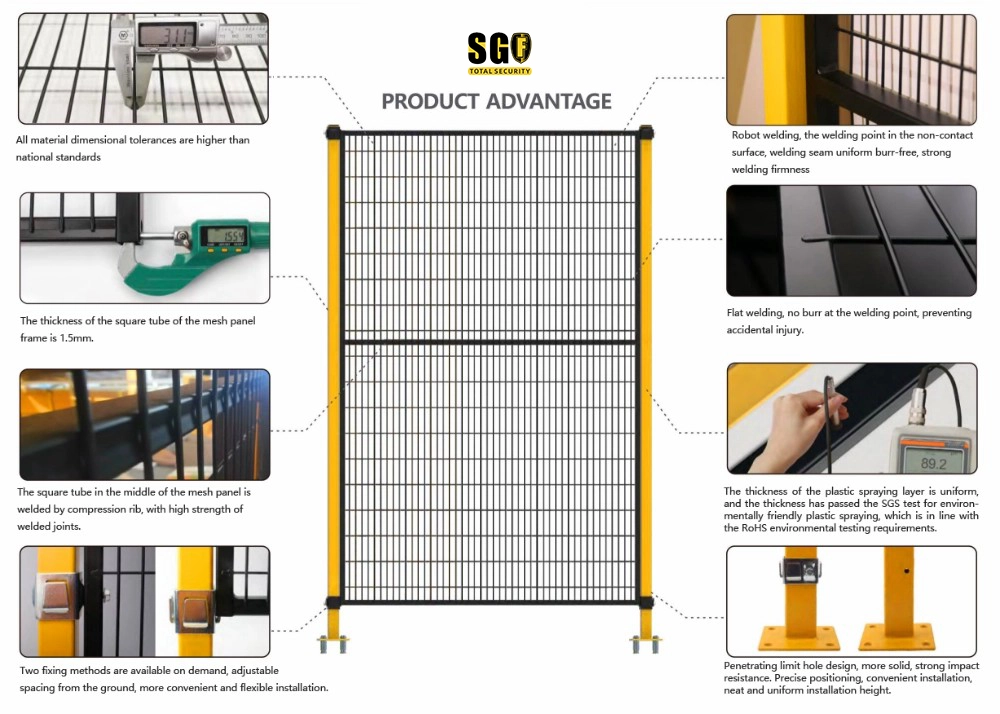
The installation detail matters because it shows where the system saves time. The base plate, drilling, expansion bolt, and retaining-ring logic keeps the build mechanical instead of welded. That means the fence can be installed in a production window, not a full shutdown, and it can be removed later without turning the old fence into waste.
2) The cell stays readable and safe for operators
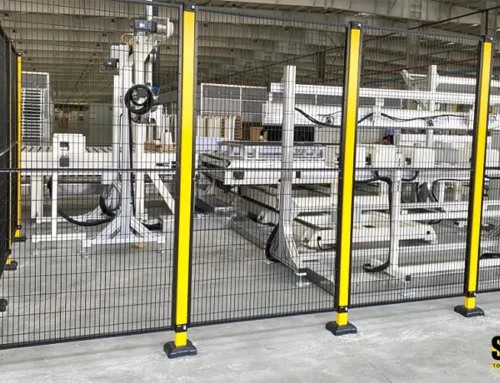
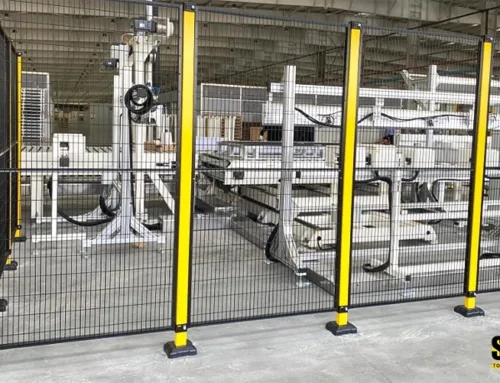
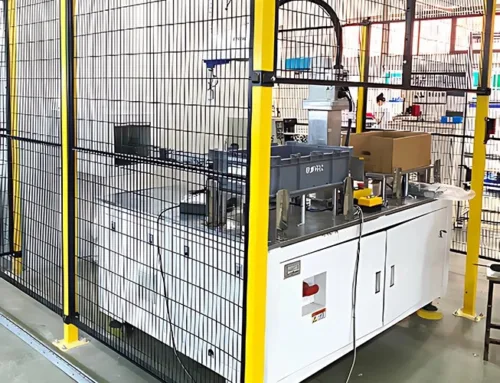
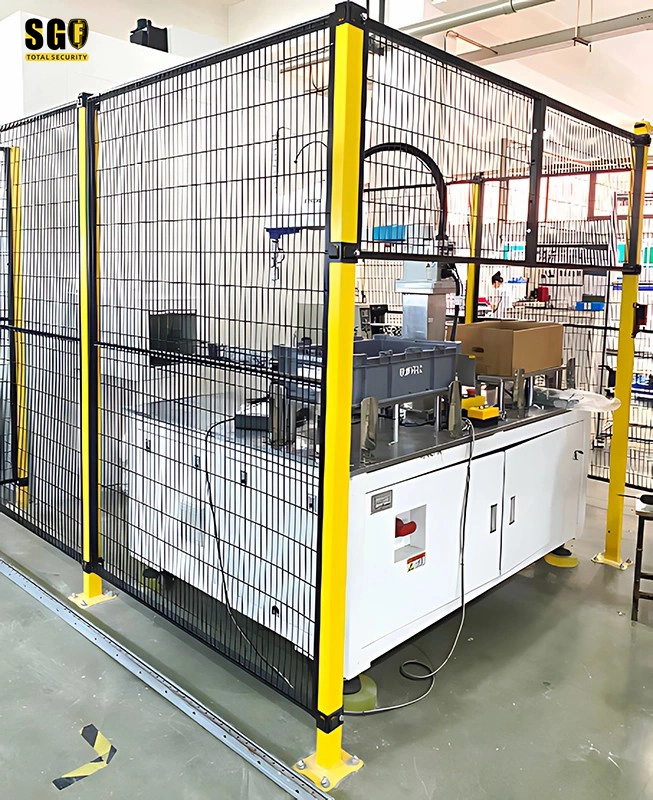
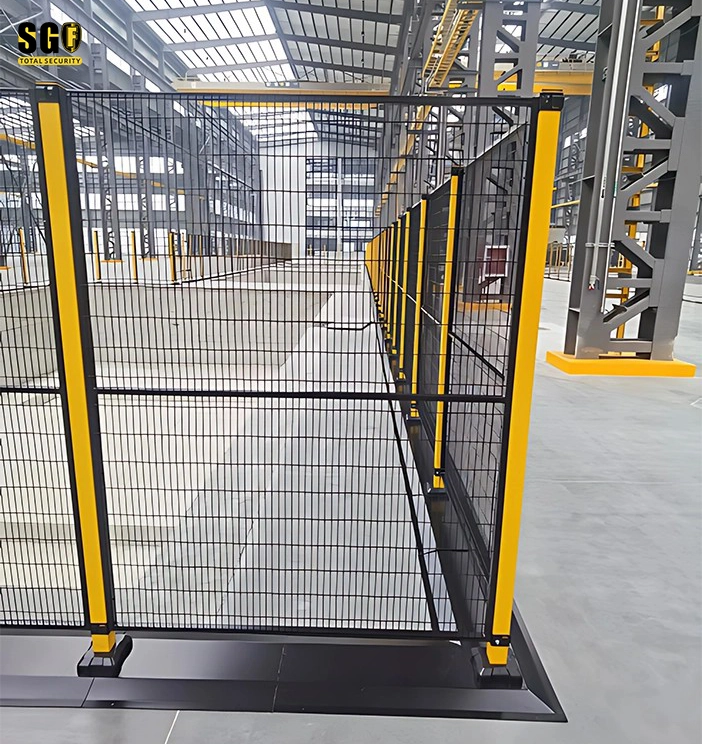
The enclosed robot cell image proves the geometry is not generic decorative fencing. The black mesh creates a visible boundary, while the yellow posts give operators an immediate visual cue around the working envelope. That matters when the line is repeatedly rebalanced and the team needs a fence that still looks intentional after every move.
3) The layout can be extended, turned, or relocated
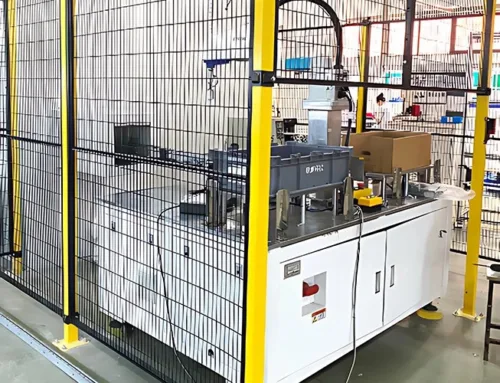
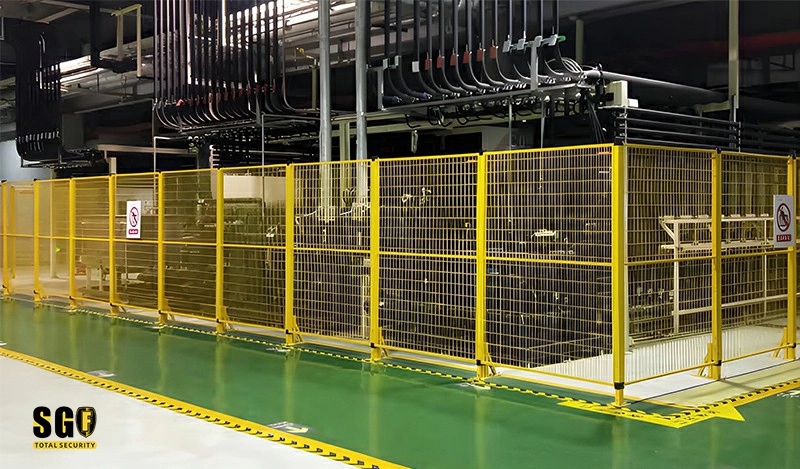
The conveyor-side photo and the corner-connection image show how the fence adapts to real plant geometry. Transfer zones, corners, and aisle edges are exactly where welded fences become expensive to alter. With a modular frame, the system can follow the material flow instead of forcing the flow to obey the fence.
Where safety fence for machinery delivers the most value
- Material processing centers that add machines in stages and need the guard line to move with each phase.
- Storage and staging areas where aisles are reconfigured to improve throughput or pallet flow.
- Plants with strict hot-work controls that cannot afford site welding for every fence adjustment.
- Cells around conveyors, transfer equipment, and robot workstations where access control must remain clear.
For these environments, the decision is no longer whether to protect a machine. The real question is whether the protection system will keep pace with layout changes without creating demolition waste. Mdfence solves that by turning the fence into a reusable plant asset instead of a fixed-cost structure.
What to specify before you choose a safety fence for machinery
Start with the plant change rate, not just the opening dimensions. If the line is likely to expand, shift, or be re-ordered, specify a cold-work modular system with clamp-based connections, fast repositioning, and reusable panels. Then confirm the fence can be installed without hot work and dismantled later without damage. Those are the details that protect both the schedule and the capital budget.
Transforme o custo de proteção fixa em um ativo móvel
Safety fence for machinery should protect the machine today and still make sense after the next layout change. If your plant needs cold-work installation, fast assembly, and high reuse value, Mdfence is built for that operating reality.