RU
RU  EN
EN  DE
DE  PT
PT  JA
JA  ES
ES  IT
IT Airside Stand Continuity
A Bent Stand Post Closes a Wide-Body Gate for Hours — A 28,950 J Self-Rebounding Polymer Crash Barrier Stays in the Apron Through the Next Bank
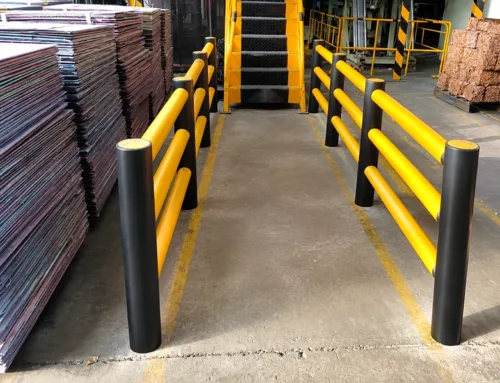
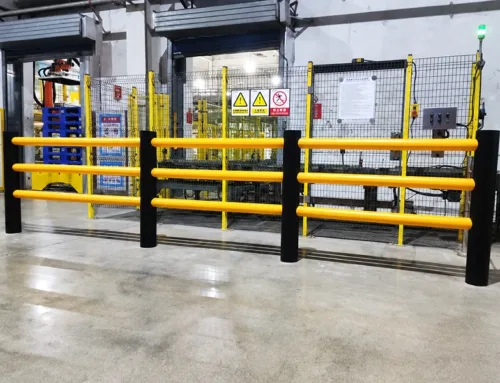
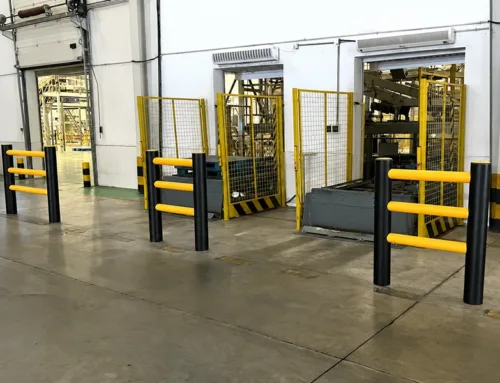
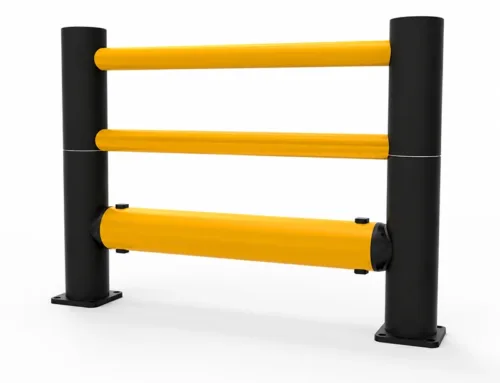
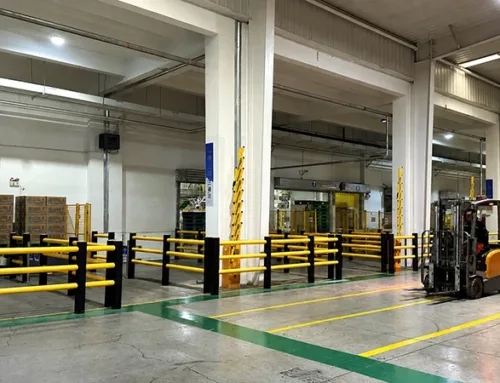
When a multi-car baggage tug misses the hold-line and bends a painted steel stand post, the wide-body gate goes dark for stand re-certification. FCBarrier DR190 / TR190+ / CTR190+ ARMORFLEX™ polymer column protectors and dual-rail guards absorb up to 28,950 J of GSE strike energy, self-rebound to their original profile, and stay on the apron through the next pushback — so a single missed hold-line does not cascade into a three-flight delay.
Stand-Post Strike-Energy Ladder — Pick the Polymer Crash Barrier Spec by GSE Weight and Approach Speed
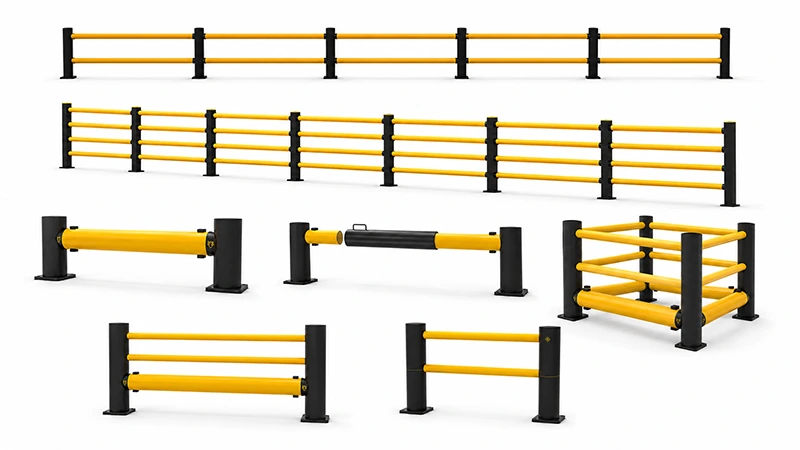
Each model in the FCBarrier SR / DR / TR / CTR family maps to a published Joule rating under a stated vehicle weight and approach speed. Spec the airside stand post the same way you spec the stand — by the worst GSE weight and approach speed the ramp will see in a 24-hour bank, not by the average cart that rolls past the marshaller.
| FCBarrier Model | Impact Rating & Equivalent Strike |
|---|---|
| DR190 Double Rail (heavy) | 28,950 J — 8 t @ 9.6 km/h |
| TR190+ Traffic / Pedestrian Rail | 28,950 J — 8 t @ 9.6 km/h |
| CTR190+ Column Protector | 28,950 J — 8 t @ 9.6 km/h |
| DR148 Двойной рельс | 19,000 J — 6 t @ 9 km/h |
| TR148+ / CTR148+ | 19,000 J — 6 t @ 9 km/h |
| SR190 Одинарная рейка | 21,350 J — 6 t @ 9.6 km/h |
| DR100 Двойная рейка | 6,500 J — 3 t @ 7.5 km/h |
| SR100 Одинарная рейка | 3,850 J — 1.5 t @ 8 km/h |
Three Polymer Crash Barrier Properties That Keep a Wide-Body Stand Open After a GSE Strike
28,950 J Impact Absorption for the Stand Post Corner
The FCBarrier DR190 dual-rail segment and the CTR190+ column protector are both rated to absorb 28,950 J of strike energy — equivalent to an 8 t ground service vehicle at 9.6 km/h. That is the energy envelope a multi-car baggage tug, a fuel bowser, or a catering truck can deliver into the post that anchors the airbridge leg, the 400 Hz GPU cabinet, and the stand-equipment rack. The flexible crash barrier absorbs the strike and rebounds; the structural post behind the polymer stays plumb, the airbridge cabin still reaches the aircraft door, and the GPU still spins up for the next bank.
Self-Rebounding ARMORFLEX™ Polymer — No Sharp Steel Protrusion on a Re-Opened Stand
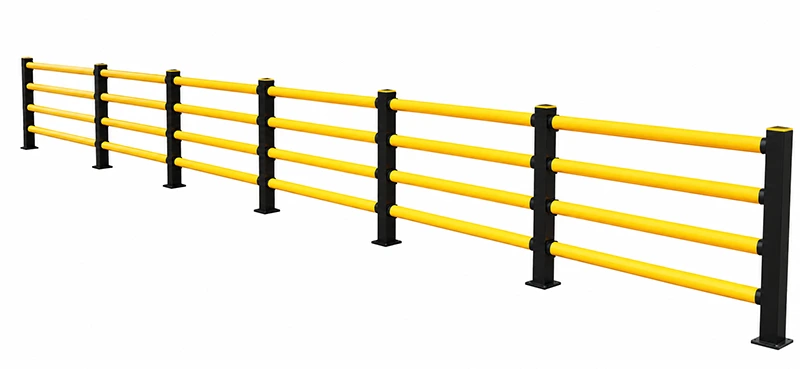
When a painted steel guard deforms under a GSE strike, the bent corner becomes a sharp protrusion at apron head height. On a re-opened stand, that protrusion is the next injury claim waiting for the next walk-out crew. ARMORFLEX™ polymer deforms on impact, absorbs up to 80% of strike energy, and rebounds to its original profile. The stand post and the airbridge leg behind the polymer are never exposed as a sharp edge; the apron supervisor re-opens the stand without sending a maintenance crew in with cutting torches first.
Mortise & Tenon Quick-Release — One Segment Swaps, the Stand Stays Open
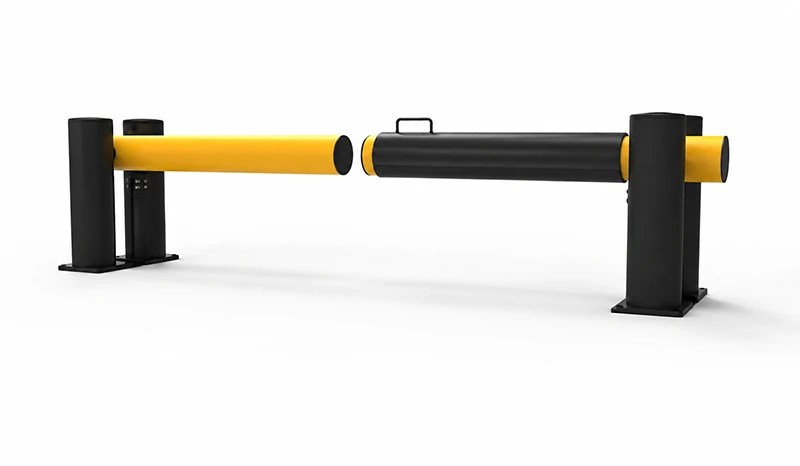
A single damaged segment is removed and replaced in minutes, not a full re-install. The mortise & tenon quick-release cell fixes to a base-plate anchor on the apron concrete; one crew, a torque wrench, and a rubber mallet, and the next pushback meets a guarded stand. No crane, no welder, no Apron Closure Notice — the modular barrier architecture means a GSE strike that bends one rail segment does not propagate into a stand-wide downtime event or a three-flight knock-on delay.
Airside Assets a 28,950 J Polymer Crash Barrier Is Specified For
- Wide-body stand posts (B777 / B747 / A330 stand classes) and the painted steel column that anchors the airbridge
- Apron equipment posts holding the 400 Hz GPU cabinet, the PCA cable rack, and the preconditioned-air hose reel
- Airbridge leg corners and the cabin approach corridor where walk-out crews and GSE share a tight envelope
- Stand-equipment racks (tow bar, head-set, chock storage, ground power jumper storage)
- Stand hold-lines and the GSE convergence lane beside the marshalling circle
- Baggage tug dispatch lanes on the apron edge and the multi-car tug staging area
- Fuel bowser and water-service vehicle approach paths between the stand and the hydrant pit
Spec the same 28,950 J envelope for the stand post, the GPU cabinet, and the airbridge leg — the CTR column protector and the DR dual-rail polymer safety barrier keep each critical asset in the same continuity class as the next pushback.
Download the FCBarrier Airside Stand-Post Spec Pack
Request the SR / DR / TR / CTR impact-energy ladder, the base-plate anchor drawing for apron concrete, and the polymer-vs-steel repair-cost comparison. The engineering team reviews airside sub-base conditions, GSE weight mix, and the stand-class hold-line geometry before sign-off — a published 28,950 J rating is the envelope, the on-site sub-base check is the qualifier.
Specify the Polymer Guard Before the Next GSE Strike Closes the Stand
Tell us your stand class, GSE mix, and worst-case approach speed; we return a 28,950 J DR190 / CTR190+ airside layout with base-plate anchor detail, a side-by-side repair-cost comparison against your current steel guard, and a Joule-by-Joule match to the FCBarrier model in the SR / DR / TR / CTR family that fits the stand.