RU
RU  EN
EN  DE
DE  PT
PT  JA
JA  ES
ES  IT
IT 

For a Системный интегратор delivering a high-stakes turnkey solution to an automotive giant, the physical guarding is often the last piece of the puzzle—and the most dangerous bottleneck. You have spent months optimizing the промышленные роботы (like KUKA or ABB) and fine-tuning the PLC logic. Yet, we often see projects stall at the finish line because the safety perimeter fails to integrate seamlessly with the sophisticated control architecture or misses a critical ISO 14120 compliance check.
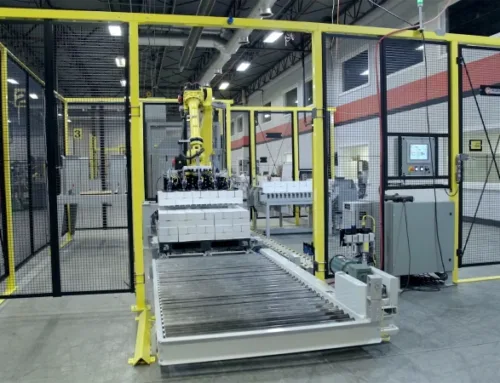
The difference between a profitable sign-off and a delayed payment often lies in the choice of Промышленные защитные ограждения. It is not just about steel mesh; it is about engineering compatibility. When your client demands a “design for automation” approach, treating the safety fence as a mere commodity is a strategic error. You need a modular system that speaks the language of your electrical engineering team—specifically regarding safety interlocks—and withstands the rigors of a зона обработки материалов without requiring on-site fabrication.
Eliminating the “Drill and Tap” Nightmare in Electrical Integration
One of the most significant hidden costs in интеграция робототехники is the mismatch between mechanical guarding and electrical safety components. Your electrical engineers specify high-end safety switches from brands like Omron or Pizzato to meet Performance Level d (PLd) requirements. However, when these components arrive at the installation site, the installation team often faces a blank steel post.
This leads to manual drilling and tapping on the shop floor—a process that destroys the порошковое покрытие, introduces metal shavings into a clean assembly system environment, and often results in misalignment. Misaligned switches mean intermittent faults, machine downtime, and a frustrated client.
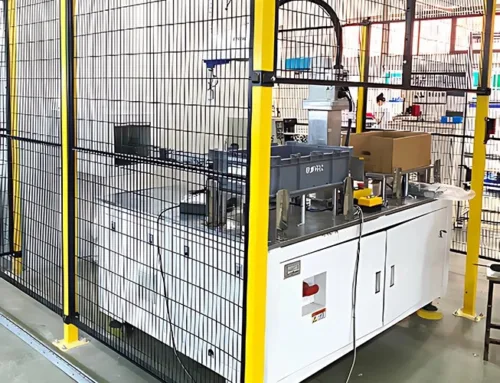
We solve this by engineering the fence as an active part of the safety circuit. By utilizing pre-manufactured “Safety Interlock Carriers,” we provide a dedicated, precision-machined interface for your specific switch model. Whether you are using a D4NL guard lock or a non-contact sensor, the mounting points are ready. This allows your team to achieve a “Plug-and-Play” integration, drastically reducing commissioning time and ensuring the автоматизированная производственная линия passes safety validation on the first attempt.

Precision-engineered lock carriers eliminate on-site fabrication for safety switches.
Why “Q235 Carbon Steel” Matters for Automotive Industry Standards
In the автомобильное производство sector, the kinetic energy involved in body-in-white welding or heavy payload handling is massive. A standard perimeter guard is not just a visual barrier; it is a containment device. If a robotic arm errs or a workpiece is ejected, the fence is the only thing standing between a fatal accident and a near-miss.
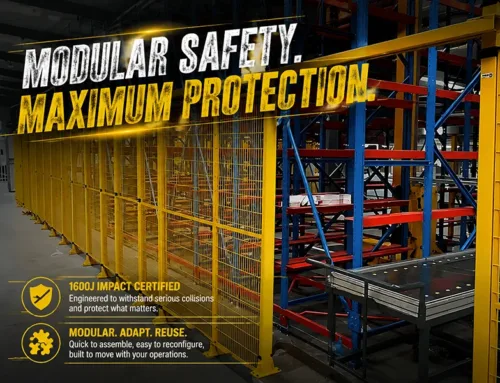
This is where material science becomes a liability shield. We utilize углеродистая сталь Q235 with a 60x60mm post profile, which offers superior ductility compared to brittle high-carbon alternatives. In the event of a high-energy impact, the system is designed to absorb energy through plastic deformation rather than catastrophic failure. This structural integrity is backed by TUV certification, providing the documentation you need to satisfy the rigorous safety audits of the Automotive Industry Association members.
Furthermore, our “flat welding” process eliminates the sharp burrs and crevices typical of spot-welded mesh. In a quality inspection cell where operators frequently interact with the guarding, this detail prevents injuries and ensures the порошковое покрытие adheres uniformly, passing strict ISO 9227 salt spray tests. This longevity is a key selling point when you hand over the facility to your client.
The Modular Advantage for Custom Machinery Layouts
Every turnkey solution has its unique spatial challenges. A building column might interfere with a standard fence line, or a конвейер feed might require a custom cutout. Traditional “cut-to-fit” methods on site are slow and compromise the corrosion resistance of the fence.
Our approach respects the fluid nature of project layouts. With adjustable “fixing rings” and a range of standard panel widths, our system accommodates floor unevenness and layout tweaks without cutting. Need to route a cable tray or integrate a pass-through for an AGV? The modular design allows for specific panels to be swapped or modified without dismantling the entire line. This flexibility protects your project schedule and allows your engineers to focus on the core value—the automation logic—rather than fighting with steel posts.
Для Промышленные защитные ограждения to be a true asset, it must support the efficiency of the integration process, not hinder it.
Часто задаваемые вопросы
1. Can your fencing system integrate with Siemens or Rockwell PLC safety modules?
Yes. While the fence itself is a physical barrier, our specialized interlock carriers are compatible with major safety switch brands that communicate with Siemens and Rockwell PLCs. This ensures the physical door status is reliably transmitted to your central control system without mechanical modification.
2. Do you provide CAD models for us to drop into our line layout designs?
Absolutely. We support the “Design for Automation” methodology. We provide 3D models of our posts, panels, and doors, allowing your design team to check for interferences and plan precise footprints inside your main assembly CAD files before any metal is ordered.
3. How does the system handle high-impact zones like robotic welding stations?
For high-risk areas, we recommend our heavy-duty configuration using 60x60mm posts and framed mesh panels. This setup is TUV-certified to withstand significant impact energy. We can also substitute mesh with polycarbonate or steel sheet panels to contain welding sparks and protect against arc flash.
4. Is on-site welding required to install the system?
No. The entire system is designed for bolt-on assembly using standard tools. This “clean installation” process is critical for cleanroom environments or finished automotive assembly halls where hot work permits are difficult to obtain and metal dust is prohibited.
5. What compliance standards does the fencing meet for international projects?
Our systems are designed to comply with ISO 14120 (General requirements for guards), ISO 13857 (Safety distances), and regional standards like OSHA 1910.212 in the US. This global compliance ensures that whether your project is in Detroit, Stuttgart, or Shanghai, the safety validation process remains consistent.