RU
RU  EN
EN  DE
DE  PT
PT  JA
JA  ES
ES  IT
IT 

In R&D Laboratories и High-Voltage Test Centers, safety is not about routine; it’s about containing the unexpected. When you are performing destructive testing on a prototype EV battery or conducting hi-pot testing on heavy machinery, the risk of arc flash, shrapnel, or thermal runaway is real. Standard industrial fencing often fails here because it lacks the containment integrity for projectiles or the electrical isolation properties needed for high-voltage zones.
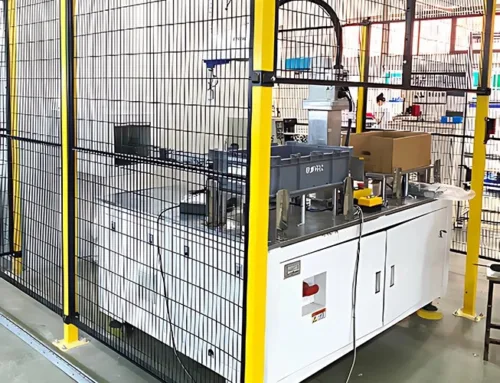
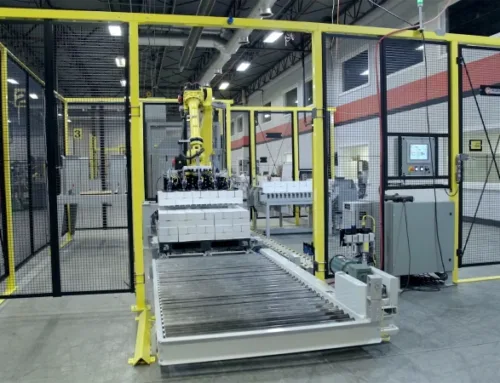
Для Lab Managers and Test Engineers, the challenge is building a “Safety Fortress” that still allows for data collection and observation. You need a Test Cell Enclosure that combines rigid steel for containment with non-conductive, transparent elements for safe viewing. Our Промышленные защитные ограждения offers verified structural integrity and customizable panel options (like Polycarbonate) to create a secure, controlled environment for your most critical experiments.
Visibility Meets High-Voltage Isolation
In a test lab, seeing the failure mode is as important as the data itself. But you cannot have engineers standing next to a 10kV transformer or a spinning centrifuge.
We solve this with our modular “Hybrid Panel” system. For high-voltage areas, we replace conductive wire mesh with Поликарбонат (PC) or Acrylic panels. These materials are electrically non-conductive and provide an optically clear shield that blocks arc flash UV radiation and contains flying debris. This allows your team to record high-speed video or visually monitor the test from a safe distance without compromising the protective barrier.
Strict Access Control: “Authorized Personnel Only”
Unlike a factory floor where many operators might need access, a test cell is a restricted zone. Accidental entry during a live test can be fatal.
Our system integrates advanced Access Control solutions. We offer specialized “Jimmy Proof” deadbolt locks and Защитные блокираторы compatible with trapped-key systems (like Fortress or Castell). This ensures that a test cannot be energized unless the gate is locked and the key is removed. This robust mechanical and electrical interlocking logic is essential for compliance with ISO 45001 and laboratory safety protocols.

Heavy-duty mechanical locks and interlocks ensure that only authorized staff can enter hazardous test zones.
Custom Heights for Non-Standard Equipment
Test rigs come in all shapes and sizes. A standard 2-meter fence might not be enough to contain a failure on a tall hydraulic press or a suspended load test.
Our engineering team supports Custom Layout Designs. As seen in our Singapore High-Voltage project, we can fabricate posts up to 2440mm (8 feet) or higher to ensure full vertical containment. We can also design irregular perimeter shapes to fit tightly around existing building columns, cable trays, and test benches, maximizing your limited laboratory floor space.
Часто задаваемые вопросы
1. Can you provide non-conductive fencing for high-voltage labs?
Yes. While our posts are steel (for strength), we can outfit the panels with non-conductive Polycarbonate or Acrylic sheets instead of metal mesh. We also ensure proper grounding points are available on the steel structure to manage any static or potential faults safely.
2. How do you ensure no one enters during a destructive test?
We recommend our “Trapped Key” or high-security interlock integrations. The gate can be mechanically locked, and the key must be physically removed and inserted into the control panel to energize the test. This guarantees the gate remains closed while the hazard is present.
3. Is the polycarbonate strong enough to stop shrapnel?
Yes. Polycarbonate is extremely impact-resistant (often used in bullet-resistant glass). When mounted in our rigid 20x30mm steel frames, it provides excellent containment for high-velocity debris generated during destructive testing.
4. Can you design a fence to fit around our complex cable trays?
Absolutely. Our modular system is designed for flexibility. We can use variable width panels and adjustable fixing rings to navigate around overhead cable trays, ductwork, and building columns that are common in crowded labs.
5. Do you offer “Dark Room” enclosure options?
Yes. For optical testing or laser labs, we can supply opaque solid steel panels or tinted polycarbonate to block external light or contain laser radiation, creating a controlled dark environment within the open lab space.