RU
RU  EN
EN  DE
DE  PT
PT  JA
JA  ES
ES  IT
IT 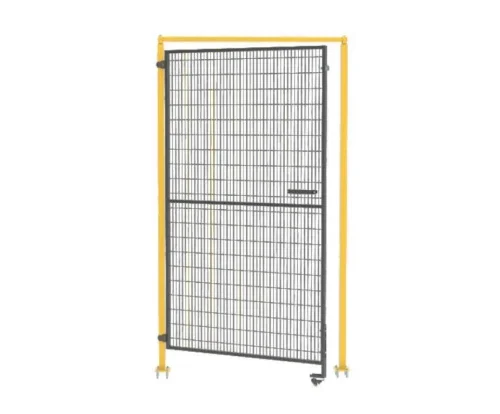

Your project timeline is shrinking, and the end-client just tweaked the robot cell layout again. The last thing you need is to waste hours on-site welding brackets for safety switches or fighting with a flimsy sliding door that won’t align. The real cost isn’t in the steel; it’s in the project delays. It’s time for a fencing system built for system integrators.
You’re asking about the **industrial safety fence with sliding doors price**, and that’s the right question. But for a system integrator, the price on the quote is only half the story. The real cost is measured in project hours, on-site modifications, and the painful process of commissioning the safety PLC. A “cheaper” fence can quickly become the most expensive part of your project when it fails to integrate smoothly.
Let’s break down what truly determines the price and how the right system moves from a project expense to a project accelerator.
## Beyond the Steel: The Hidden Costs in a “Standard” Sliding Door System
In any automated production line or защитные ограждения для роботов project, the guarding system is one of the last components to be installed but one of the first to cause headaches. A poorly specified sliding door system introduces costs that never appear on the initial invoice.
* **On-Site Fabrication:** Your technicians are forced to become welders, fabricating custom brackets on the fly to mount the Pizzato or Omron safety interlocks your client specified. That’s unplanned labor and potential quality inconsistencies.
* **Door Sag & Misalignment:** Wide openings for material handling are common, but without proper structural support, large sliding doors sag. The interlock bolts misalign, causing nuisance trips that shut down the line and lead to frustrating troubleshooting calls with the end-user.
* **The “Scrap & Re-weld” Cycle:** The client requests a change to the conveyor path. Suddenly, your perfectly cut and welded fence is obsolete. This means more material costs, more labor, and a direct hit to your project margin.

## Deconstructing the Mdfence Sliding Door Price: A System Integrator’s Breakdown
When you get a quote for an Mdfence system, you’re not just buying posts and panels. You’re investing in a pre-engineered solution designed to eliminate these hidden costs.
### Factor 1: Engineered Structure That Guarantees Alignment
The foundation of a reliable sliding door is structural rigidity. Our system is built with heavy-duty components as standard, not as a costly upgrade.
* **Posts:** We use robust 60 x 60mm posts made from Q235 carbon steel, providing a solid anchor point that resists deflection.
* **Framed Panels:** The doors themselves are constructed from обрамлённые панели, using a 20 x 30mm tubular frame. This prevents the mesh from warping and ensures the entire door assembly remains square.
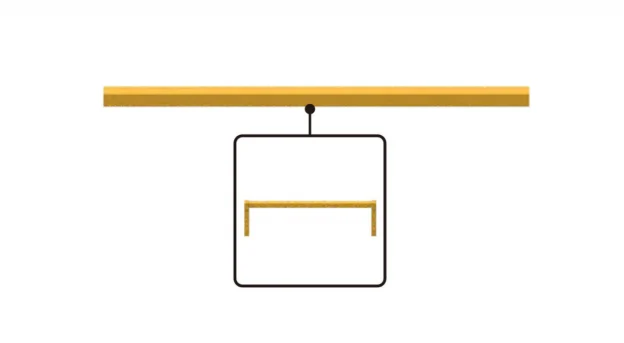
* **The Critical Door Frame Beam:** For all sliding and hinged doors, we include a top door frame beam. This simple but vital component connects the two door posts, locking them in a perfectly parallel position. It physically prevents the posts from shifting or leaning over time, ensuring your safety interlock and door hardware remain perfectly aligned for the life of the system.
### Factor 2: A True “Plug-and-Play” Safety Interlock Carrier
This is where Mdfence transitions from a passive barrier to an active part of your control system. We recognized that mounting safety switches was a major pain point for automation engineers. Our solution is the pre-engineered **Safety Interlock Carrier**.
This isn’t just a plate with holes. It’s a purpose-built mounting kit, like our KKCK-LCK-B-D4NL-SET, designed specifically for industry-standard switches like the Omron D4NL or Pizzato FS series. It positions the switch and actuator perfectly, right out of the box.
**The result? You eliminate hours of measuring, drilling, and custom fabrication. Your technicians simply bolt on the carrier and the switch, wire it to the PLC, and move on. The time saved on a single door installation often justifies the cost of the entire component.**
### Factor 3: Inherent Modularity for Inevitable Project Changes
Our entire machine guarding systems are built on a modular, component-based philosophy. Every post, panel, and bracket is a standardized part. When the client’s layout for the automotive welding station changes, you don’t scrap the system. You unbolt it, reconfigure it, and redeploy it. This flexibility protects your initial investment and allows you to adapt quickly without blowing the budget.

## The Real Price: Faster Commissioning and a Healthier Margin
So, what is the price of an Mdfence industrial safety fence with sliding doors? It’s the price of predictability.
* **Before:** Unpredictable hours spent on-site modifying a generic fence.
* **After:** A fixed number of hours for assembly, with no welding or custom fabrication required.
* **Before:** Days of troubleshooting a faulty safety circuit due to misaligned door switches.
* **After:** The safety system is commissioned in hours because the mechanical integration is flawless from the start.
The price reflects a complete solution that respects your time, reduces your project risk, and delivers a robust, professional-grade Промышленная охрана периметра system that your clients will value.
Часто задаваемые вопросы для системных интеграторов
1. How wide can your sliding doors be for a large robot work cell or material transfer area?
Our modular sliding door systems can accommodate very wide openings. A double-leaf sliding door can achieve a clear opening of up to 4300mm (approx. 14.1 feet). The inclusion of the top door frame beam is standard and ensures structural integrity and smooth operation even at these larger widths, preventing post misalignment that is common in other systems.
2. We use specific safety interlocks (Omron, Pizzato, Schmersal). Can your system accommodate them without custom drilling?
Absolutely. This is one of our core value propositions. We offer a range of pre-engineered “Safety Interlock Carriers” designed for the most common safety switches in the automation industry. You simply specify the make and model of your interlock (e.g., Omron D4NL-4EFG-B), and we provide the corresponding mounting kit. This eliminates all on-site fabrication and ensures perfect alignment.
3. What information do you need from us to provide an accurate and fast quote?
The fastest way to get an accurate quote is to provide your layout drawings (CAD files like .dwg or .step are ideal). Please also specify the required heights, the number and type of doors (hinged, sliding, folding), their locations and widths, and the models of any safety interlocks you plan to integrate. The more detail you provide, the more precise our solution and quote will be.
4. How does your powder coating hold up in an industrial environment with coolants or oils?
Наш сайт порошковое покрытие process provides a durable, corrosion-resistant finish suitable for demanding industrial settings. The coating meets GB/T9286-1998 standards for adhesion and has been validated through ISO9227 salt spray testing. While direct, prolonged exposure to harsh chemicals should be assessed on a case-by-case basis, the finish is designed to withstand the typical conditions found in automotive manufacturing and metalworking facilities.
5. Our client’s production needs change frequently. How difficult is it to reconfigure an Mdfence installation?
Reconfiguration is a core design feature. The entire system is assembled with mechanical fasteners (bolts), requiring no welding. A maintenance team can easily unbolt sections, move posts, and re-assemble the layout using basic hand tools. This modularity is ideal for agile manufacturing environments and protects your investment, as the components can be reused in new layouts instead of being scrapped.