RU
RU  EN
EN  DE
DE  PT
PT  JA
JA  ES
ES  IT
IT 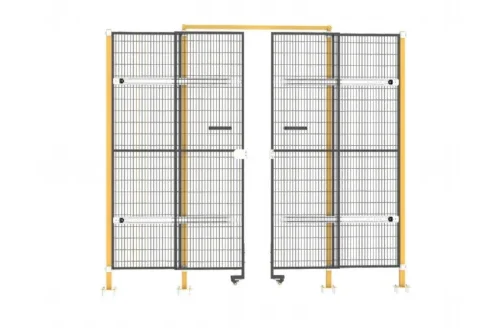
 |
You’re designing a new robotic cell. The spec sheet is demanding. The footprint is tight. And the choice between wire mesh and solid panels for your защита машин feels like a compromise. You need operators to have a clear line-of-sight for process monitoring, but the CNC next door is throwing coolant, or the welding robot is spitting sparks. It seems you have to trade visibility for containment. But what if you didn’t have to choose? |
The Default Choice: Why High-Visibility Wire Mesh is Standard
For most automation system integrators, wire mesh is the go-to solution for a reason. But not all mesh is created equal. The critical mistake is assuming any “wire cage” will pass the end-client’s EHS audit. The difference lies in the engineering details that directly impact your cell’s footprint and safety compliance.
Before: The Footprint Problem with Standard Mesh
A common scenario: you use generic 2″ x 2″ (approx. 50x50mm) mesh panels. During the risk assessment, you realize that according to ISO 13857, this large opening means an entire arm can reach through. To be compliant, you’re forced to place the entire guarding perimeter a significant distance—sometimes up to 34 inches (850mm)—away from the hazard. This “safety creep” eats up valuable floor space, potentially making your cell layout unworkable and blowing up the project’s ROI.
Mdfence Logic: How Engineered Mesh Saves Floor Space
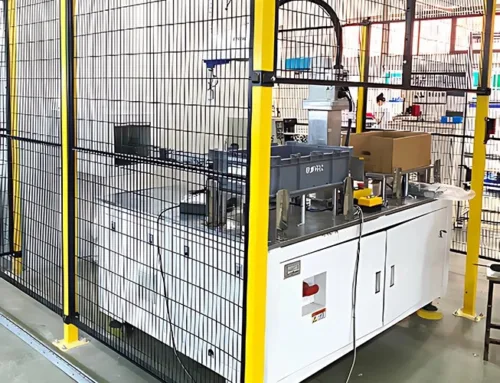
Our standard panels utilize a 20x100mm (approx. 0.8″ x 4″) mesh aperture. This isn’t an arbitrary size. It’s specifically designed to prevent fingers from passing through, drastically reducing the required safety distance. Per ISO 13857, this allows you to place the защитные ограждения для роботов as close as 4.7 inches (120mm) from the danger zone. Furthermore, the RAL 9005 black powder coating on the Q235 carbon steel mesh isn’t just for aesthetics; it absorbs light and eliminates the glare common with galvanized or brightly colored mesh, providing superior visibility for operators monitoring the process.

After: A Compact, Compliant, and Visually Open Cell
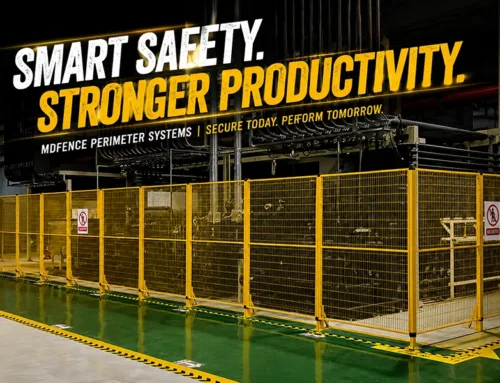
By using engineered mesh, you reclaim square footage on every linear foot of guarding. For a 50-foot production line, this can mean saving over 100 square feet of high-value production floor. The result is a more compact, efficient layout that still provides the unrestricted visual access and airflow needed for most robotic applications.
When Containment is Non-Negotiable: The Role of Solid Panels
Sometimes, visibility takes a backseat to absolute containment. Applications involving high-velocity chip generation, fluid spray, or weld spatter demand an impermeable barrier.
Before: The “One-Size-Fits-All” Trap
Faced with a welding or coolant-intensive application, an integrator might be forced to enclose the entire cell in solid steel or polycarbonate. This solves the containment issue but creates new problems: operators can’t see what’s happening inside, heat can build up, and the cell feels like a black box, making troubleshooting and routine checks difficult.
Mdfence Logic: The Power of a Modular, Hybrid Approach
This is where the Mdfence system moves beyond a simple product and becomes a flexible engineering toolkit. Our solid polycarbonate (PC) and sheet steel panels are designed to be fully interchangeable with our mesh panels. They use the exact same 60x60mm posts, fasteners, and framed panel structure. This means you aren’t locked into one choice. You can, and should, mix and match.
Consider a CNC tending robot cell. You can specify:
- Solid Polycarbonate Panels: On the sides facing the machine tool to completely block coolant mist and flying chips.
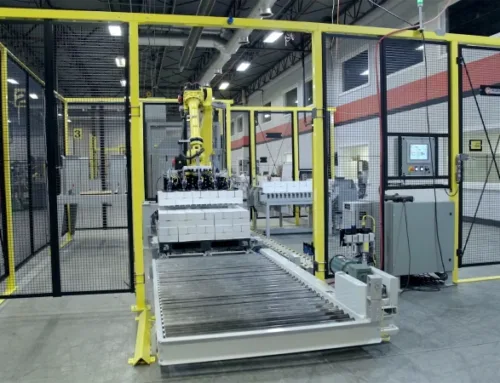
- High-Visibility Mesh Panels: On the front of the cell, allowing the operator a clear view from the HMI station.
- Steel Sheet Panels: At the base of the fence line to contain fluids that might pool on the floor.
After: An Optimized Guarding System, Not a Compromise
The result is a purpose-built guarding solution that provides containment precisely where you need it and visibility everywhere else. You deliver a safer, cleaner work environment without sacrificing the operational efficiency that comes from clear sightlines. You’ve solved the client’s specific process challenge, demonstrating a higher level of integration expertise.
Beyond the Panel: The Integrator’s Checklist for True Value
The panel material is only part of the equation. For a system integrator, the real value lies in the system’s overall engineering, which directly impacts your installation time and the project’s success.
| Critical Factor | The Hidden Risk of “Cheaper” Alternatives | The Mdfence Engineered Advantage |
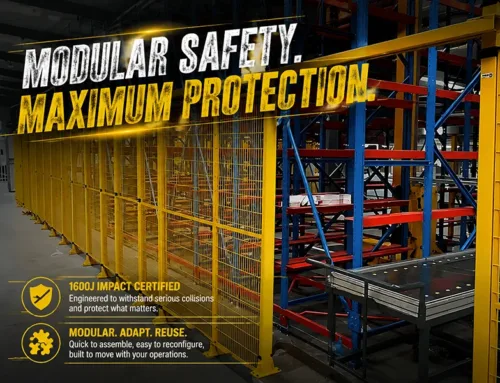
| Ударопрочность | Flimsy, frameless mesh (“chain-link” style) can’t withstand a significant impact from a dropped payload or a wayward forklift, leading to catastrophic failure and potential liability. | Наш сайт промышленные защитные ограждения features fully welded 20x30mm steel tube frames on every panel. The system is certified to withstand 1600 Joules of impact—equivalent to stopping a 220 lb object moving at 12.5 mph. |
| Safety Interlock Integration | You’re left to drill and tap holes on-site to mount the client-specified Omron, Pizzato, or Schmersal interlocks. This is slow, messy, compromises the powder coat, and invites rust. | We provide pre-engineered mounting plates and lock carriers (like the KKCK-LCK-B-D4NL-SET) designed for specific, industry-standard safety switches. It’s a bolt-on solution that saves hours of on-site fabrication and ensures perfect alignment. |
| Modularity & Reconfiguration | Welded-on-site solutions or systems with proprietary fasteners become scrap metal the moment the production line needs to be moved or modified. | The entire system assembles with standard M8 bolts. It can be disassembled, reconfigured, and redeployed without damage, preserving the asset’s value through multiple factory layouts. |

Ultimately, the debate isn’t just “wire mesh vs. solid panels.” It’s about choosing an integrated защита машин system that gives you the flexibility to use the right panel in the right place, backed by a robust structure that simplifies your integration work and guarantees you’ll pass the final EHS sign-off.
Frequently Asked Questions for Automation Integrators
1. How exactly does mesh size affect my robot cell footprint?
The size of the mesh opening is a critical variable in the safety distance calculation defined by standards like ISO 13857. Larger openings (e.g., 50x50mm) allow fingers and hands to reach closer to the hazard, legally requiring the guard to be placed further away. Our standard 20x100mm mesh significantly limits reach-through, allowing the barrier to be placed as close as 120mm (4.7 inches), directly reducing the overall machine footprint and saving valuable floor space.
2. Can I mount my client’s specified safety interlock (e.g., Schmersal, Pizzato, Omron) on your system?
Yes. This is a core part of our design philosophy. We offer a range of pre-engineered mounting plates and “lock carriers” specifically designed for popular safety interlock switches from brands like Omron (e.g., D4NL series), Pizzato, and Schmersal. This eliminates the need for on-site drilling or welding, ensuring a clean, compliant, and fast installation that integrates seamlessly into your safety PLC circuit.
3. What is the impact resistance rating of your system and is it certified?
Our standard Q235 carbon steel system with framed panels is certified to withstand an impact energy of 1600 Joules. This is a crucial data point for your risk assessment, providing third-party validation (TUV certification) that the guarding can contain a significant projectile or withstand an accidental impact, protecting both personnel and high-value automation equipment.
4. How does the Mdfence system handle conveyor or cable pass-throughs?
We handle pass-throughs via custom-sized “tunnel guards” or modified panels. Because our system is modular, we can create openings that are precisely sized to fit your conveyor or cable tray while still complying with ISO 13857 to prevent human access. This is configured during the design phase to ensure a perfect fit upon delivery.
5. We have a tight project timeline. What are your lead times for standard components?
We maintain a significant inventory of standard components, including posts in common heights (e.g., 2000mm), mesh panels in various widths, and common door kits. This allows us to often ship standard configurations very quickly to meet the urgent demands of integration projects and avoid becoming the bottleneck in your timeline.