RU
RU  EN
EN  DE
DE  PT
PT  JA
JA  ES
ES  IT
IT 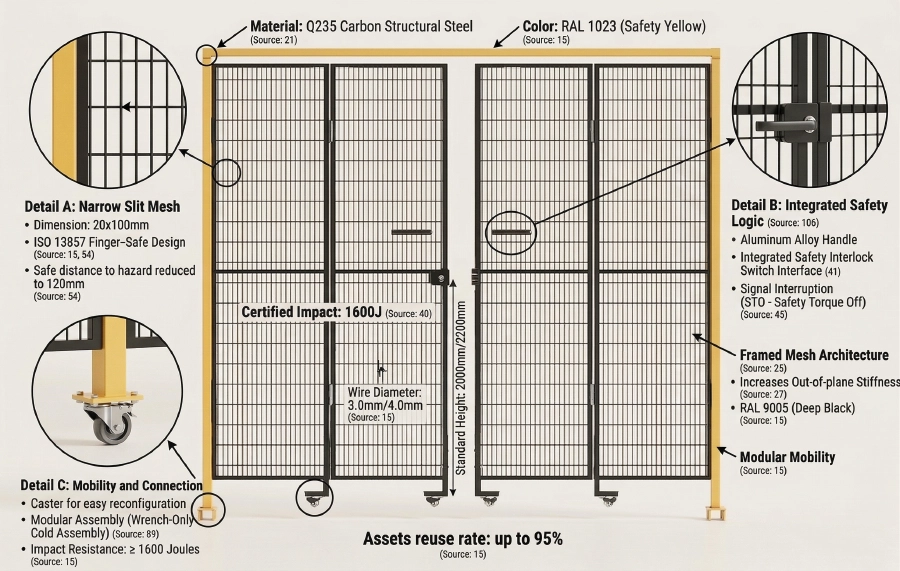
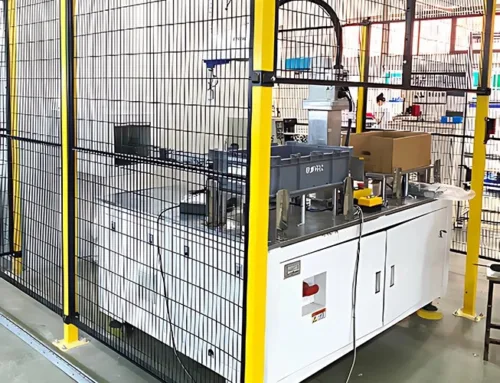
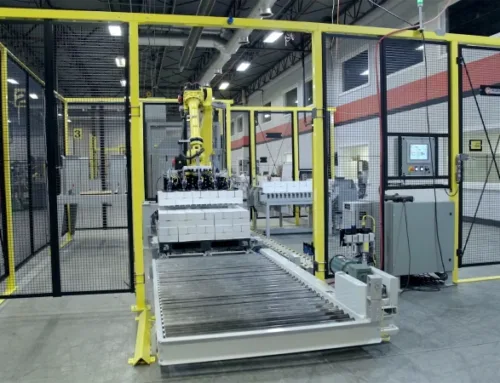
High factory floor cost and tight internal space push automation builders to rethink machine guarding early. For compact robot cell, conveyor, and palletizer layouts, MDFence uses a 20×100 mm micro-mesh concept that can support a much tighter protective perimeter than ordinary 50×50 mm wire fence designs, helping preserve forklift aisles, operator circulation, and valuable production area while keeping the guarding strategy audit-oriented.
Why floor-space cost becomes a machine guarding decision
Many integrators treat safety fencing as a late mechanical package. That works until the project enters a real plant with narrow aisles, existing columns, utility drops, pallet movement, and fixed egress routes. At that point, the difference between a compact machine guarding system and a generic fence becomes a layout issue with direct commercial impact.
When a large automation cell needs extra setback because the mesh opening is too permissive, the loss is not just the fence footprint. The buyer also loses maneuvering width for forklifts, maintenance approach distance, buffer space for infeed or discharge conveyors, and room for future line balancing. In high-rent or already crowded facilities, even a few extra square meters around each cell compound into a serious cost driver.
How mesh opening changes the usable layout envelope
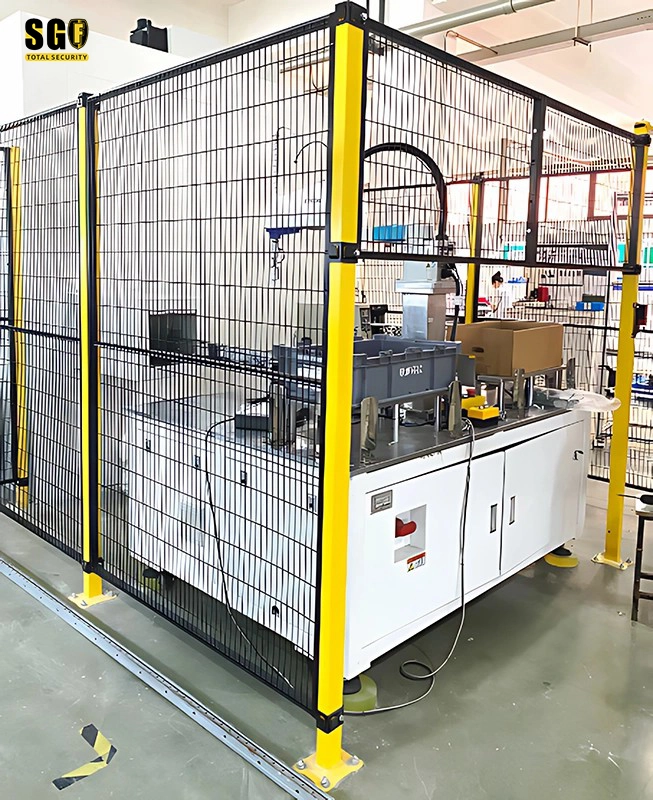
The user pain point here is simple: ordinary 50×50 mm wire fence often forces a much larger safety offset from the hazard zone. If that offset stretches toward 850 mm, the perimeter quickly expands beyond what a tight workshop can comfortably absorb. Forklift circulation suffers, machine packing density drops, and the customer ends up paying for protected empty space instead of productive space.
MDFence is built around a 20×100 mm micro-mesh approach used in machine safety fencing. In applications where the governing risk assessment and distance tables support it, that smaller aperture can allow the guarding line to move dramatically closer to the hazard source, down to around 120 mm. The result is not a cosmetic improvement. It changes the entire geometry of the automation cell.
| Guarding choice | Typical layout effect | Commercial consequence |
|---|---|---|
| Large-mesh generic fence | Perimeter may need a much bigger setback from the hazard zone | Consumes aisle width and usable production area |
| MDFence micro-mesh machine guard fencing | Supports a tighter protective envelope in the appropriate application | Helps deliver compact cells and lower hidden floor-space cost |
Where the saved space shows up inside a real plant
1. Forklift aisles stay functional
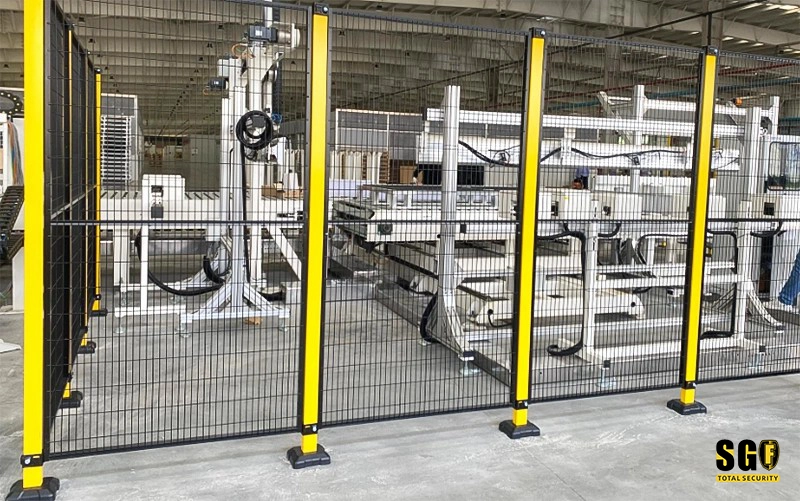
Production planners often discover too late that a safety fence has narrowed a crossing or forced awkward turning movements for pallet traffic. A tighter fence line helps keep transport lanes practical instead of turning them into slow, high-risk choke points.
2. End users gain more productive square meters
For OEMs and integrators, the hidden value is in what the end user can still do around the machine after commissioning. Extra room can be used for staging totes, adding an inspection point, routing utilities more cleanly, or preserving access for preventive maintenance.
3. Multi-cell automation becomes easier to scale
Once one robot or palletizer cell consumes too much space, the next cell becomes harder to place. Compact Mdfence layouts help plant teams repeat a safe perimeter concept across multiple stations without steadily shrinking the rest of the workshop.
Why MDFence is more than just a smaller-footprint fence
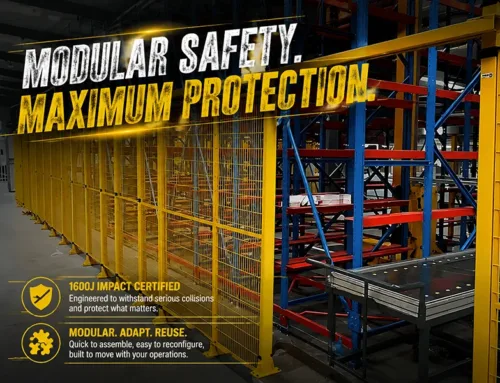
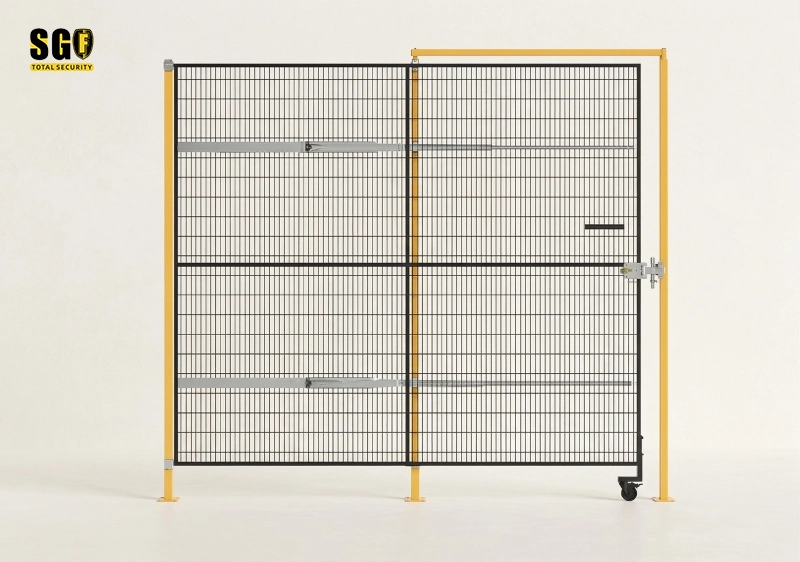
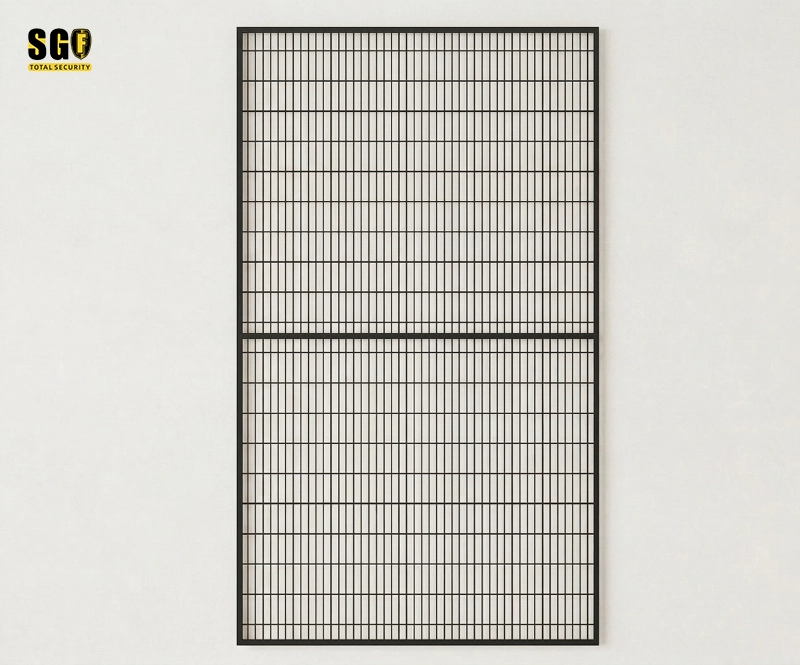
A compact safety envelope only works if the fence still behaves like real machine guarding. Mdfence supports that with framed steel mesh panels, Q235 steel construction, modular post-and-clamp assembly, and gate options that can be adapted to how the cell is actually serviced.
- Framed mesh construction: helps the panel keep structural order better than flimsy frameless alternatives used in cost-led projects.
- Interlock-ready door logic: hinged, sliding, folding, or wide-opening access can be matched to the maintenance task instead of forcing awkward workarounds.
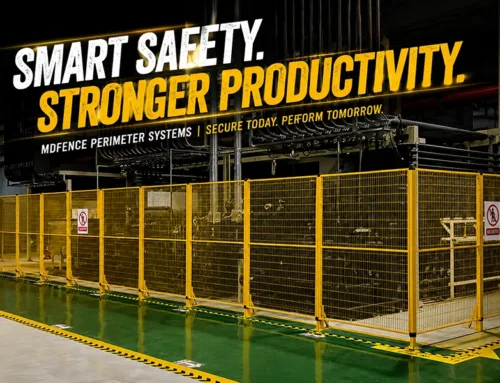
- Yellow and black visibility: operators can see into the cell while the hazard boundary stays visually obvious on the shop floor.
- Cold assembly workflow: modular installation reduces welding-related disruption during retrofit or line changeover work.
Why this matters to automation builders selling against competitors
If two machine builders can deliver similar cycle time and process capability, footprint becomes a commercial differentiator. The supplier that can offer a safer, tighter, easier-to-place automation cell gives the end user something that is hard to replicate later: more available plant area without leasing more building space.
That advantage can be decisive in packaging, palletizing, warehouse automation, and retrofit projects where factory expansion is expensive or impossible. A cell that saves several square meters may not look dramatic on a quote sheet, but it materially improves the buyer’s long-term operating flexibility.
In other words, compact machine guarding is not just an EHS detail. It is a project economics detail.
Fast installation also protects the project schedule
Space-constrained projects are usually time-constrained as well. Mdfence supports a modular installation approach that helps teams avoid unnecessary hot work and reduces the friction of future relocation or extension. That matters when an integrator must commission quickly, then revisit the cell after process tuning or downstream equipment changes.
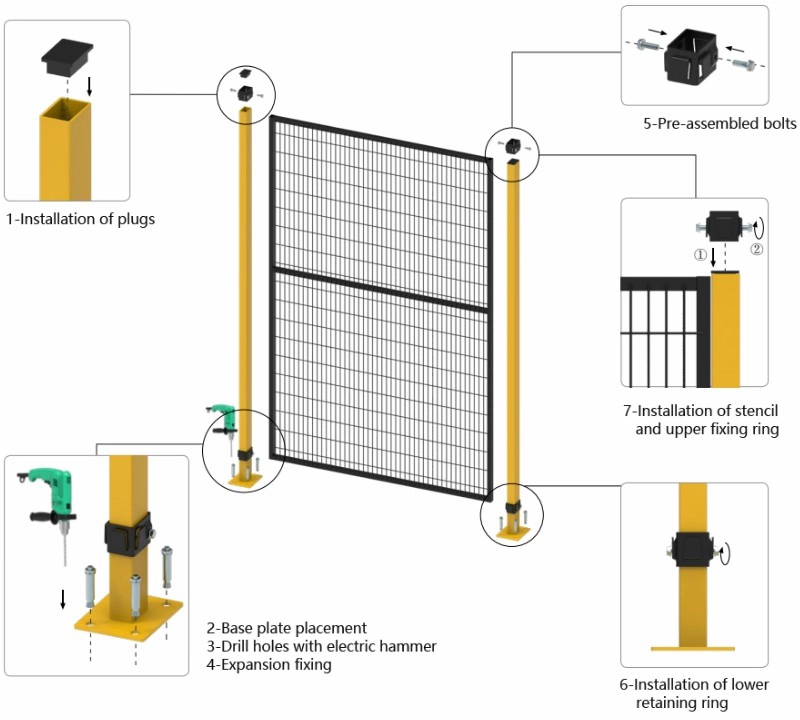
For buyers evaluating factory space cost, internal congestion, and future layout uncertainty at the same time, this combination of compact protective distance and modular installation is often the practical reason to choose an engineered machine guarding system instead of a generic fence package.
Need a compact robot cell or conveyor guarding layout?
MDFence is suited to automation builders and plant teams that need machine safety fencing for tight internal space, controlled access, and lower hidden floor-space cost.
Share your cell footprint, hazard points, and access requirements to evaluate the right mesh, gate, and perimeter strategy for a compact industrial safety fencing solution.